

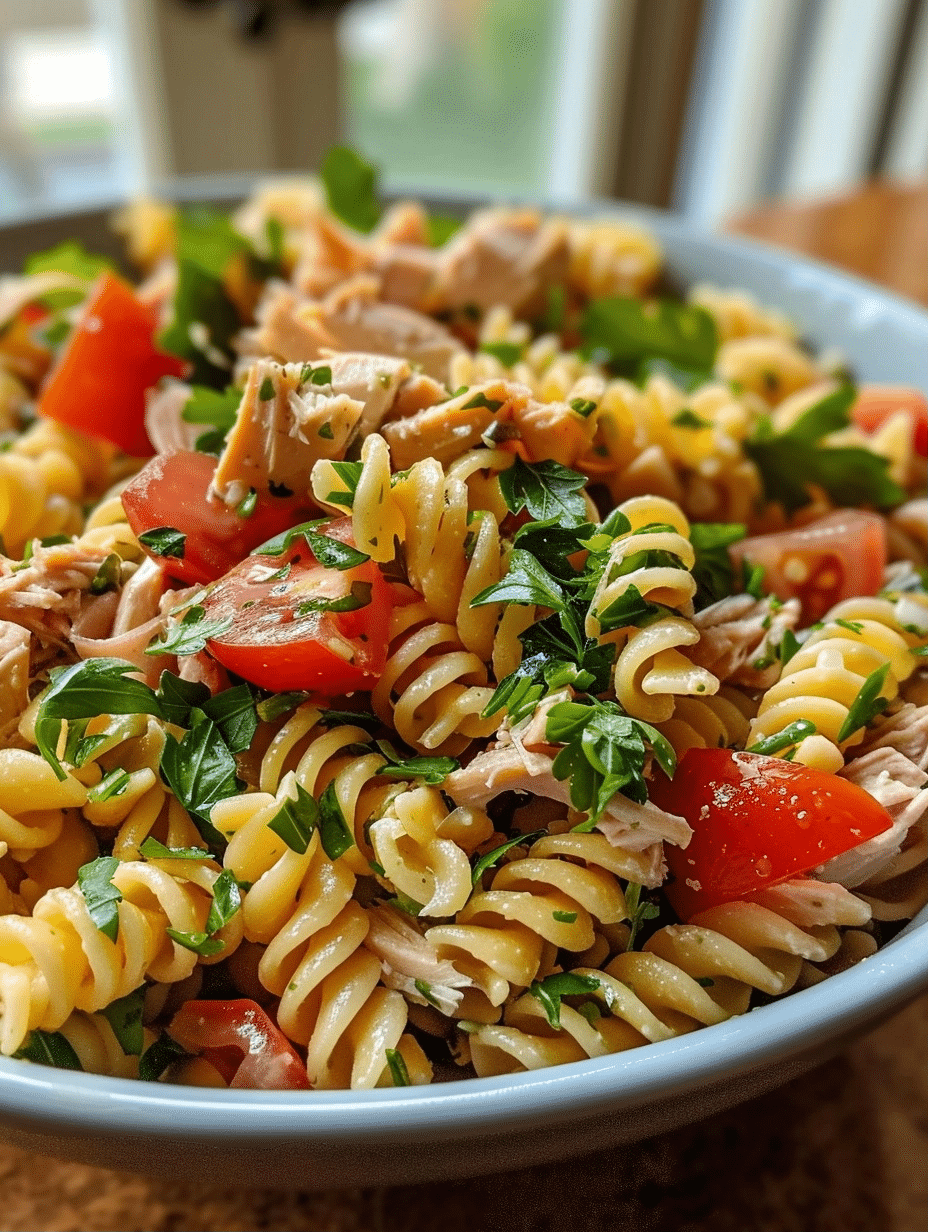
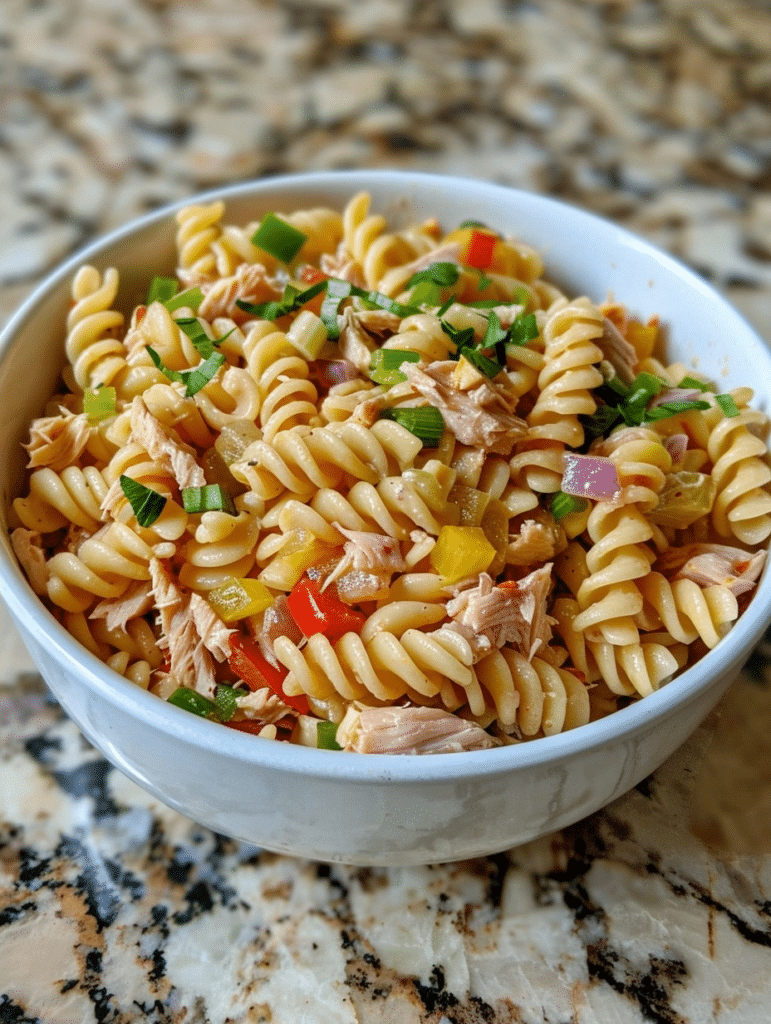
Tuna pasta salad is a protein-rich lunch dish that combines tender pasta, quality tuna, and fresh vegetables in a light, creamy dressing. This recipe delivers restaurant-quality results in under twenty minutes with pantry staples you likely already have on hand. The beauty of this tuna pasta salad lies in its versatility, making it ideal for weekday lunches, potlucks, and meal prep throughout the week. Fresh vegetables like celery, red onion, and bell peppers add crunch and nutritional value, while a simple mayo-based dressing brings everything together. Whether you prefer a classic combination or enjoy experimenting with new ingredients, this tuna pasta salad adapts beautifully to your taste preferences.
Author and Brand Story
I’m Eva Stoner, the creator of Fresh Recipes Corner, where I share simple, reliable recipes for everyday cooking. My love for cooking began in my grandmother’s kitchen, where I learned that good food doesn’t have to be complicated—it just needs care, patience, and the right techniques. Those early moments shaped how I cook today and inspired me to keep things practical and approachable.
Growing up, my grandmother made a tuna pasta salad every summer for family gatherings. I watched her choose the freshest vegetables from her garden and teach me how proper seasoning transforms simple ingredients into something memorable. That experience taught me that the best recipes are the ones you return to again and again, and the ones that work reliably every time you make them. Over the years, I’ve refined her technique, tested countless variations, and discovered what truly makes a tuna pasta salad exceptional. Today, I’m thrilled to share this refined version with you through Fresh Recipes Corner.
Recipe Overview
| Attribute | Details |
|---|---|
| Prep Time | 10 minutes |
| Cook Time | 10 minutes |
| Total Time | 20 minutes |
| Servings | 4 servings |
| Difficulty Level | Easy |
| Cuisine | American |
Why This Recipe Works
I’ve made this tuna pasta salad countless times, and it works because every component serves a purpose. The pasta provides a hearty base that holds the dressing beautifully without becoming mushy or absorbing too much moisture. Quality canned tuna adds protein and substance, transforming this from a light side dish into a complete, satisfying meal.
The vegetable combination matters tremendously in this tuna pasta salad recipe. I learned from experience that red onion provides a sharp bite that balances the richness of mayo, while celery offers authentic crunch that persists even after the salad sits in the refrigerator for several hours. Bell peppers add sweetness and color, making the finished dish visually appealing and more enjoyable to eat.
This tuna pasta salad also works perfectly for meal prep because the flavors actually improve as it sits. The pasta absorbs subtle flavors from the dressing, and the vegetables soften slightly while retaining enough structure to stay interesting. I typically make a large batch on Sunday and enjoy portions throughout the week, confident the quality remains consistent.
Ingredients
| Ingredient | Quantity | Notes |
|---|---|---|
| Pasta (small shapes like penne or fusilli) | 8 ounces | Choose whole wheat for added fiber, or gluten-free if needed |
| Canned tuna in water | 2 cans (5 ounces each) | Drain thoroughly; use solid white for best texture, though chunk light works too |
| Mayonnaise | 1/2 cup | Use quality mayo; Greek yogurt can replace half for lighter texture |
| Red onion | 1/4 medium, diced | Smaller pieces distribute flavor better than large chunks |
| Celery | 2 stalks, diced | Cut into small pieces; traditional choice for authentic crunch |
| Bell pepper (red or yellow) | 1 medium, diced | Adds sweetness and vibrant color; green pepper offers more bite |
| Fresh dill | 2 tablespoons, chopped | Dried dill works but use only 2 teaspoons; fresh provides brighter flavor |
| Lemon juice | 2 tablespoons | Prevents oxidation and brightens all flavors; use fresh squeezed |
| Dijon mustard | 1 teaspoon | Adds depth without overpowering; yellow mustard is milder alternative |
| Sea salt | 1/2 teaspoon | Adjust to taste; remember canned tuna adds some sodium already |
| Black pepper | 1/4 teaspoon | Freshly ground provides superior flavor compared to pre-ground |
| Garlic powder | 1/4 teaspoon | Optional but recommended; fresh minced garlic can substitute |
Step-by-Step Instructions
Phase 1: Prepare the Pasta Base
- Bring a large pot of salted water to a rolling boil over high heat, approximately 8-10 minutes until water reaches a full boil.
- Add pasta and stir immediately to prevent sticking; cook according to package directions until al dente, typically 8-10 minutes depending on shape and brand.
- Drain pasta in a colander and rinse with cool water until completely cooled, about 2-3 minutes, to stop the cooking process and prevent mushiness.
- Transfer cooled pasta to a large mixing bowl, breaking up any clusters gently with a fork.
Phase 2: Prepare the Vegetables
- Dice red onion into small, uniform pieces, approximately 1/4-inch cubes for even distribution throughout the tuna pasta salad.
- Cut celery stalks vertically lengthwise, then slice crosswise into small pieces to maximize crunch and texture.
- Remove seeds and white membranes from bell pepper, then dice into pieces matching the size of onion and celery for visual consistency.
- Chop fresh dill into small pieces, keeping tender fronds separate from tougher stems.
Phase 3: Create the Dressing and Combine
- Whisk together mayonnaise, Dijon mustard, lemon juice, salt, pepper, and garlic powder in a small bowl until completely smooth, about 1 minute of mixing.
- Drain canned tuna thoroughly, pressing gently with a fork against the can to remove excess liquid without breaking apart the fish.
- Add drained tuna to the pasta, breaking it into bite-sized pieces as it goes in for even distribution.
- Add diced onion, celery, and bell pepper to the pasta and tuna mixture.
- Pour prepared dressing over the pasta mixture and gently fold everything together using a large rubber spatula until all ingredients are evenly coated, approximately 2-3 minutes of folding.
- Sprinkle chopped fresh dill over the top and fold gently one more time to incorporate.
- Taste the tuna pasta salad and adjust seasonings as needed, adding more salt, pepper, or lemon juice to reach your preferred flavor balance.
Phase 4: Chill and Serve
- Cover the salad with plastic wrap or transfer to an airtight container and refrigerate for at least 30 minutes before serving, allowing flavors to meld and develop.
- Remove from refrigerator 5 minutes before serving to bring to ideal eating temperature.
- Stir gently before serving to redistribute dressing that may have settled to the bottom.
Chef Tips for Perfect Results
- Cool the pasta properly: Rinsing cooked pasta with cold water stops the cooking process immediately, preventing your tuna pasta salad from becoming mushy. This step is non-negotiable for maintaining the ideal tender-but-firm texture throughout storage.
- Use quality tuna: Solid white canned tuna in water provides superior texture and flavor compared to chunk light varieties. Look for brands that pack tuna from sustainable sources, which typically have better flavor integrity.
- Don’t oversalt: Canned tuna already contains significant sodium, so start with half the salt the recipe calls for and add more gradually. Taste as you go rather than seasoning aggressively upfront.
- Prepare vegetables uniformly: Cut onion, celery, and bell pepper into similar-sized pieces so they cook and soften at the same rate. This consistency also improves the visual appeal of your finished tuna pasta salad.
- Make ahead strategically: Prepare this tuna pasta salad up to two days in advance for best results. The pasta softens slightly and absorbs flavors beautifully over time, but the vegetable crunch gradually diminishes after 48 hours.
- Fresh dill makes the difference: While dried dill works in a pinch, fresh dill provides a brightness that significantly elevates the entire dish. Add it during the final fold to preserve its delicate flavor and appearance.
Common Mistakes to Avoid
Mistake 1: Not draining tuna thoroughly. Excess water from canned tuna dilutes your dressing and creates a watery, bland tuna pasta salad. Press the drained tuna gently against the can with a fork to remove every drop of liquid before adding to the mixture.
Mistake 2: Oversaturating the dressing. Adding too much mayo creates a heavy, unappetizing texture that coats your mouth. Start with the recommended 1/2 cup and add more in one-tablespoon increments only if the mixture seems too dry after combining all ingredients.
Mistake 3: Skipping the cooling step for pasta. Combining hot pasta with mayo-based dressing causes the mayo to break down and separate, resulting in a greasy rather than creamy texture. Always cool the cooked pasta completely before mixing with the dressing.
Mistake 4: Cutting vegetables too large. Large chunks of onion, celery, and pepper create unbalanced bites where some forkfuls are vegetable-heavy while others lack crunch. Consistent small dicing ensures every bite contains a balanced mix of all components.
Mistake 5: Using old mayonnaise or low-quality brands. Expired or budget mayo produces a flat, chemical-tasting dressing that undermines your entire tuna pasta salad despite quality ingredients elsewhere. Always check expiration dates and invest in full-fat, better-quality brands for superior results.
Variations and Substitutions
| Ingredient | Substitution | Impact on Flavor |
|---|---|---|
| Mayonnaise | Greek yogurt (use 1/4 cup mayo + 1/4 cup Greek yogurt) | Lighter, tangier flavor with reduced calories; slightly less creamy texture |
| Canned tuna in water | Canned tuna in oil (drain thoroughly) or fresh cooked tuna | Oil-packed tuna is richer; fresh tuna is more delicate and requires careful handling |
| Fresh dill | Fresh tarragon, fresh basil, or 2 teaspoons dried dill | Tarragon adds sophisticated anise note; basil creates Italian flavor profile; dried dill is milder |
| Red onion | White onion or shallots | White onion is milder; shallots add sophisticated, slightly sweet onion flavor |
| Bell pepper | Diced cucumber, snap peas, or roasted red peppers from a jar | Cucumber adds crispness and dilutes flavors slightly; snap peas add sweetness; roasted peppers add smoky depth |
| Dijon mustard | Yellow mustard or whole grain mustard | Yellow mustard is milder and less complex; whole grain adds texture and rustic appeal |
| Penne or fusilli pasta | Bow tie, orzo, or elbow pasta | All work similarly; choose based on preference for how dressing clings to shapes |
| Celery | Diced water chestnuts or jicama | Water chestnuts provide similar crunch with slightly sweeter, more delicate flavor; jicama adds juiciness |
Serving Suggestions and Pairings
Serve this tuna pasta salad at lunch on a bed of fresh greens such as spinach or mixed lettuces for a more substantial meal that stretches one batch across multiple servings. The cool salad pairs beautifully with grilled or roasted vegetables on the side, such as zucchini, asparagus, or roasted broccoli, which add nutritional density without heavy carbohydrates.
This tuna pasta salad works perfectly for picnic and potluck occasions where it must travel well and maintain quality for several hours. Pack it in an insulated container with an ice pack and it will stay fresh and safe for up to four hours without refrigeration. Pair it alongside fresh fruit platters, grilled vegetable skewers, or hummus with vegetable crudités for a balanced, colorful spread.
For casual weeknight dinners, serve tuna pasta salad alongside crusty whole grain bread or toasted pita chips to add satisfying texture and substance. A light side of steamed green beans or roasted beets complements the creamy richness without overshadowing the delicate tuna flavor. For summer entertaining, present the tuna pasta salad in individual glasses layered with fresh herbs and microgreens for elegant plating that looks like restaurant preparation.
Consider serving this tuna pasta salad alongside other complementary salads or dishes for lunch buffets, office gatherings, or family barbecues. It pairs well with grain-based salads like quinoa or farro salads, which provide different textures and nutritional profiles. For a protein-focused meal, add hard-boiled eggs and cheese to make it more substantial, or enjoy it as a light standalone dish with minimal additions.
Storage and Reheating
| Method | Duration | Instructions |
|---|---|---|
| Refrigerator Storage | Up to 3 days | Transfer tuna pasta salad to an airtight container and store in coldest part of refrigerator. Cover with plastic wrap to prevent odor transfer. Flavors peak around day two as pasta continues absorbing dressing. |
| Freezer Storage | Not recommended | Mayo-based dressing does not freeze well and separates upon thawing, creating unappetizing texture. Vegetables become mushy. Only freeze individual pasta and tuna components separately if needed. |
| Portable Storage (Before Serving) | Up to 4 hours | Pack in insulated container with ice pack for picnics and potlucks. Keep closed until ready to serve to maintain temperature. Salad is best served cold directly from the container. |
| Reviving Day-Old Salad | 2-3 minutes preparation | Remove from refrigerator and let sit at room temperature for 5 minutes. If dressing has been absorbed into pasta, fold in additional mayo one tablespoon at a time until reaching desired consistency. Fresh lemon juice brightens flavors that fade overnight. |
| Preventing Sogginess | Best practice | Keep dressing components separate until 30 minutes before serving. Combine pasta, tuna, and vegetables first, then fold in dressing just before eating. This preserves vegetable crunch throughout storage duration. |
Nutritional Information
| Nutrient | Amount Per Serving |
|---|---|
| Calories | 425 |
| Protein | 28 grams |
| Total Fat | 18 grams |
| Saturated Fat | 3 grams |
| Carbohydrates | 38 grams |
| Dietary Fiber | 2 grams |
| Sugars | 2 grams |
| Sodium | 520 milligrams |
| Cholesterol | 22 milligrams |
Approximate values based on standard ingredients. Nutritional content varies based on specific brands used and ingredient substitutions. Values represent one serving from a four-serving batch.
Frequently Asked Questions
Can I make tuna pasta salad without mayonnaise?
Yes, you can create a lighter version using Greek yogurt, olive oil and lemon juice, or a vinaigrette base as the dressing instead of mayo. Greek yogurt mixed with Dijon mustard and lemon juice creates a tangier, protein-boosted dressing that works beautifully. An olive oil-based dressing with fresh herbs produces a Mediterranean-style tuna pasta salad that feels fresher and less heavy than mayo versions.
Can I use fresh tuna instead of canned tuna in this salad?
Fresh cooked tuna works excellently in this recipe and provides a more delicate flavor than canned varieties. Cook fresh tuna steaks to an internal temperature of 145 degrees Fahrenheit, then flake into bite-sized pieces once cooled. Fresh tuna requires careful handling to maintain its texture and is best used the same day for optimal quality and food safety.
How long does tuna pasta salad keep in the refrigerator?
This tuna pasta salad stays fresh and safe to eat for up to three days when stored in an airtight container in the refrigerator. The flavors actually improve during the first two days as the pasta absorbs dressing and vegetables soften slightly. After three days, the texture deteriorates and food safety becomes a concern, so discard any remaining salad.
Can I make tuna pasta salad ahead for meal prep?
You can prepare tuna pasta salad up to two days in advance for meal prep purposes with excellent results. Store in individual airtight containers and keep in the coldest part of your refrigerator. Flavors meld beautifully over time, making day-two salad arguably better than freshly made versions.
What can I add to make tuna pasta salad more interesting or flavorful?
Add chopped hard-boiled eggs, diced avocado, capers, sun-dried tomatoes, or roasted artichoke hearts for increased flavor complexity and texture variety. Fresh herbs like chives, parsley, or tarragon brighten the dish, while a pinch of cayenne pepper adds subtle heat. Roasted pine nuts or sunflower seeds provide satisfying crunch and nutritional value.
Is tuna pasta salad a healthy lunch option?
This tuna pasta salad provides excellent nutrition with substantial protein from tuna, complex carbohydrates from pasta, and vitamins from fresh vegetables. Each serving contains approximately 28 grams of protein and 2 grams of dietary fiber. For lighter results, substitute half the mayo with Greek yogurt or use a vinaigrette base instead, reducing calories while maintaining satisfying flavor and texture.
Conclusion
This tuna pasta salad recipe delivers reliable, delicious results that work for weekday lunches and entertaining alike. The combination of tender pasta, quality tuna, and fresh vegetables in a creamy dressing creates a complete meal that satisfies both appetite and palate. With simple ingredients and minimal prep time, you’ll return to this tuna pasta salad again and again, discovering new ways to adapt it to your changing tastes and seasonal availability.
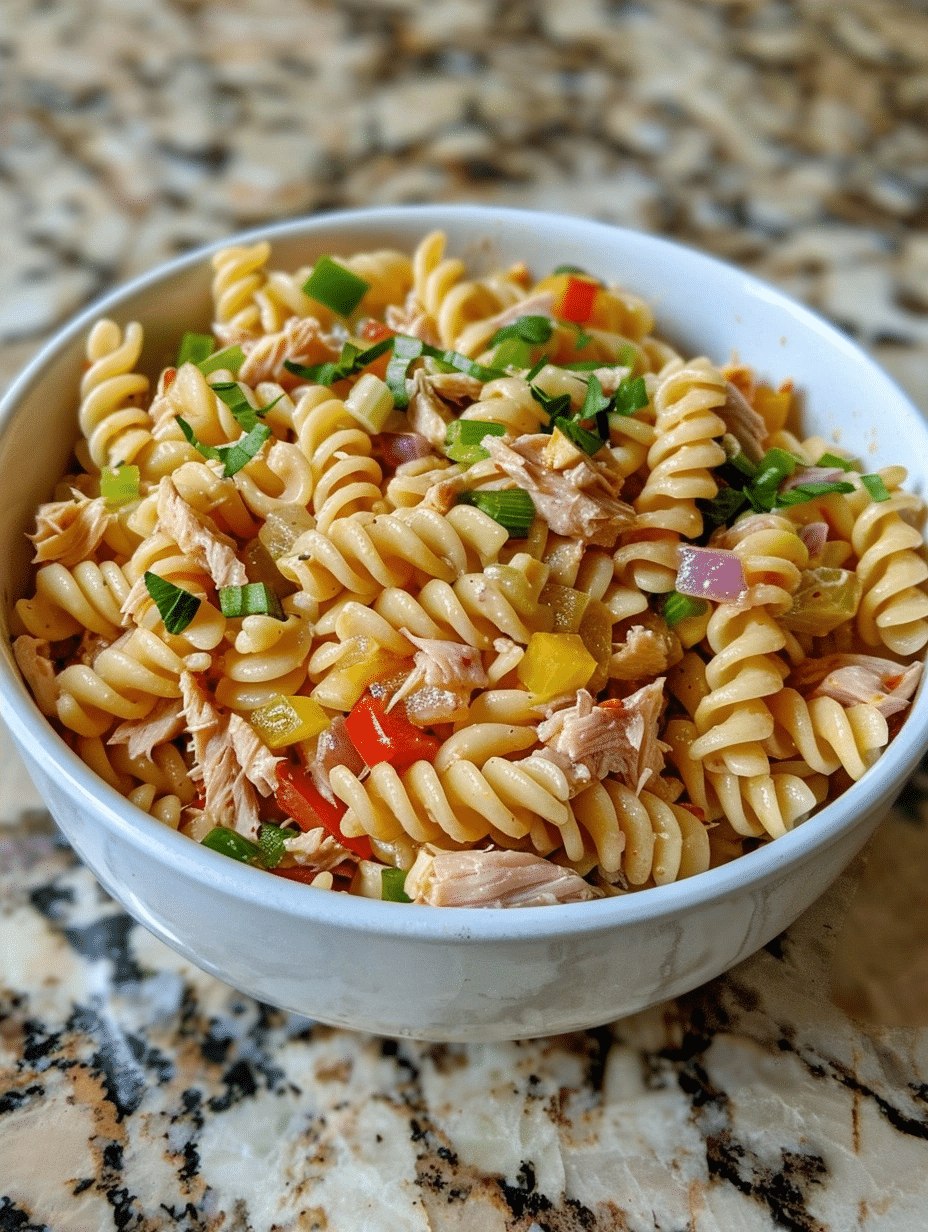
Tuna Pasta Salad Recipe for Easy Lunch
Ingredients
- 8 oz (225g) elbow macaroni or penne pasta
- 2 cans (5 oz/140g each) solid white albacore tuna in water, drained
- 1 cup (150g) chopped celery
- 1/2 cup (75g) finely diced red onion
- 1/2 cup (70g) chopped red bell pepper
- 1/2 cup (120g) mayonnaise
- 1 tbsp fresh lemon juice
- 1 tbsp chopped fresh parsley
- 1 tsp Dijon mustard (optional)
- Salt and black pepper to taste
Instructions
- Bring a large pot of salted water to a boil. Add pasta and cook until al dente (8-10 minutes). Drain and rinse with cold water to cool.
- In a large bowl, mix tuna with mayonnaise, lemon juice, Dijon mustard, parsley, salt, and pepper until well combined.
- Add celery, red onion, bell pepper, and cooked pasta to the bowl with the tuna mixture. Toss gently to combine.
- Cover and refrigerate for at least 15 minutes to let flavors meld. Serve chilled or at room temperature.
Notes
For a lighter version, substitute half the mayo with Greek yogurt.