

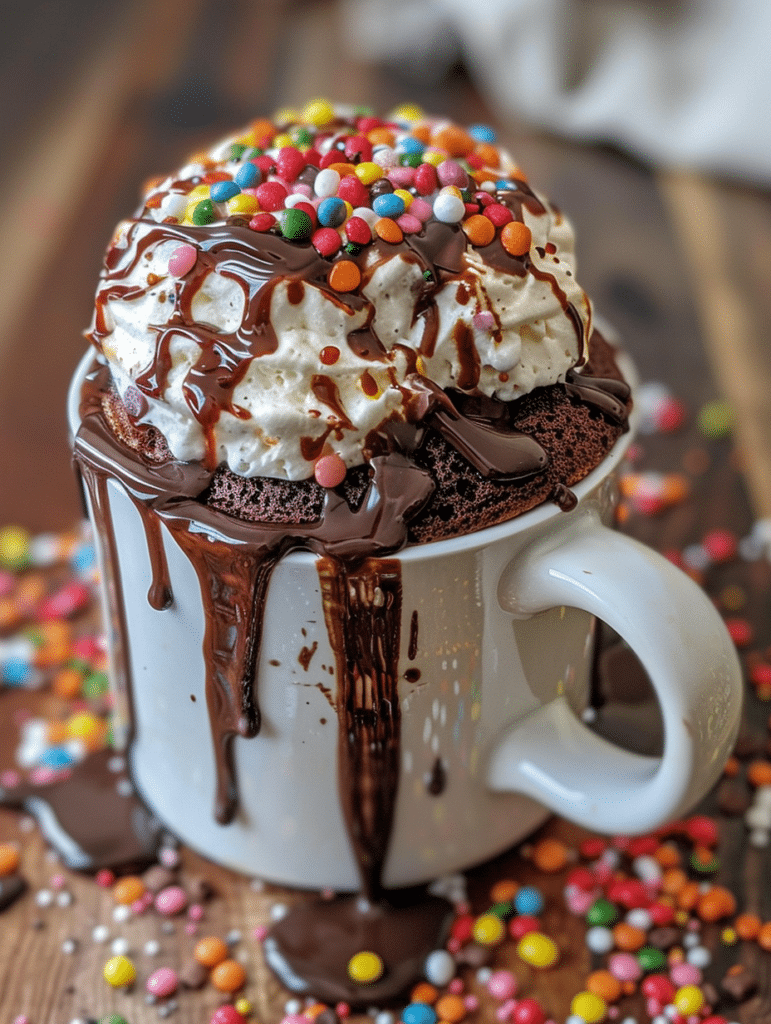
Mug cake is a single-serving dessert baked directly in a microwave-safe mug, combining flour, sugar, egg, oil, and liquid into a warm, moist cake in under five minutes. This quick microwave cake requires no mixing bowl, no standing mixer, and no complicated techniques. I’ve spent years perfecting dessert recipes in my Portland kitchen, and mug cakes represent one of the most practical solutions for sudden sweet cravings without the waste or effort of full-sized baking. Whether you’re managing dietary restrictions, living in a small space, or simply craving something warm and satisfying right now, mug cakes deliver real flavor and genuine texture that rivals traditionally baked versions.
About My Baking Journey
I’m Lila Bennett, a 34-year-old home baker based in Portland, Oregon, and my kitchen is almost always filled with the smell of something sweet. I fell in love with baking as a kid, sneaking tastes of cookie dough and watching simple ingredients turn into something comforting and delicious. What started with slightly overbaked cookies turned into years of experimenting with cakes, pancakes, and all kinds of desserts—learning through trial, error, and a lot of taste-testing.
During my twenties, I worked as a pastry assistant in a small café, where I learned precision, timing, and the science behind why baked goods succeed or fail. But life changed when I moved into a tiny apartment downtown without a full kitchen. That’s when I discovered mug cakes out of pure necessity. I was amazed at how quickly I could satisfy a dessert craving without heating up the entire house or making enough cake for ten people. Since then, I’ve tested hundreds of mug cake variations, perfecting the ratio of wet to dry ingredients, experimenting with flavor combinations, and developing methods that guarantee fluffy, moist results every single time.
Today, I share these tested recipes and techniques with home bakers who want professional results without the complexity. Mug cakes taught me that sometimes the best desserts are the simplest ones, and that constraint breeds creativity. Every recipe I share carries the weight of real kitchen experience and genuine troubleshooting.
Recipe Overview
| Metric | Value |
|---|---|
| Prep Time | 5 minutes |
| Cook Time | 2-3 minutes |
| Total Time | 7-8 minutes |
| Servings | 1 |
| Difficulty | Beginner |
| Cuisine | American |
Why This Recipe Works
Mug cakes work because they rely on precise ingredient ratios that cook quickly in microwave heat while maintaining moisture through steam containment. I’ve found that the 1:1 ratio of wet to dry ingredients creates a batter that’s neither too thick nor too thin, baking evenly from edge to center in just minutes. The mug itself acts as both mixing vessel and baking vessel, which means less cleanup and faster service from start to finish.
The key to avoiding dense, rubbery results lies in not overmixing the batter and using room-temperature eggs, which incorporate air more effectively than cold eggs. I learned this through dozens of failed attempts early on, when I was treating mug cakes like traditional cake recipes. Microwave cooking generates intense, concentrated heat, so timing is everything. A 10-second overcook transforms your perfect cake into rubber, but a 5-second undercook leaves the center gummy.
I’ve tested microwave powers from 800 watts to 1200 watts, and the variations are significant enough that knowing your microwave is crucial. Throughout this article, I’ll share the adjustments I’ve made to ensure success across different kitchen equipment. The beauty of mug cakes is their adaptability—they forgive minor ingredient swaps and welcome creative flavor combinations while maintaining structural integrity.
Ingredients
| Ingredient | Quantity | Notes |
|---|---|---|
| All-Purpose Flour | 1/4 cup (30g) | Spoon and level for accuracy; whole wheat flour adds nuttiness but requires +1 tablespoon liquid |
| Granulated Sugar | 1/4 cup (50g) | Coconut sugar or brown sugar works; reduces sweetness slightly due to moisture content |
| Cocoa Powder (Optional) | 1 tablespoon (6g) | Use unsweetened; Dutch-process cocoa deepens flavor; omit for vanilla mug cake |
| Baking Powder | 1/8 teaspoon | Essential for lift; baking soda requires acidic ingredient; never substitute |
| Salt | Pinch (1/16 teaspoon) | Enhances sweetness perception; use fine sea salt or table salt |
| Large Egg | 1 whole | Room temperature binds dry ingredients; cold eggs don’t incorporate air properly |
| Vegetable Oil | 2 tablespoons (30ml) | Canola or coconut oil works; creates moisture; butter works but requires +1 tablespoon flour |
| Milk | 3 tablespoons (45ml) | Any dairy or non-dairy milk works; almond milk or oat milk produces lighter crumb |
| Vanilla Extract | 1/4 teaspoon | Pure vanilla amplifies flavor; omit for chocolate-forward versions |
| Water (If Needed) | 1-2 tablespoons | Add only if batter seems too thick; adjust for altitude or flour absorption variations |
Step-by-Step Instructions
Phase 1: Dry Ingredients
- Add 1/4 cup all-purpose flour to a microwave-safe mug (8-12 ounces capacity).
- Mix in 1/4 cup granulated sugar, stirring with a fork until combined.
- Add 1 tablespoon unsweetened cocoa powder if making chocolate mug cake, stirring to distribute evenly.
- Sprinkle 1/8 teaspoon baking powder and a tiny pinch of salt over the dry mixture.
- Combine all dry ingredients thoroughly, breaking up sugar lumps with the fork for 30 seconds.
Phase 2: Wet Ingredients and Mixing
- Crack one large egg into a small bowl, beating it gently with a fork for 20 seconds until yolk and white combine fully.
- Pour 2 tablespoons vegetable oil into the beaten egg, stirring to create an emulsion.
- Add 3 tablespoons milk and 1/4 teaspoon vanilla extract to the egg mixture, whisking until smooth.
- Pour the wet ingredients into the mug with dry ingredients slowly while stirring with a fork.
- Mix for 30-45 seconds using an up-and-down stirring motion, scraping the bottom and sides to incorporate all dry pockets.
- Stop when streaks of flour disappear but don’t overmix; slight lumps are acceptable and desirable.
Phase 3: Microwave Baking
- Place the mug on a microwave-safe plate to catch any overflow spillage during cooking.
- Microwave on high power for 90 seconds if your microwave is 1000 watts; reduce to 75 seconds for 1200-watt microwaves; increase to 2 minutes for 800-watt microwaves.
- Check cake doneness by inserting a toothpick into the center; it should emerge with moist crumbs but no wet batter.
- If the toothpick comes out with liquid batter, microwave for additional 15-20 second intervals until a crumb-coated toothpick emerges.
- Stop cooking immediately when doneness is achieved; residual heat continues cooking the cake for 10 seconds after removal.
Phase 4: Cooling and Serving
- Let the mug cake rest in the microwave for 1 minute with the door closed to set the crumb structure.
- Carefully remove the mug using an oven mitt; the ceramic will be extremely hot.
- Run a butter knife around the interior mug edges to loosen the cake if desired.
- Allow the mug cake to cool for 3-5 minutes before eating; this prevents mouth burns and improves flavor perception.
- Eat directly from the mug with a spoon, or invert onto a plate if preferred.
- Serve immediately with optional toppings like whipped cream, frosting, or ice cream.
Chef Tips for Perfect Results
- Know Your Microwave Wattage: Microwave power varies significantly between brands and models. Test your first mug cake at 90 seconds, then adjust future batches in 10-second increments. Mark your optimal cooking time on a sticky note attached to your microwave for consistency.
- Use Room-Temperature Ingredients: Cold eggs and milk don’t incorporate air into the batter properly, resulting in dense cakes. Remove ingredients from the refrigerator 30 minutes before baking, or place the egg in warm water for 5 minutes to warm it quickly.
- Measure Flour by Spoon and Level Method: Scooping flour directly from the bag compacts it, adding up to 30% more flour than needed. Spoon flour into your measuring cup, then level with a knife for accurate measurements and lighter cakes.
- Don’t Overmix the Batter: Gluten develops when flour is overworked, creating tough, dense cake structure. Mix just until flour streaks disappear; small lumps are preferable to overmixing.
- Choose Mugs Carefully: Ceramic mugs heat more evenly than glass. Avoid decorative mugs with metallic paint or glazing that might affect microwave cooking. Standard 10-12 ounce mugs work best for proper rise and moisture retention.
- Add a Topping Before Cooking: Drop chocolate chips, sprinkles, or frosting onto the batter just before microwaving. The heat melts toppings into the cake, creating swirled flavor effects and professional presentation.
Common Mistakes to Avoid
Mistake 1: Overmixing the Batter
Overmixing develops gluten strands that make mug cakes tough and rubbery instead of tender and moist. The friction of vigorous stirring activates gluten proteins, which is exactly what you want to avoid in quick-bake cakes. Fix this by mixing for exactly 30 seconds maximum, using gentle up-and-down folding motions rather than aggressive circular stirring. Accept that small flour lumps will cook out during microwaving.
Mistake 2: Using Cold Eggs Straight from the Refrigerator
Cold eggs don’t incorporate air effectively, and they don’t emulsify with oil properly, creating dense, oily cakes with grainy texture. Warm eggs whip to slightly higher volume, trapping tiny air bubbles that expand during microwave cooking for fluffier results. Remove your egg from the refrigerator 30 minutes before baking, or place it in a cup of warm water for 5 minutes to bring it to room temperature quickly.
Mistake 3: Overcooking by Even 10 Seconds
Microwave cooking concentrates heat intensely, so overcooking by just 10 seconds transforms perfect moist cake into dry, rubbery texture. Once the residual heat continues cooking after removal, your cake bakes an additional 10-15 seconds. Cook until a toothpick emerges with moist crumbs but no wet batter, then stop immediately. If uncertain, undercook slightly; the residual heat will finish cooking.
Mistake 4: Packing Flour into the Measuring Cup
Directly scooping flour from the bag compacts it significantly, adding 30-40% more flour than intended and creating dry, dense cakes. This single mistake causes more mug cake failures than any other factor. Always spoon flour into your measuring cup and level with a knife. If a recipe calls for sifted flour, sift it before measuring for even more accuracy.
Mistake 5: Not Adjusting for Microwave Wattage Differences
Microwave wattage varies from 600 watts to 1200+ watts, creating massive cooking time differences. A recipe developed on a 1200-watt microwave will overcook on an 800-watt model by 30 seconds, destroying your cake. Check your microwave’s wattage on the specifications plate inside the door, then adjust cooking times accordingly. Start conservative with cooking time; you can always add 10 more seconds.

Variations and Substitutions
| Ingredient | Substitution | Impact on Flavor and Texture |
|---|---|---|
| All-Purpose Flour | Whole Wheat Flour (same amount) | Adds nutty, earthy flavor; creates slightly denser crumb; increase milk by 1 tablespoon |
| All-Purpose Flour | Almond Flour (use 3 tablespoons + 1 tablespoon cornstarch) | Creates moist, tender crumb; adds almond flavor; more delicate structure |
| Granulated Sugar | Honey (use 3 tablespoons) | Adds moisture and subtle floral notes; reduces browning slightly; slight texture softening |
| Granulated Sugar | Maple Syrup (use 3 tablespoons) | Creates deeper flavor profile; adds moisture; increases cooking time by 10 seconds |
| Vegetable Oil | Melted Butter (same amount) | Adds rich flavor; creates slightly denser crumb; add 1 tablespoon flour to balance |
| Vegetable Oil | Applesauce (same amount) | Reduces fat; adds moisture and subtle apple notes; creates more delicate crumb |
| Milk | Coconut Milk (same amount) | Adds tropical sweetness; creates richer texture; pairs perfectly with chocolate |
| Milk | Almond Milk (same amount) | Creates lighter crumb; pairs well with vanilla or fruit variations; less moisture |
| Vanilla Extract | Almond Extract (use 1/8 teaspoon) | Creates almond-forward flavor; more potent; use half the amount |
| Cocoa Powder | Instant Coffee Powder (1 teaspoon) | Creates rich coffee cake; intensifies chocolate notes; no cocoa-specific flavor |
Flavor Variations
Red Velvet Mug Cake: Add 1/4 teaspoon red food coloring and 1/4 teaspoon apple cider vinegar to the wet ingredients. Reduce cocoa powder to 1/2 teaspoon. Top with cream cheese frosting after cooling for 3 minutes.
Strawberry Mug Cake: Omit cocoa powder entirely. Add 1/2 cup fresh diced strawberries to the batter. Increase sugar to 1/3 cup and add 1 tablespoon of strawberry jam to the center before microwaving.
Lemon Blueberry Mug Cake: Replace vanilla with 1/2 teaspoon lemon extract. Add 1/4 teaspoon lemon zest and 1/4 cup fresh blueberries. Reduce milk by 1 tablespoon. Top with lemon glaze made from 2 tablespoons powdered sugar and 1 teaspoon lemon juice.
Peanut Butter Mug Cake: Replace 1 tablespoon flour with 1 tablespoon natural peanut butter stirred into wet ingredients. Add 1/4 teaspoon vanilla. Drizzle melted chocolate over the top after cooling.
Spiced Cinnamon Mug Cake: Add 1/4 teaspoon cinnamon, 1/8 teaspoon nutmeg, and 1/16 teaspoon ginger to dry ingredients. Decrease cocoa powder to 1/2 teaspoon. Sprinkle cinnamon sugar (1 teaspoon cinnamon mixed with 1 tablespoon sugar) on batter before microwaving.
Serving Suggestions and Pairings
Mug cakes serve perfectly for single-portion desserts after weeknight dinners, offering immediate gratification without the commitment of full-sized cakes. I often make chocolate mug cakes on busy Wednesdays, then top them with a small scoop of vanilla ice cream that melts into the warm cake for café-quality desserts in under 10 minutes total.
Pair classic chocolate mug cakes with strong coffee or espresso for morning indulgence, or serve them warm after dinner with fresh whipped cream and fresh berries for elegant simplicity. Vanilla mug cakes work beautifully with afternoon tea, coffee, or hot chocolate for cozy moments.
For special occasions, top mug cakes with homemade frosting: cream cheese frosting for red velvet variations, chocolate ganache for intensified chocolate cakes, or lemon glaze for bright, citrus-forward versions. Crushed cookies (oreos, graham crackers, digestives) stirred into frosting add texture and visual appeal.
Serve mug cakes directly in their baking vessels for rustic charm at casual gatherings, or invert onto small plates and garnish with edible flowers, fresh fruit, or candied lemon peels for dinner parties. Dust with powdered sugar for classic elegance.
Specific Pairings: Chocolate mug cake + vanilla ice cream + strong coffee; strawberry mug cake + fresh whipped cream + afternoon tea; lemon mug cake + Greek yogurt + honey drizzle; spiced cinnamon mug cake + hot milk with cinnamon stick; peanut butter mug cake + cold glass of milk.
Storage and Reheating
| Method | Duration | Instructions |
|---|---|---|
| Room Temperature (Covered) | 2-3 hours | Cover the mug with a small plate or paper towel to prevent drying. Stir with a spoon or invert onto a plate. Texture remains optimal during this window. |
| Refrigerator (Covered) | 3-4 days | Transfer cooled cake to an airtight container or keep in the mug covered tightly with plastic wrap. Cold cake is denser but still flavorful. |
| Freezer (Wrapped) | Up to 3 months | Wrap cooled cake tightly in plastic wrap, then place in a freezer bag. Thaw at room temperature for 2 hours or in the refrigerator overnight before serving. |
| Microwave Reheating | 30-60 seconds | Place refrigerated or frozen (thawed) cake back in a microwave-safe mug with 1 tablespoon water. Microwave at 50% power for 30 seconds for refrigerated, 45 seconds for room-temperature. Check after 20 seconds to prevent overcooking. |
| Oven Reheating | 8-10 minutes | Transfer cake to a small oven-safe dish, cover loosely with foil, and reheat at 325°F until warmed through. This method preserves texture better than microwaving but requires more time. |
| Toaster Oven | 5-7 minutes | Place cake on a small sheet of foil on the toaster oven tray. Heat at 350°F until warmed through. Monitor closely to prevent over-browning. |
Important Note on Storing Wet Ingredients: Never store a mug cake with frosting or wet toppings in a sealed container for more than 2 hours; condensation creates soggy texture. Apply frosting or toppings immediately before serving after storage.
Nutritional Information
| Nutrient | Amount per Serving |
|---|---|
| Calories | Approximately 380-420 |
| Protein | 5-6g |
| Total Fat | 16-18g |
| Saturated Fat | 2-3g |
| Carbohydrates | 52-56g |
| Dietary Fiber | 1-2g |
| Total Sugar | 38-42g |
| Sodium | 180-200mg |
Approximate values. Nutritional content varies based on specific ingredient brands, exact measurements, and any variations used. For precise nutritional tracking, input your exact ingredients into a nutrition calculator. Values reflect the basic recipe without additional toppings or frosting.
Frequently Asked Questions
Can I Make a Mug Cake Without an Egg?
Yes, you can substitute one egg with 1/4 cup unsweetened applesauce or 3 tablespoons of mashed banana plus 1/2 teaspoon baking powder. Applesauce creates lighter texture while banana adds sweetness and moisture. Reduce milk by 1 tablespoon when using applesauce since it contributes liquid. The resulting cake will be slightly more delicate but equally delicious.
How Do I Know When My Mug Cake Is Done?
Insert a toothpick into the center of the cake; it should emerge with moist crumbs coating the toothpick but no liquid batter. If raw batter clings to the toothpick, microwave for another 15-20 seconds and test again. Stop cooking as soon as the crumb test passes; residual heat continues cooking the cake for 10-15 seconds after removal.
Why Is My Mug Cake Dense and Rubbery?
Density typically results from overmixing the batter (which develops gluten), using cold eggs, or overcooking in the microwave. Dense texture also occurs when flour is packed into the measuring cup, adding excess flour to the batter. Start fresh with room-temperature ingredients, measure flour using the spoon-and-level method, mix for exactly 30 seconds, and cook conservatively—you can always add 10 more seconds if needed.
Can I Make Mug Cake Ahead and Reheat It Later?
Absolutely; mug cakes freeze beautifully for up to three months when wrapped tightly in plastic wrap. Thaw at room temperature for two hours or in the refrigerator overnight, then reheat in the microwave at 50% power for 30-45 seconds until warmed through. Reheating restores the cake’s original texture and warmth better than eating it cold.
What If My Microwave Is Very Powerful or Very Weak?
Adjust cooking time based on your microwave’s wattage: 800-900 watts requires approximately 2 minutes, 1000-1100 watts requires 90 seconds, and 1200+ watts requires 60-75 seconds. Check your microwave’s specifications on the plate inside the door. Test your first mug cake at the suggested time, then note adjustments for future batches. Most newer microwaves fall into the 1000-1100 watt range, making 90 seconds the standard starting point.
Can I Use a Metal Mug or Container for Mug Cakes?
No; metal containers create dangerous arcing and uneven heat distribution in microwave ovens. Use only microwave-safe ceramic or glass mugs. Avoid mugs with metallic paint, glazing, or decorative elements that might not be microwave-safe. Test any unmarked mug by microwaving an empty mug for 30 seconds; if it becomes extremely hot, it’s not microwave-safe for baking.
Final Thoughts
Mug cakes represent the perfect intersection of convenience and quality, delivering warm, moist, genuinely delicious desserts in under ten minutes with minimal cleanup. After years of testing and refining these recipes, I’m confident that anyone can master this technique with attention to ingredient temperatures, accurate measurements, and microwave timing specific to their equipment. Start with the classic chocolate variation, then experiment with flavor combinations once you’ve mastered your microwave’s unique characteristics. Your next sweet craving doesn’t require elaborate planning or hours of baking—just grab a mug, mix your ingredients, and satisfy your dessert desires immediately.

Mug Cake: Single-Serving Dessert in Minutes
Ingredients
- 3 tablespoons all-purpose flour
- 2 tablespoons granulated sugar
- 1 large egg, beaten
- 1 tablespoon vegetable oil
- 4 tablespoons milk or water
- 1/2 teaspoon baking powder
Instructions
- Add flour, sugar, and baking powder to a microwave-safe mug
- Mix in beaten egg and vegetable oil
- Gradually stir in milk (or water) until smooth
- Microwave on high for 2-3 minutes
- Check for doneness by inserting a toothpick in the center
Notes
Use plant-based milk for a vegan version
Replace oil with melted coconut oil or clarified butter for rich flavor
Check mug size (8 oz works well) and adjust power level if overdone
Add a sprinkle of vanilla extract (optional) for extra depth
