

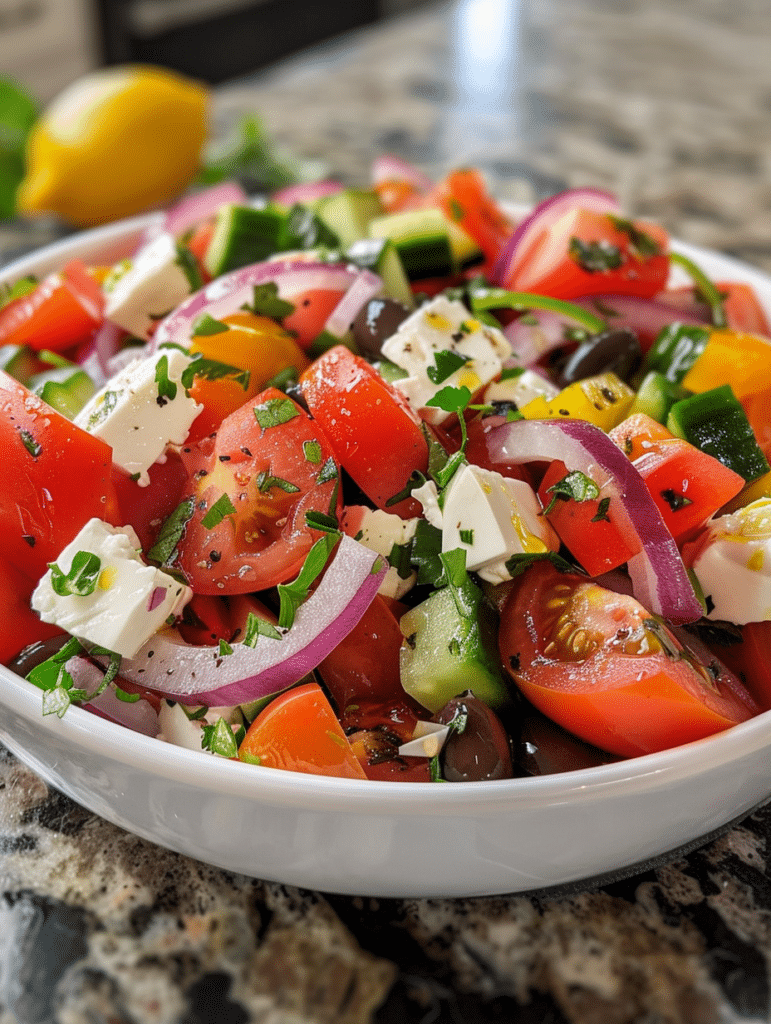
Mediterranean salad is a vibrant, nutrient-dense dish that combines crisp vegetables, briny olives, creamy feta cheese, and tangy lemon vinaigrette into one satisfying meal. This classic recipe originates from the sun-drenched regions surrounding the Mediterranean Sea, where fresh produce, quality olive oil, and simple preparation methods define everyday cooking. The Mediterranean salad delivers authentic flavors without requiring advanced cooking skills, making it perfect for busy weeknights and elegant dinner parties alike. I’ve perfected this recipe through countless kitchen experiments, and I’m excited to share my proven techniques with you today.
About Eva Stoner and Fresh Recipes Corner
I’m Eva Stoner, creator of Fresh Recipes Corner, where I share simple, reliable recipes for everyday cooking. My love for cooking began in my grandmother’s kitchen, where I learned that good food doesn’t have to be complicated—it just needs care, patience, and the right techniques. Those early moments shaped how I cook today and inspired me to keep things practical and approachable.
Growing up, my grandmother made a Mediterranean salad every summer using tomatoes from her garden and olives from the market. I watched her select each ingredient with intention, understanding that quality matters when you’re working with so few components. That philosophy guides every recipe I create and share. When you invest in fresh, high-quality ingredients and treat them with respect, the results speak for themselves.
Through Fresh Recipes Corner, I’ve helped thousands of home cooks build confidence in the kitchen by breaking down recipes into clear, manageable steps. This Mediterranean salad recipe reflects years of testing, refinement, and real feedback from readers like you. I’m committed to proving that restaurant-quality food is entirely achievable at home.
Recipe Overview
| Attribute | Details |
|---|---|
| Prep Time | 15 minutes |
| Cook Time | 0 minutes |
| Total Time | 15 minutes |
| Servings | 4 |
| Difficulty Level | Easy |
| Cuisine | Mediterranean |
Why This Recipe Works
I created this Mediterranean salad recipe because it delivers impressive flavor with minimal effort. The combination of textures—crisp vegetables, creamy feta, chewy olives—keeps every bite interesting. Fresh herbs and quality olive oil elevate simple ingredients into something restaurant-worthy, and the lemon juice adds brightness that ties everything together beautifully.
What I love most about this recipe is its flexibility. You can prepare components ahead of time and assemble the salad moments before serving. The dressing won’t make greens soggy if you toss everything right before eating. I’ve served this salad at potlucks, family dinners, and casual lunches, and it’s always received enthusiastically. People are surprised when they learn how quick and easy it is to make.
From a nutritional standpoint, this Mediterranean salad offers exceptional value. You get vitamins from fresh vegetables, healthy fats from olive oil and olives, protein from feta cheese, and antioxidants from herbs and colorful produce. It satisfies as a light lunch or serves as an excellent side dish for grilled proteins. The Mediterranean diet is scientifically proven to support heart health, and this salad embodies those principles perfectly.
Ingredients
| Ingredient | Quantity | Notes & Alternatives |
|---|---|---|
| Cherry tomatoes | 2 cups | Use ripe, in-season tomatoes. Regular tomatoes work but cherry tomatoes hold their shape better. Substitute with sun-dried tomatoes for deeper flavor. |
| Cucumber | 1 medium | English or Persian cucumbers are excellent choices. Peel partially for visual appeal. Skip seeds if they’re overly watery. |
| Red bell pepper | 1 large | Choose firm, glossy peppers. Yellow or orange peppers add sweetness. Green peppers provide more herbaceous notes. |
| Red onion | 1/2 medium | Slice thinly for better distribution. Soak in ice water for 10 minutes to reduce sharp bite if preferred. |
| Kalamata olives | 1 cup | Pit them unless you prefer leaving pits in. Green olives provide less intensity. Use high-quality imported olives. |
| Feta cheese | 1 cup crumbled | Crumble by hand or use pre-crumbled. Cow’s milk feta is milder than sheep’s milk. Substitute ricotta salata for firmer texture. |
| Mixed salad greens | 3 cups | Romaine, arugula, spinach, or mixed baby greens work well. Use fresher greens within 3 days of purchase. |
| Fresh parsley | 1/4 cup chopped | Use flat-leaf parsley for better flavor. Add just before serving to maintain freshness. |
| Fresh oregano | 2 tablespoons | Fresh oregano is essential—dried tastes too strong here. Mint or basil add different dimensions. |
| Extra-virgin olive oil | 1/4 cup | Quality matters significantly. Use premium cold-pressed olive oil. This is not the place to economize. |
| Lemon juice | 2 tablespoons | Fresh lemon juice only—never bottled. One medium lemon yields approximately 2-3 tablespoons juice. |
| Garlic clove | 1 clove | Minced finely for even distribution. Use freshly minced garlic, not jarred, for best flavor. |
| Salt and pepper | To taste | Use kosher salt for better control. Add freshly ground black pepper just before serving. |
Step-by-Step Instructions
Preparing the Vegetables
- Halve your cherry tomatoes using a sharp knife, cutting each one lengthwise to create two pieces. Place halved tomatoes in a large mixing bowl.
- Dice your cucumber into 1/2-inch cubes, removing seeds if they’re excessively watery. Add diced cucumber to the bowl with tomatoes.
- Chop your red bell pepper into small, uniform pieces approximately 1/2 inch in size. Combine chopped pepper with other vegetables.
- Slice your red onion thinly using a mandoline or sharp knife, cutting against the grain for better texture. Add thin slices to the vegetable mixture.
Building the Salad Base
- Add your pitted Kalamata olives to the vegetable mixture, stirring gently to combine all components evenly.
- Crumble your feta cheese into bite-sized pieces directly into the bowl. Aim for uniform pieces of approximately 1/2 inch.
- Divide your mixed salad greens among four serving bowls, creating a bed for other ingredients. Use approximately 3/4 cup greens per bowl.
- Spoon the vegetable and cheese mixture onto each bed of greens, distributing ingredients evenly across all four servings.
Making and Adding the Dressing
- Whisk together extra-virgin olive oil, fresh lemon juice, minced garlic, fresh oregano, salt, and pepper in a small bowl. Mix until emulsified, approximately one minute of whisking.
- Drizzle the prepared vinaigrette evenly over each salad, using approximately 2 tablespoons of dressing per serving.
- Garnish with fresh chopped parsley and additional fresh oregano leaves. Add freshly ground black pepper as a final touch.
- Serve immediately while greens are cold and crisp. Do not prepare dressing more than 15 minutes before serving.
Chef Tips for Perfect Results
- Invest in quality extra-virgin olive oil because it comprises a significant portion of this dish’s flavor profile. Cheaper oils taste flat and rancid by comparison. Store olive oil in a cool, dark place to prevent oxidation.
- Use fresh lemon juice exclusively—bottled juice contains preservatives that alter the dressing’s taste. One medium lemon yields approximately 2-3 tablespoons juice. Squeeze lemons just before making the dressing.
- Pat dry your salad greens thoroughly before combining with other ingredients. Excess moisture dilutes the dressing and creates a soggy salad. Use a salad spinner or paper towels for best results.
- Toss the dressing with vegetables and feta up to 30 minutes before serving, but add greens only moments before plating. This prevents wilting while keeping flavors well-developed.
- Chop vegetables into uniform sizes so they cook and absorb dressing evenly. Irregular pieces result in some components becoming oversaturated while others remain dry.
- Taste and adjust seasoning as you build the salad. Feta brings saltiness, so add salt conservatively. Taste one final time before serving and add fresh pepper generously.
Common Mistakes to Avoid
Mistake 1: Using Wilted or Old Greens Wilted greens create a sad salad that lacks appeal and nutritional value. WHY: Old greens lose crispness, nutrients, and develop bitter flavors. HOW TO FIX: Purchase greens within two days of serving. Store them in the crisper drawer with a paper towel to absorb excess moisture. Wash and dry thoroughly before using.
Mistake 2: Dressing the Salad Too Far in Advance Greens become limp and slimy when dressed more than five minutes early. WHY: The acidic vinaigrette breaks down cell walls in delicate leaves. HOW TO FIX: Prepare vegetable components and dressing separately. Combine and dress the entire salad immediately before serving. Keep a separate dressing container at the table so diners can add more if desired.
Mistake 3: Skipping Fresh Herbs Dried herbs deliver harsh, dusty flavors that don’t complement fresh vegetables. WHY: Drying concentrates flavors intensely and removes delicate aromatic compounds. HOW TO FIX: Always use fresh parsley and oregano. If fresh herbs are unavailable, reduce dried herb quantities to one-third the fresh amount. Add dried herbs to the dressing rather than sprinkling them on top.
Mistake 4: Using Low-Quality Olive Oil Inferior oils taste rancid or neutral, robbing the salad of depth and character. WHY: Budget olive oils are often oxidized or contain filler oils. HOW TO FIX: Spend money on one excellent bottle of extra-virgin olive oil. Store it properly in a cool, dark location. This investment elevates every Mediterranean dish you create.
Mistake 5: Overcrowding the Salad Bowl Too much of any ingredient creates an unbalanced, overwhelming dish. WHY: Proportions determine how flavors interact and how satisfying the salad feels. HOW TO FIX: Follow the recipe quantities precisely. If doubling the recipe, double all ingredients equally. Taste before adding more of any component.
Variations and Substitutions
| Ingredient | Substitution Option | Impact on Flavor |
|---|---|---|
| Kalamata olives | Green olives or Castelvetrano olives | Green olives taste sharper and more herbaceous. Castelvetrano olives are buttery and mild. Both work well; choose based on personal preference. |
| Feta cheese | Ricotta salata or halloumi cheese | Ricotta salata provides firmer texture and milder flavor. Halloumi adds saltiness and chewiness. Both are delicious alternatives. |
| Red bell pepper | Yellow, orange, or roasted bell pepper | Yellow and orange peppers taste sweeter. Roasted peppers add smoky depth. All three work beautifully. |
| Fresh oregano | Fresh mint or fresh basil | Mint brings cooling, refreshing notes. Basil adds Italian garden vibes. Both shift the flavor profile pleasantly. |
| Cherry tomatoes | Sun-dried tomatoes or regular tomatoes | Sun-dried tomatoes intensify umami and add chewy texture. Regular tomatoes work but are juicier and less concentrated. |
| Mixed salad greens | Romaine, arugula, or spinach | Romaine stays crisp longest. Arugula adds peppery bite. Spinach brings earthiness. Each changes the salad’s character. |
| Extra-virgin olive oil | Avocado oil or walnut oil | Avocado oil is neutral and lighter. Walnut oil adds nutty complexity. Neither provides Mediterranean authenticity, but both work. |
| Lemon juice | Lime juice or white wine vinegar | Lime juice brings brightness with subtle sweetness. White wine vinegar adds tanginess without citrus notes. Both alter the profile. |
Serving Suggestions and Pairings
Serve Mediterranean salad as a light lunch paired with warm pita bread and hummus for a complete meal. For dinner, present this salad alongside grilled chicken breast, lamb kebabs, or baked fish fillets. The cool, crisp vegetables and tangy dressing complement warm proteins beautifully.
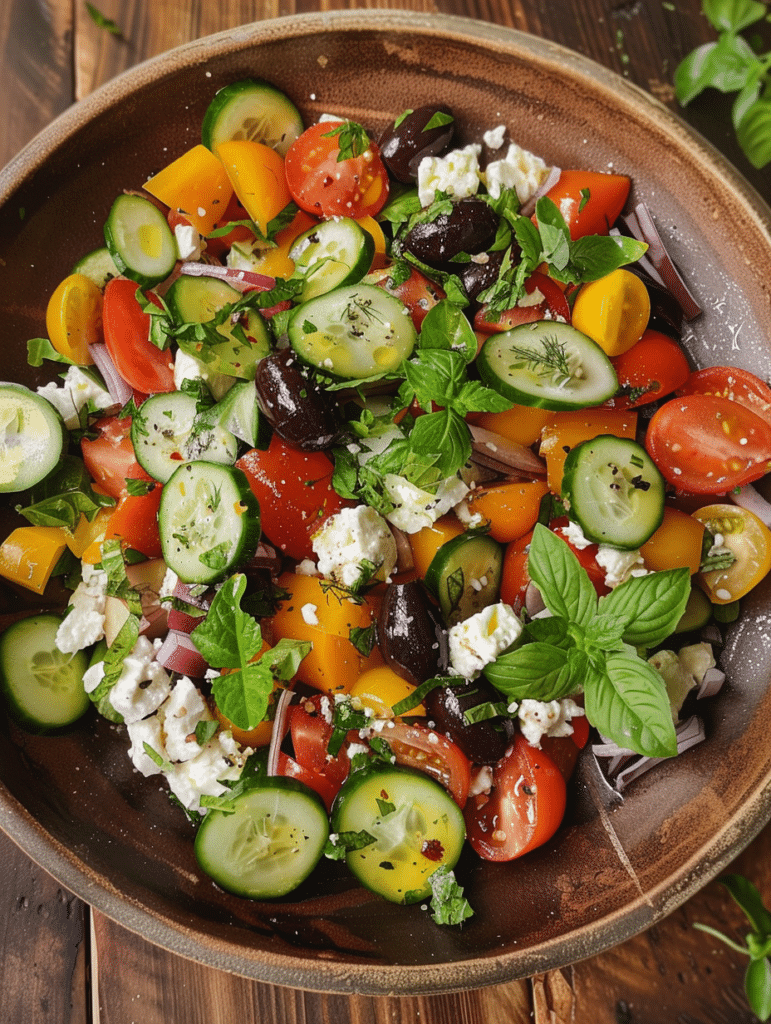
This Mediterranean salad works wonderfully at summer picnics served in large bowls with serving spoons. Guests can help themselves while the salad remains fresh and dressed. At formal dinner parties, plate individual portions on chilled plates moments before service. For casual family dinners, assemble the salad in a large wooden bowl at the center of the table.
Pair Mediterranean salad with grilled halibut for an elegant, light supper. Serve alongside herb-roasted potatoes for a heartier meal. This salad also complements Mediterranean vegetable dishes like ratatouille or [Greek stuffed tomatoes](# target=”_blank” rel=”noopener”). Offer garlic bread or focaccia on the side to capture every drop of the delicious dressing.
For a Mediterranean mezze spread, arrange this salad alongside hummus, tzatziki, olives, and fresh vegetables with pita chips. Create a complete plant-based meal by doubling the feta cheese and adding chickpeas or white beans. This salad becomes more substantial without compromising its refreshing character.
Storage and Reheating
| Method | Duration | Instructions |
|---|---|---|
| Refrigerator (Prepared) | 2-4 hours | Store the dressed salad in an airtight container on the coldest shelf. Do not store longer as greens will wilt. Eat within 4 hours of dressing for best quality. |
| Refrigerator (Undressed Components) | 3-4 days | Store vegetables and dressing separately in airtight containers. Assemble and dress immediately before serving. This method preserves quality and allows flexibility. |
| Freezer | Not Recommended | Do not freeze Mediterranean salad. Vegetables become mushy upon thawing, and the entire dish becomes unappetizing. Freeze only the dressing if absolutely necessary. |
| Make-Ahead Tip | Up to 12 hours | Prepare vegetable and feta mixture up to 12 hours ahead. Cover tightly and refrigerate. Wash and dry greens separately. Make dressing 2 hours before serving. Combine everything moments before plating. |
| Transport | 2-3 hours | Pack salad in a sealed container with dressing in a separate jar. Transport in a cooler with ice packs. Assemble or combine at your destination to maintain quality. |
Nutritional Information
| Nutrient | Amount per Serving |
|---|---|
| Calories | 245 |
| Total Fat | 18g |
| Saturated Fat | 5g |
| Trans Fat | 0g |
| Cholesterol | 22mg |
| Sodium | 520mg |
| Total Carbohydrates | 16g |
| Dietary Fiber | 4g |
| Total Sugars | 4g |
| Protein | 8g |
| Vitamin A | 45% Daily Value |
| Vitamin C | 85% Daily Value |
| Calcium | 22% Daily Value |
| Iron | 12% Daily Value |
Approximate values based on standard USDA databases. Actual nutrition varies based on specific brands and preparation methods.
Frequently Asked Questions
Can I make Mediterranean salad without feta cheese?
Yes, you can absolutely make Mediterranean salad without feta cheese while maintaining excellent results. Ricotta salata, halloumi, or even chickpeas provide protein and substance. The salad becomes lighter and more vegetable-focused, which some people prefer. The tangy dressing still provides the characteristic Mediterranean flavor you’re seeking.
How do I know when to serve Mediterranean salad at its peak?
Serve Mediterranean salad immediately after dressing and plating, within five minutes of combining. The greens should be cold and crisp, vegetables should be firm with intact texture, and the dressing should coat everything evenly. The moment you plate the salad is the moment of perfection for this dish.
What’s the best way to prevent soggy Mediterranean salad?
Pat your salad greens completely dry before combining with other ingredients, use a salad spinner for thorough moisture removal, and dress the salad only moments before serving. Keep undressed components refrigerated separately until assembly. These steps ensure maximum crispness and texture throughout your meal.
Can I prepare Mediterranean salad the night before?
Prepare vegetable components and dressing separately the night before, storing each in airtight containers in your refrigerator. Wash and dry greens just before serving. Combine everything only at mealtime. This approach keeps greens fresh while allowing you to get prep work done ahead.
Is Mediterranean salad suitable for meal prep?
Mediterranean salad is excellent for meal prep if you store components separately and assemble individual portions as needed. Prepare vegetables and dressing in bulk, then divide greens into containers. Combine fresh greens with prepared ingredients each day for maximum quality. Each serving stays fresh for three to four days when stored properly.
What dressing alternatives work with Mediterranean salad?
A red wine vinaigrette made with quality vinegar and olive oil works beautifully with Mediterranean salad. Greek yogurt-based dressing adds creaminess while maintaining Mediterranean character. Tahini-lemon dressing provides Middle Eastern flair. Experiment with different vinegars like balsamic or red wine to discover your preferred flavor profile.
Final Thoughts
Mediterranean salad represents everything I love about simple, quality cooking: fresh ingredients, straightforward technique, and extraordinary flavor. This recipe proves that restaurant-caliber food doesn’t require complicated methods or exotic ingredients. With just fifteen minutes and attention to ingredient quality, you create a salad that nourishes your body and delights your palate. Make this Mediterranean salad today and discover why it’s remained a kitchen staple for centuries.
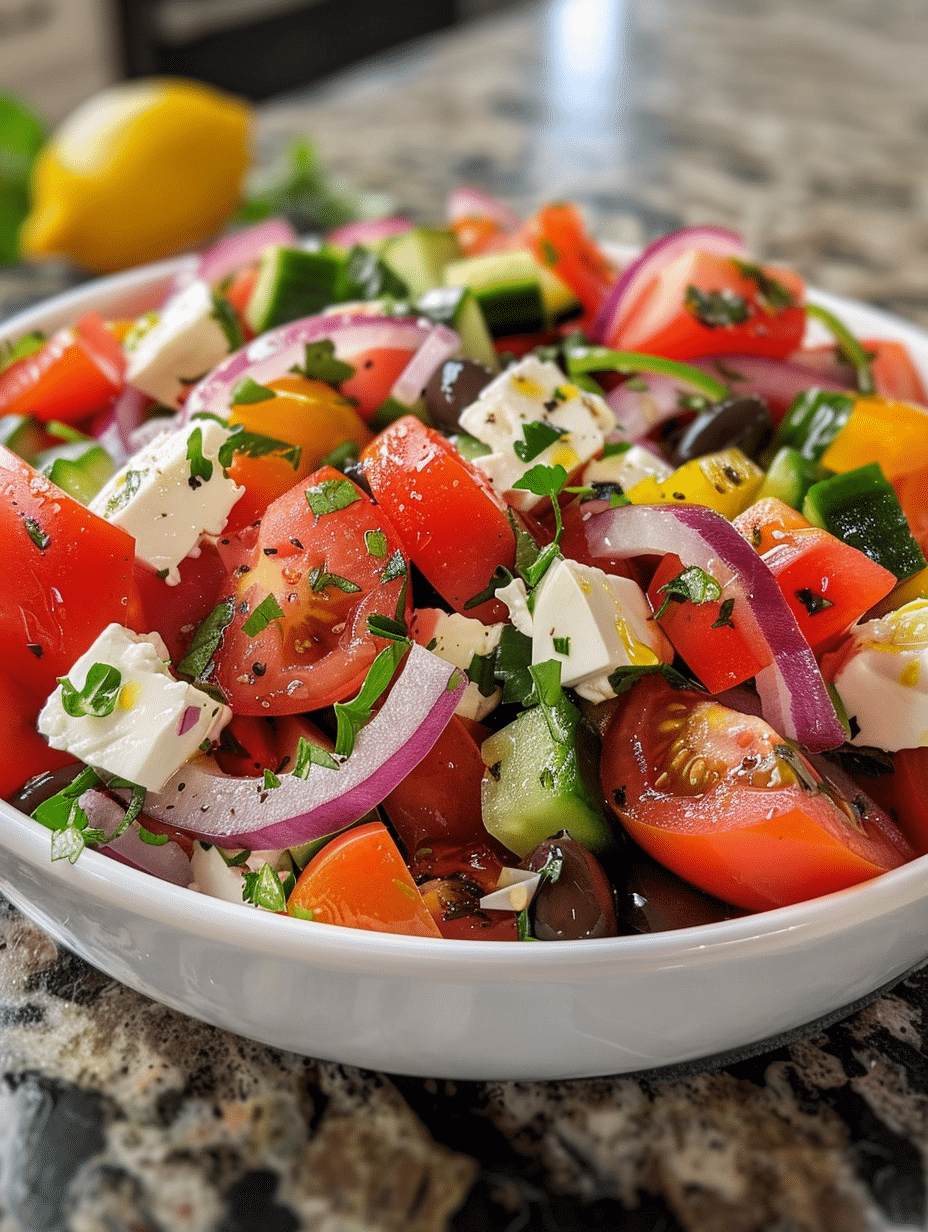
Mediterranean Salad Recipe: Fresh, Healthy & Easy
Ingredients
- 4 large tomatoes, diced
- 1 English cucumber, sliced
- 1/2 red onion, thinly sliced
- 1 green bell pepper, chopped
- 1 cup Kalamata olives
- 8 oz feta cheese, crumbled
- 1/4 cup olive oil
- 2 tbsp red wine vinegar (halal substitute)
- 1 lemon, juice and zest
- 1 tsp dried oregano
- 1 garlic clove, minced
- Salt and pepper to taste
- Optional: fresh basil or parsley
Instructions
- 1. Wash and dice tomatoes; slice cucumber lengthwise.
- 2. Separate red onion slices and bell pepper into 1/2-inch pieces.
- 3. In a bowl, mix olive oil, vinegar, lemon juice/zest, oregano, garlic, salt, and pepper.
- 4. Arrange tomatoes, cucumber, onion, bell pepper, and olives on a platter.
- 5. Sprinkle feta over the salad and drizzle the dressing just before serving.
- 6. Garnish with fresh herbs if using.