

Caramel cookies are soft, buttery cookies loaded with rich caramel flavor and chewy texture. These homemade treats combine simple pantry ingredients with premium caramel additions to create desserts that rival bakery versions. Whether you’re baking for a special occasion or satisfying a sweet craving, caramel cookies deliver consistent results with minimal effort.

Author and Brand Story
I’m Lila Bennett, a 34-year-old home baker based in Portland, Oregon, and my kitchen is almost always filled with the smell of something sweet. I fell in love with baking as a kid, sneaking tastes of cookie dough and watching simple ingredients turn into something comforting and delicious. What started with slightly overbaked cookies turned into years of experimenting with cakes, pancakes, and all kinds of desserts—learning through trial, error, and a lot of taste-testing.
My passion for caramel cookies began during my first year living independently when I wanted to recreate the buttery, caramel-loaded cookies from my favorite local bakery. After dozens of batches, countless failed experiments, and some delicious mistakes, I developed a recipe that captures everything I loved about those bakery treats. Now, I bake these cookies monthly for friends, family, and community events, and I’m excited to share this recipe with you.
Recipe Overview
| Attribute | Details |
|---|---|
| Prep Time | 15 minutes |
| Cook Time | 12 minutes per batch |
| Total Time | 27 minutes |
| Servings | 24 cookies |
| Difficulty Level | Easy |
| Cuisine | American |
Why This Recipe Works
This caramel cookies recipe works because it balances butter, sugar, and caramel in exact proportions that prevent spreading while maintaining chewiness. The combination of granulated and brown sugar creates depth of flavor while keeping the cookies tender. I’ve tested this formula dozens of times to ensure the cookies bake evenly and develop that signature golden edge.
What makes these caramel cookies special is the double caramel approach: caramel chips mixed into the dough plus a caramel sauce drizzle that adds moisture and complexity. The baking soda slightly raises the pH, allowing browning while the salt enhances the caramel flavor. This recipe uses minimal leavening to prevent cake-like texture, keeping cookies dense and satisfying.
When I first developed this recipe, I discovered that chilling the dough for just 15 minutes dramatically improved results. The butter stays firmer during baking, preventing excessive spread while allowing proper caramelization on the edges. This single step transformed my cookies from average to exceptional.
Ingredients
| Ingredient | Quantity | Notes and Alternatives |
|---|---|---|
| All-Purpose Flour | 2 cups | Spoon and level for accuracy. Cake flour creates softer cookies but reduces structure. |
| Unsalted Butter | 1 cup (226g) | Must be softened to room temperature. Salted butter requires reducing added salt to 1/4 teaspoon. |
| Granulated Sugar | 3/4 cup (150g) | Provides sweetness and structure. Coconut sugar adds deeper molasses notes. |
| Brown Sugar | 1/4 cup (55g) | Adds moisture and complexity. Dark brown sugar intensifies caramel flavor. |
| Large Egg | 1 whole | Room temperature eggs incorporate smoothly. Cold eggs require additional mixing. |
| Vanilla Extract | 1 teaspoon | Use pure vanilla for best flavor. Almond extract adds complementary nuttiness. |
| Salt | 1/2 teaspoon | Enhances caramel notes. Sea salt offers mineral complexity. |
| Baking Soda | 1/2 teaspoon | Creates spread and browning. Double the amount for chewier edges. |
| Caramel Chips | 1 cup | Found in baking aisle. Toffee chips or butterscotch chips substitute effectively. |
| Caramel Sauce | 1/4 cup | Use quality bottled sauce or homemade. Dulce de leche creates Latin-inspired variation. |
Step-by-Step Instructions
Preparation Phase
- Cream together 1 cup softened unsalted butter, 3/4 cup granulated sugar, and 1/4 cup brown sugar in a large mixing bowl using an electric mixer on medium speed for 2 to 3 minutes until light and fluffy.
- Beat in 1 large room-temperature egg and 1 teaspoon vanilla extract until fully incorporated and the mixture appears smooth and pale.
- Whisk together 2 cups all-purpose flour, 1/2 teaspoon salt, and 1/2 teaspoon baking soda in a separate medium bowl.
- Fold the dry ingredients into the wet ingredients using a spatula or wooden spoon, stirring until just combined and no flour streaks remain visible.
Assembly Phase
- Stir 1 cup caramel chips into the cookie dough, folding gently to distribute evenly throughout.
- Spoon 1/4 cup caramel sauce into the dough in small amounts, swirling it through without fully blending to create caramel ribbons within the cookies.
- Refrigerate the dough for 15 minutes to allow the butter to firm slightly and the flavors to develop.
Baking Phase
- Preheat your oven to 350 degrees Fahrenheit and line two large baking sheets with parchment paper.
- Scoop the dough using a 2-tablespoon cookie scoop, placing cookies 2 inches apart on prepared baking sheets.
- Bake for 11 to 13 minutes until the edges are golden brown but the centers still appear slightly underdone.
- Remove from the oven and allow cookies to cool on the baking sheet for 5 minutes before transferring to a wire cooling rack.
- Cool completely for at least 30 minutes before serving or storing to allow the centers to set properly.
Chef Tips for Perfect Results
- Use an instant-read thermometer to verify butter and egg are room temperature before mixing; this ensures proper emulsification and creates fluffier cookies with better caramel distribution.
- Measure flour by spooning it into a measuring cup and leveling with a knife rather than scooping directly from the bag; this prevents dense, tough cookies by ensuring proper flour-to-liquid ratios.
- Don’t overbake these caramel cookies; remove them when the edges turn golden but centers look slightly pale, as carryover heat continues cooking them on the cooling sheet.
- Place a sheet of aluminum foil over the baking sheet during the final 2 minutes if edges brown too quickly; this protects the caramel chips from burning while centers finish setting.
- For chewier cookies, add an extra 1/4 teaspoon baking soda and reduce baking time by 1 minute; this creates a softer, more tender crumb texture.
- Store a slice of bread in the cookie container to maintain moisture; replace the bread every 2 days to keep cookies chewy rather than becoming stale.
Common Mistakes to Avoid
Mistake 1: Using Cold Butter Cold butter doesn’t cream properly, resulting in dense dough that bakes unevenly. The caramel flavor becomes muted because ingredients don’t incorporate smoothly. Fix this by removing butter from the refrigerator 30 minutes before baking and cutting it into small cubes to speed softening.
Mistake 2: Overmixing After Adding Flour Overmixing develops gluten, creating tough, cake-like cookies instead of tender, chewy ones. The cookies become dense and heavy rather than displaying the desired soft texture. Stop mixing as soon as no flour streaks remain visible in the dough.
Mistake 3: Baking at Too High Temperature Baking caramel cookies at 375°F or higher causes the edges to burn before centers cook through, wasting the caramel additions. The cookies spread excessively and lose their thick, chewy character. Stick to 350°F exactly and use an oven thermometer to verify accuracy.
Mistake 4: Skipping the Dough Rest Period Skipping the 15-minute refrigeration causes cookies to spread too much during baking, making them thin and crispy instead of thick and chewy. The caramel flavor becomes diluted because ingredients haven’t fully developed their profiles. Always chill the dough before scooping onto baking sheets.
Mistake 5: Using Melted Caramel Sauce Overheating caramel sauce before mixing into dough causes it to seize and separate, creating greasy cookies with waxy texture. The caramel flavor becomes bitter and unpleasant. Use caramel sauce at room temperature and swirl it gently through the dough rather than fully blending.
Variations and Substitutions
| Ingredient | Substitution | Impact on Flavor and Texture |
|---|---|---|
| Caramel Chips | Toffee Bits | Creates more intense butterscotch notes with added crunch; reduces caramel smoothness slightly. |
| Caramel Chips | Butterscotch Chips | Adds vanilla-forward sweetness with less caramel depth; creates milder overall flavor profile. |
| Caramel Sauce | Dulce de Leche | Introduces Latin American sweetness with deeper molasses character; increases density slightly. |
| Caramel Sauce | Homemade Caramel | Offers customizable caramel flavor intensity; allows controlling salt levels and burn depth. |
| Brown Sugar | Dark Brown Sugar | Enhances molasses notes and caramel complexity; darkens cookie color slightly. |
| Vanilla Extract | Almond Extract | Adds complementary nuttiness; reduces caramel sweetness perception through subtle spice. |
| All-Purpose Flour | Bread Flour | Increases structure and chewiness; reduces tenderness and creates chewier final texture. |
| Butter | Coconut Oil | Creates lighter, crispier cookies with subtle coconut undertones; reduces caramel impact. |
| Granulated Sugar | Coconut Sugar | Adds deeper molasses complexity; creates denser cookies with lower glycemic response. |
| Egg | Applesauce (3 tablespoons) | Creates vegan-friendly version; reduces richness and creates slightly cakier texture. |
Serving Suggestions and Pairings
Serve warm caramel cookies with cold milk for a classic American pairing that balances sweetness with creamy freshness. The coolness of milk contrasts perfectly with warm caramel cookies and helps cut through richness. This combination works beautifully for afternoon snacks or casual gatherings.
Pair caramel cookies with specialty coffee drinks like lattes or cappuccinos at breakfast gatherings and brunches. The caramel notes in both the cookies and coffee create harmonious flavor synergy. This pairing elevates simple baked goods into cafe-quality offerings.
Include caramel cookies in gift boxes with homemade fudge, caramel popcorn, and other caramel-themed treats during holiday seasons. The cookies’ shelf stability makes them ideal for gift-giving year-round. Layer cookies with parchment paper in decorative boxes for presentation.
Serve caramel cookies alongside vanilla ice cream for a simple dessert that requires no additional preparation. The melting ice cream mixes with warm cookie caramel, creating an impromptu ice cream sandwich. This pairing transforms cookies into an elegant dessert suitable for dinner parties.
Pack caramel cookies in lunch boxes alongside fresh fruit and nuts for balanced afternoon snacks. The combination provides sustained energy through afternoon slumps. The individual cookies portion naturally for school and work lunch containers.
Storage and Reheating
| Method | Duration | Instructions |
|---|---|---|
| Room Temperature Container | 5-7 days | Place completely cooled cookies in an airtight container with a slice of bread to maintain moisture. Replace bread every 2 days for best results. |
| Refrigerator Storage | 2 weeks | Store cookies in an airtight container on a shelf away from strong odors. Cookies remain chewy and fresh longer when refrigerated. |
| Freezer Storage | 3 months | Layer cookies in freezer bags separated by parchment paper. Thaw at room temperature for 30 minutes before serving. |
| Oven Reheating | 5 minutes | Preheat oven to 300°F, place cookies on baking sheet, heat for 3-5 minutes until warmed through. This restores chewy texture better than microwave. |
| Microwave Reheating | 1-2 minutes | Wrap individual cookies in damp paper towels, microwave for 10-15 seconds per cookie. This method works quickly but may create less chewy results. |
| Dough Freezing | 1 month | Scoop dough into portions, freeze on baking sheet, transfer to freezer bags. Bake directly from frozen, adding 1-2 minutes to baking time. |
Nutritional Information
Approximate values per cookie (based on 24-cookie yield):
| Nutrient | Amount per Serving |
|---|---|
| Calories | 185 kcal |
| Total Fat | 9g |
| Saturated Fat | 5.5g |
| Cholesterol | 28mg |
| Sodium | 140mg |
| Total Carbohydrates | 24g |
| Dietary Fiber | 0g |
| Sugars | 18g |
| Protein | 2g |
| Calcium | 22mg |
| Iron | 0.8mg |

These values are approximate and may vary based on specific ingredient brands and actual portion sizes.
Frequently Asked Questions
Can I use salted butter in this caramel cookies recipe?
Yes, salted butter works in this recipe but requires reducing the added salt to 1/4 teaspoon to prevent overly salty cookies. Unsalted butter gives you better control over total salt content and allows the caramel flavor to shine. Many professional bakers prefer unsalted butter for this reason.
How do I know when caramel cookies are fully baked and done?
Remove cookies from the oven when the edges turn golden brown but the centers still appear slightly pale and underdone. The cookies continue cooking on the hot baking sheet during the 5-minute resting period, finishing with perfect chewy centers. A fully set center indicates overbaking and results in dense, cake-like cookies.
Why are my caramel cookies spreading too much during baking?
Excessive spreading occurs when the dough is too warm or the baking temperature is too high, or when baking soda exceeds the recipe amount. Chill the dough for the full 15 minutes before scooping and verify your oven temperature with a thermometer. Reduce baking soda to 1/4 teaspoon if spreading persists.
Can I make caramel cookie dough ahead of time for later baking?
Yes, prepare the dough up to 3 days ahead and refrigerate in an airtight container until ready to bake. You can also freeze scooped dough portions for up to 1 month and bake directly from frozen, adding 1-2 minutes to the baking time. This flexibility makes caramel cookies ideal for meal planning.
What’s the best way to keep caramel cookies fresh and chewy after baking?
Store completely cooled cookies in an airtight container with a slice of bread that absorbs excess moisture and keeps cookies soft. Replace the bread every 2 days to maintain optimal moisture levels. Refrigeration extends freshness to 2 weeks while maintaining chewy texture better than room temperature storage.
Can I substitute the caramel chips with homemade caramel pieces?
Homemade caramel pieces work well if wrapped in parchment paper and cut into small chip-sized portions before adding to dough. The pieces may soften during baking more than commercial caramel chips, creating richer caramel pools throughout the cookies. Allow homemade caramel to cool completely and harden before cutting and mixing into dough.
Conclusion
Caramel cookies deliver rich, buttery satisfaction with every bite through simple ingredients and proven techniques. This recipe produces consistently perfect results whether you’re baking for yourself, your family, or special occasions. Start baking today and experience the irresistible caramel flavor that makes these homemade cookies so special.
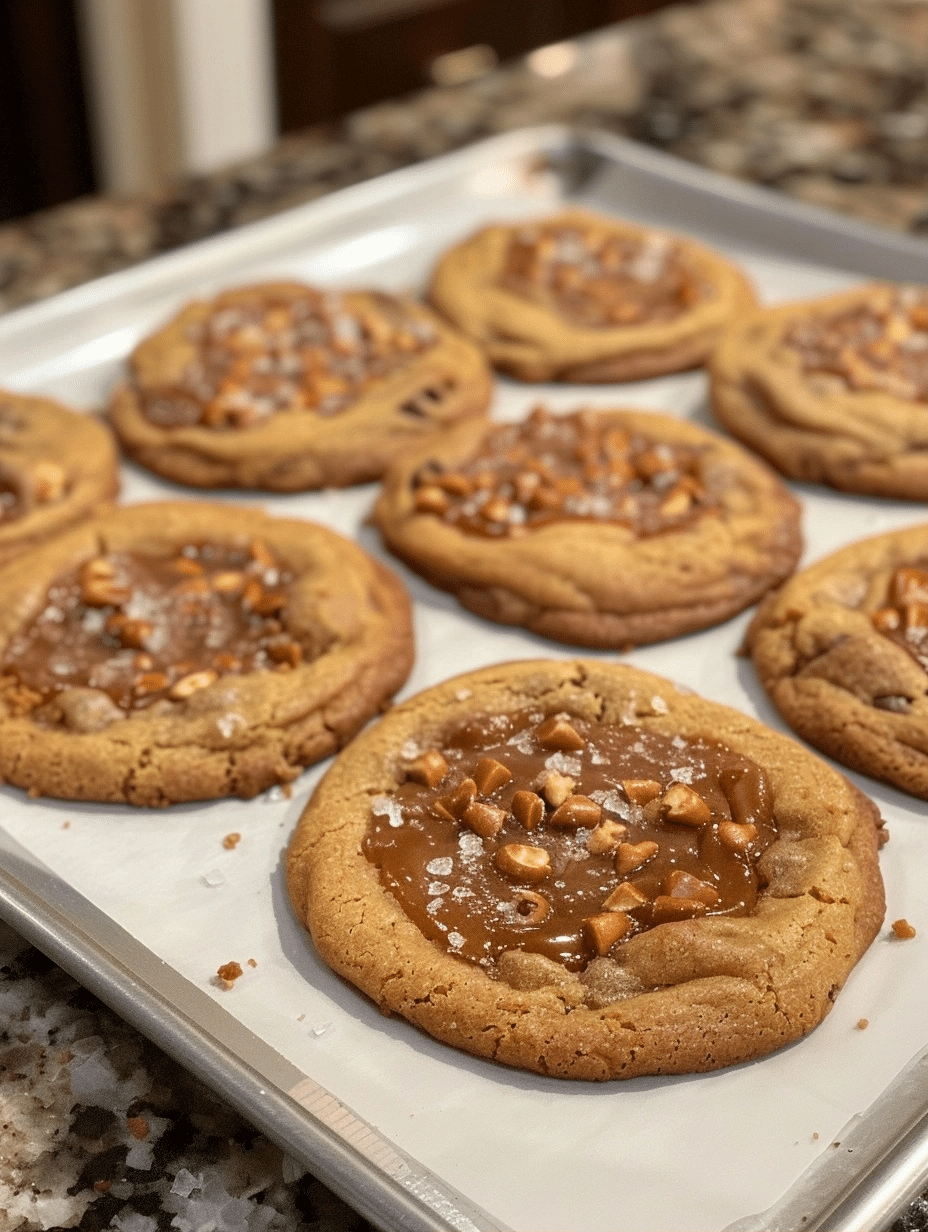
Caramel Cookies
Ingredients
- 2 1/4 cups all-purpose flour
- 1 tsp baking soda
- 1/2 tsp salt
- 3/4 cup unsalted butter, softened
- 1 cup brown sugar, packed
- 1/2 cup granulated sugar
- 2 large eggs
- 1 tsp pure vanilla extract
- 1 cup caramel chips
- Caramel sauce, for drizzling
Instructions
- Preheat oven to 350°F (175°C)
- Line baking sheets with parchment paper
- In a medium bowl, whisk together flour, baking soda, and salt
- In a large bowl, cream together butter, brown sugar, and granulated sugar until light and fluffy
- Beat in eggs, one at a time, then stir in vanilla extract
- Gradually add flour mixture to the butter mixture until just combined
- Fold in caramel chips
- Cover dough and chill in the refrigerator for 15 minutes
- Scoop dough into 1 1/2-inch balls and place on prepared baking sheets, spacing 2 inches apart
- Bake for 10-12 minutes, or until golden around the edges
- Cool cookies on the baking sheets for 5 minutes before transferring to wire racks to cool completely
- Drizzle with caramel sauce just before serving
Notes
For a richer flavor, use high-quality caramel chips and homemade caramel sauce.
Store cookies in an airtight container for up to 5 days.
Can be frozen unbaked for up to 2 months.
