

Snickerdoodle cookies are a timeless American classic featuring soft, buttery dough rolled in a signature cinnamon-sugar coating that bakes into crispy edges while maintaining a tender center. These beloved treats have graced cookie jars and family gatherings for generations, standing out among cookies for their warm spice flavor and simple elegance. The beauty of snickerdoodle cookies lies in their straightforward ingredient list and reliable baking process, making them accessible to both experienced bakers and beginners. Their distinctive appearance and satisfying texture make them instantly recognizable and universally loved across all ages.

Author and Baker Story
I’m Lila Bennett, a 34-year-old home baker based in Portland, Oregon, and my kitchen is almost always filled with the smell of something sweet. I fell in love with baking as a kid, sneaking tastes of cookie dough and watching simple ingredients turn into something comforting and delicious. What started with slightly overbaked cookies turned into years of experimenting with cakes, pancakes, and all kinds of desserts, learning through trial, error, and a lot of taste-testing.
Snickerdoodle cookies hold a special place in my baking journey because they were among the first recipes I perfected beyond my mother’s guidance. After countless batches, I discovered the precise balance between crispy and chewy, the ideal oven temperature, and the subtle art of the cinnamon-sugar coating. This recipe represents my accumulated knowledge from over fifteen years of home baking, refined through seasons of experimentation and countless gatherings where these cookies disappeared within minutes. My expertise in creating consistently perfect snickerdoodles comes from understanding the chemistry of butter, sugar, and spices, which I’m excited to share with you.
Recipe Overview
| Metric | Value |
|---|---|
| Prep Time | 15 minutes |
| Cook Time | 10 minutes |
| Total Time | 25 minutes |
| Servings | 24 cookies |
| Difficulty Level | Easy to Intermediate |
| Cuisine | American Classic |
Why This Recipe Works
This snickerdoodle cookie recipe succeeds because it balances moisture retention with crispy edges through precise butter-to-sugar ratios and strategic baking temperatures. I’ve found that using room-temperature butter creates a lighter, fluffier dough that bakes more evenly, while the single egg provides enough structure without making the cookies dense or cake-like. The coating of cinnamon and sugar doesn’t just add flavor; it creates a textural contrast that keeps these cookies interesting from the first bite to the last.
Over years of perfecting this recipe, I discovered that the key to consistent results is understanding your specific oven’s behavior and recognizing the visual cues of proper baking. The cookies should look slightly underbaked when you remove them from the oven because residual heat continues cooking them as they cool on the baking sheet. This technique, which I’ve refined through dozens of batches, ensures you get that desirable combination of crispy, crinkled edges with a soft, almost gooey center that makes snickerdoodle cookies so craveable.
The vanilla extract enhances the warmth of the cinnamon coating without competing for attention, creating a harmonious flavor profile that works equally well with morning coffee or afternoon tea. This recipe’s reliability comes from its simplicity and forgiving nature; minor variations rarely result in complete failure, though precision does improve the final product. I recommend this recipe to anyone seeking foolproof snickerdoodle cookies that impress family and friends with their restaurant-quality appearance and taste.
Ingredients
| Ingredient | Quantity | Notes and Alternatives |
|---|---|---|
| All-purpose flour | 2 1/4 cups | Measured by scooping and leveling. Use unbleached flour for a slightly nuttier flavor if preferred. |
| Baking soda | 1 teaspoon | Essential for lift and browning. Check expiration date for effectiveness. |
| Fine sea salt | 1/2 teaspoon | Enhances sweetness and spice. Table salt works but reduces quantity by 1/4 tsp due to finer granules. |
| Unsalted butter | 1 cup (2 sticks) | Must be softened to room temperature. Salted butter will require reducing added salt to 1/4 tsp. |
| Granulated sugar | 1 1/2 cups | Use standard white granulated sugar. Avoid powdered sugar as it changes texture significantly. |
| Large egg | 1 whole | Room temperature eggs blend more smoothly. Cold eggs can break the dough emulsion. |
| Vanilla extract | 1 teaspoon | Pure vanilla extract recommended. Vanilla powder can substitute but use 1/3 tsp only. |
| Granulated sugar (for coating) | 3 tablespoons | Combined with cinnamon in separate bowl before dough rolling. |
| Ground cinnamon (for coating) | 2 tablespoons | Use fresh cinnamon for maximum flavor and aroma. Ceylon cinnamon offers milder spice than cassia. |
Step-by-Step Instructions
Preparation Phase
- Preheat your oven to 375 degrees Fahrenheit, positioning the racks in the upper and middle positions for even heat distribution.
- Combine the all-purpose flour, baking soda, and fine sea salt in a small bowl, whisking together until completely uniform.
- Mix the three tablespoons of granulated sugar with two tablespoons of ground cinnamon in a separate shallow bowl, stirring until the cinnamon distributes evenly throughout.
Dough Creation Phase
- Place one cup of softened unsalted butter into a large mixing bowl, beating it with an electric mixer on medium speed for approximately two minutes.
- Gradually add one and one-half cups of granulated sugar to the butter, continuing to beat on medium speed until the mixture becomes light, fluffy, and pale yellow, approximately three to four minutes total.
- Add one large room-temperature egg to the creamed butter mixture, beating on medium speed until fully incorporated, which takes about one minute.
- Pour in one teaspoon of vanilla extract, mixing on medium speed until the vanilla distributes evenly throughout the wet ingredients.
- Add the flour mixture to the wet ingredients in two additions, mixing on low speed after each addition until just combined, being careful not to overmix.
Shaping and Baking Phase
- Roll approximately one tablespoon of dough into a smooth ball between your palms, maintaining consistent sizing for even baking.
- Roll each dough ball generously in the cinnamon-sugar mixture, ensuring complete coating on all sides.
- Arrange the coated dough balls on parchment-lined baking sheets, spacing them approximately two inches apart to allow for spread during baking.
- Bake the cookies on the preheated oven for eight to ten minutes, until the edges appear golden brown and slightly firm but the centers still look slightly underbaked.
- Remove the baking sheets from the oven, allowing the cookies to cool on the hot pan for two to three minutes to set slightly.
- Transfer the cookies to a wire cooling rack using a thin spatula, allowing them to cool completely before serving or storing.
Chef Tips for Perfect Results
- Room Temperature Ingredients Matter: Ensure your butter and egg are at room temperature before mixing, as this creates a smoother emulsion that incorporates air more effectively, resulting in lighter, fluffier cookies with better crumb structure throughout baking.
- Don’t Overmix the Dough: Mix the flour until just combined; overmixing develops gluten, making cookies tough and dense rather than tender and crumbly with the desired bite-through texture.
- Use Parchment Paper: Line your baking sheets with parchment paper rather than greasing them, which prevents over-browning on the bottoms and makes cleanup significantly easier without affecting cookie quality.
- Remove Cookies Slightly Underbaked: The cookies continue cooking on the hot baking sheet after removal from the oven; this residual heat creates perfectly crispy edges while maintaining a soft, chewy center that defines exceptional snickerdoodles.
- Invest in an Oven Thermometer: Most home ovens have temperature inconsistencies; an inexpensive oven thermometer ensures accurate baking temperature, which directly impacts final texture and appearance of your snickerdoodle cookies.
- Make a Cinnamon-Sugar Station: Place your cinnamon-sugar mixture in a shallow bowl and coat your dough balls immediately after rolling, while they’re still slightly warm from handling, ensuring the coating adheres perfectly.
Common Mistakes to Avoid
Mistake 1: Using Cold Butter and Eggs. Cold ingredients don’t blend smoothly, resulting in a grainy dough texture and uneven cookie appearance. Fix this by removing butter and eggs from the refrigerator thirty minutes before baking, ensuring they reach a consistent room temperature that mixes properly.
Mistake 2: Overbaking Cookies. Many bakers leave cookies in the oven until they look completely set, but this creates hard, brittle cookies rather than the desired soft centers. Fix this by removing cookies when the edges appear golden but the centers still have a slight jiggle, as residual heat completes the baking process.
Mistake 3: Not Rolling Balls to Consistent Size. Unevenly sized dough balls bake at different rates, resulting in some cookies burned while others remain underbaked. Fix this by using a cookie scoop to portion dough, ensuring every cookie is approximately the same size and bakes uniformly.
Mistake 4: Insufficiently Coating with Cinnamon-Sugar. Sparse coating means your snickerdoodles lose their signature appearance and distinctive flavor impact. Fix this by rolling dough balls generously in the cinnamon-sugar mixture, ensuring complete coverage on all surfaces before placing them on baking sheets.
Mistake 5: Skipping the Cooling Period on the Baking Sheet. Transferring cookies immediately to a cooling rack halts the cooking process before the structure fully sets, causing them to fall apart or become fragile. Fix this by leaving cookies on the hot baking sheet for two to three minutes, allowing them to firm up before moving them to wire racks.
Variations and Substitutions
| Original Ingredient | Substitution Option | Impact on Flavor and Texture |
|---|---|---|
| All-purpose flour | Cake flour (2 1/2 cups) | Creates softer, more delicate cookies with a finer crumb; slightly less structure and crispy edge definition. |
| Granulated sugar (in dough) | Coconut sugar (1 1/2 cups) | Adds subtle molasses notes and slightly deeper flavor; cookies may brown faster due to different caramelization. |
| Unsalted butter | Coconut oil (1 cup) | Creates crispier cookies with tropical undertones; slightly different spread pattern and texture. |
| Vanilla extract | Almond extract (1/2 teaspoon) | Adds complementary nutty flavor that pairs beautifully with cinnamon; reduce quantity as almond extract is more potent. |
| Ground cinnamon (coating) | Combination of cinnamon and nutmeg (1 tbsp cinnamon + 1 tbsp nutmeg) | Creates warming spice complexity; nutmeg adds depth and earthiness that enhances the classic profile. |
| Single large egg | Egg replacer or applesauce (1/4 cup unsweetened) | Creates slightly softer cookies with marginally less structure; bake for additional one to two minutes for optimal texture. |

Serving Suggestions and Pairings
Snickerdoodle cookies shine brightest when served fresh within two hours of baking, when the cinnamon-sugar coating remains crispy and the interior maintains its optimal softness. Pair them with a steaming mug of black coffee or fresh-brewed tea for a classic afternoon treat that complements the warm spice notes beautifully. These cookies work wonderfully for school bake sales, office potlucks, and holiday cookie exchanges, where their universal appeal ensures they disappear quickly from dessert tables.
Consider serving snickerdoodles alongside a tall glass of cold milk for an ideal after-school snack that appeals to both children and adults alike. For a more sophisticated presentation, arrange them on a wooden board with other cookie varieties, creating a DIY cookie tasting experience for guests. Snickerdoodle cookies also make excellent gifts when packaged in clear cellophane bags tied with ribbon, transforming homemade treats into thoughtful presents for neighbors, teachers, or holiday gatherings.
These cookies pair exceptionally well with fresh fruit, particularly sliced pears or apple slices, which echo the warm cinnamon flavoring in subtle ways. Serve them alongside whipped cream or vanilla ice cream for an elevated dessert that transforms simple cookies into restaurant-quality treats. At holiday celebrations, snickerdoodle cookies alongside gingerbread and frosted sugar cookies create a classic American cookie trio that represents timeless baking traditions.
Storage and Reheating
| Storage Method | Duration | Instructions |
|---|---|---|
| Room Temperature Container | Up to 7 days | Place cooled cookies in an airtight container with parchment between layers to prevent sticking and moisture loss that affects crispness. |
| Refrigerator | Up to 10 days | Store in an airtight container in the coldest section; the cooler temperature extends shelf life but may slightly firm the texture. |
| Freezer | Up to 3 months | Place cookies in a freezer-safe container with parchment between layers; thaw at room temperature for one hour before serving. |
| Oven Reheating | Restores crispness | Place cookies on a baking sheet and heat at 300 degrees Fahrenheit for five minutes to restore that freshly-baked crispness. |
| Microwave Reheating | Quick reheating | Microwave individual cookies for ten to fifteen seconds on medium power to warm through, though this method softens the cookies slightly. |
| Freezer Dough Storage | Up to 2 months | Freeze dough balls on a baking sheet, then transfer to a freezer bag; bake directly from frozen, adding two to three extra minutes to baking time. |
Nutritional Information
| Nutrient | Amount per Serving |
|---|---|
| Calories | 156 kcal |
| Protein | 1.8 grams |
| Total Fat | 7.2 grams |
| Saturated Fat | 4.5 grams |
| Unsaturated Fat | 2.7 grams |
| Total Carbohydrates | 21.4 grams |
| Dietary Fiber | 0.2 grams |
| Total Sugar | 14.1 grams |
| Sodium | 178 milligrams |
| Cholesterol | 22 milligrams |
Approximate nutritional values per cookie based on 24-cookie yield. Values calculated using standard USDA nutrition database. Individual cookies may vary slightly based on specific ingredient brands and precise portioning.
Frequently Asked Questions
Can I Use Salted Butter Instead of Unsalted Butter?
Yes, you can use salted butter, but reduce the added salt in the recipe from one-half teaspoon to one-quarter teaspoon to maintain proper seasoning balance. Salted butter contains varying amounts of salt depending on the brand, so adjusting the recipe salt prevents cookies from tasting overly salty. Most professional bakers prefer unsalted butter for control over final salt content, but salted butter works perfectly well with this adjustment.
How Do I Know When My Snickerdoodle Cookies Are Done Baking?
Your snickerdoodle cookies are perfectly baked when the edges appear golden brown and slightly firm while the centers still retain a slight jiggle or appear slightly underbaked. The cookies will look too soft when you remove them from the oven, but residual heat continues cooking them on the hot baking sheet for two to three minutes. A visual indicator is when the cinnamon-sugar coating shows light brown edges and the center appears light golden, not pale or completely set.
Why Are My Snickerdoodle Cookies Spreading Too Much?
Excessive spreading typically results from using softened butter that’s too warm or a kitchen temperature that’s too hot, preventing the dough from maintaining its shape during baking. Fix this by refrigerating your dough for thirty minutes before baking, which firms the butter and allows for better shape retention. Additionally, verify your oven temperature with an oven thermometer, as temperatures that are too low cause cookies to spread excessively rather than baking firmly.
Can I Make Snickerdoodle Cookie Dough in Advance?
Absolutely, you can prepare snickerdoodle dough one to two days ahead by covering it tightly with plastic wrap and refrigerating until ready to bake. Roll the dough into balls immediately before baking for best results, as the cold dough becomes firmer and holds its shape better during the baking process. You can also freeze dough balls on a baking sheet, then transfer to a freezer bag for up to two months; bake directly from frozen, adding two to three extra minutes to the baking time.
What’s the Difference Between Crispy and Chewy Snickerdoodle Cookies?
Crispy snickerdoodles result from longer baking times, typically ten to twelve minutes, until the entire cookie firms throughout and develops dark golden edges. Chewy cookies achieve their texture from shorter baking times of eight to nine minutes, leaving the centers underbaked so residual heat creates soft, tender interiors. Experiment with both times to determine your preferred texture, keeping detailed notes on baking duration and oven temperature to replicate results consistently.
Are Snickerdoodle Cookies Suitable for Gifting?
Yes, snickerdoodle cookies make excellent gifts when packaged thoughtfully in clear cellophane bags tied with ribbon or placed in decorative boxes with tissue paper separators. These cookies stay fresh at room temperature for up to seven days when stored in an airtight container, making them ideal for gift-giving without requiring refrigeration or special handling instructions. Include a storage card with suggested serving methods to ensure recipients enjoy them at peak freshness and flavor quality.
Conclusion
Snickerdoodle cookies represent the perfect balance of simplicity and satisfaction, delivering restaurant-quality treats from your home kitchen with straightforward techniques and accessible ingredients. This recipe produces consistently excellent results through precise measurements, proper technique, and understanding the science behind butter, sugar, and cinnamon combinations. Whether you’re baking for family gatherings, holiday celebrations, or simple afternoon indulgence, these snickerdoodle cookies deliver the warm spice flavor and comforting texture that makes them timeless classics worth perfecting.
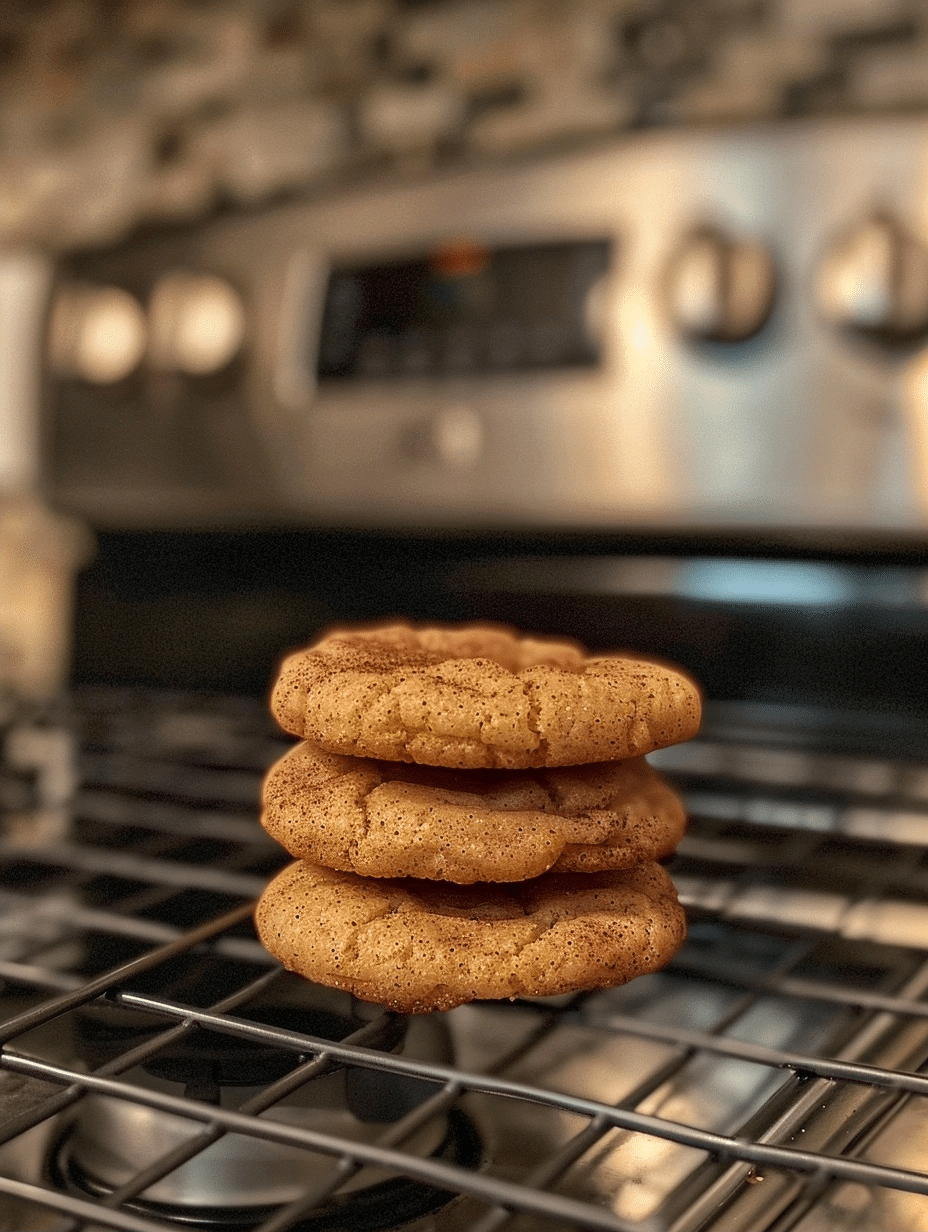
Snickerdoodle Cookies
Ingredients
- 2 cups all-purpose flour
- 1/2 tsp baking soda
- 1/2 tsp cream of tartar
- 1/4 tsp salt
- 1 cup unsalted butter, softened
- 3/4 cup granulated sugar
- 3/4 cup brown sugar
- 1 large egg
- 1 tsp alcohol-free vanilla extract
- Cinnamon-Sugar Coating: 1/2 cup granulated sugar + 2 tsp ground cinnamon
Instructions
- Preheat oven to 375°F (190°C)
- Whisk flour, baking soda, cream of tartar, and salt in a bowl
- In separate bowl, cream butter and sugars together until smooth
- Beat in egg and vanilla
- Gradually mix dry ingredients into wet mixture until dough forms
- Form dough into 1-inch balls
- Mix cinnamon-sugar coating in a small bowl
- Roll each dough ball in cinnamon sugar coating
- Place on parchment-lined baking sheets, spaced 2 inches apart
- Bake for 8-10 minutes until edges are golden
Notes
Use aluminum-free baking powder if sensitivity concerns exist
Store in airtight container for up to 5 days
For best texture, don’t chill dough before baking
