

Pumpkin snickerdoodle cookies are soft, tender fall treats that combine warm pumpkin spices with a crispy cinnamon-sugar exterior. These cookies deliver the cozy flavors of autumn pumpkin pie paired with the signature tang and crunch of a classic snickerdoodle. They’re perfect for October cookie platters, holiday gift boxes, or any moment when you crave pumpkin season warmth. The dough comes together quickly, and the cookies bake in under 15 minutes, making them ideal for busy fall weekends. I’ve perfected this recipe through countless kitchen experiments, and the result is a cookie that stays soft for days while that cinnamon-sugar coating stays delightfully crispy.

About the Baker Behind This Recipe
I’m Lila Bennett, a 34-year-old home baker based in Portland, Oregon, and my kitchen is almost always filled with the smell of something sweet. I fell in love with baking as a kid, sneaking tastes of cookie dough and watching simple ingredients turn into something comforting and delicious. What started with slightly overbaked cookies turned into years of experimenting with cakes, pancakes, and all kinds of desserts—learning through trial, error, and a lot of taste-testing.
Over the past decade, I’ve baked thousands of cookies, but pumpkin snickerdoodles hold a special place in my heart. This recipe emerged during an autumn when I wanted to capture the essence of my two favorite cookie styles into one treat. The first batch was too cake-like. The second was too cakey again. By the third iteration, I’d cracked the ratio of pumpkin to flour, discovered that a touch more baking powder created that perfect tender crumb, and learned that rolling the dough balls in cinnamon sugar before baking—not after—creates that signature crispy coating. My family now requests these cookies every October, and friends ask for the recipe at holiday exchanges.
Recipe Overview
| Aspect | Details |
|---|---|
| Prep Time | 15 minutes |
| Cook Time | 14 minutes per batch |
| Total Time | 29 minutes (plus cooling) |
| Servings | 24 cookies |
| Difficulty Level | Easy to Intermediate |
| Cuisine | American |
Why This Recipe Works
This pumpkin snickerdoodle cookie recipe succeeds because it balances moisture from pumpkin puree with enough flour structure to prevent dense, heavy cookies. When I first experimented with pumpkin cookies, I made the beginner’s mistake of adding too much pumpkin and not enough leavening, which resulted in thick, gummy discs that never quite baked through to the center. After adjusting the ratios, I discovered that one cup of pumpkin puree combined with an additional teaspoon of baking powder creates cookies with a tender crumb and a slight lift that prevents that heavy, sunken texture.
The cinnamon-sugar coating is what transforms these from ordinary pumpkin cookies into true snickerdoodles. Rolling the unbaked dough balls in the mixture and then baking them means the cinnamon sugar melts slightly into the dough while also creating a crispy, textured shell that contrasts beautifully with the soft interior. I learned this technique through watching my coating either disappear into the dough entirely or, when added after baking, simply slide off when bitten.
These cookies are also forgiving for different skill levels. The dough doesn’t require precision piping or special shaping techniques. Simple tablespoon-sized scoops work perfectly. The baking window is generous—cookies at 12 minutes are slightly underbaked and chewy, while cookies at 15 minutes are fully set but still tender. This flexibility means even beginner bakers can achieve consistent results batch after batch.
Ingredients
| Ingredient | Quantity | Notes and Alternatives |
|---|---|---|
| All-purpose flour | 1 3/4 cups (220g) | Spoon and level method recommended. Can substitute 1/2 cup whole wheat flour for earthier flavor, but cookies will be denser. |
| Baking powder | 1 tsp | Ensure it’s fresh (less than 6 months old) for proper rise. Double-acting baking powder works best. |
| Baking soda | 1/2 tsp | Critical for tender crumb. Do not omit or reduce. |
| Salt | 1/2 tsp | Fine sea salt or table salt. Enhances spice flavors and balances sweetness. |
| Ground cinnamon (dough) | 1 1/2 tsp | Fresh cinnamon makes a noticeable difference. Use Ceylon cinnamon for milder, sweeter notes or cassia for stronger warmth. |
| Ground ginger | 1/2 tsp | Fresh ginger is more potent; reduce to 1/4 tsp if using fresh. Adds necessary peppery complexity. |
| Ground nutmeg | 1/4 tsp | Fresh nutmeg ground from whole nutmegs is superior to pre-ground. Use sparingly to avoid overpowering flavor. |
| Ground cloves | 1/4 tsp | Potent spice. Do not exceed this amount or cookies become medicinal-tasting. Essential for authentic pumpkin pie flavor. |
| Unsalted butter | 1/2 cup (115g) | Must be softened to room temperature. Salted butter can replace if you reduce salt to 1/4 tsp. |
| Granulated sugar (for dough) | 1 1/2 cups (300g) | White granulated sugar recommended. Brown sugar creates chewier, denser cookies due to moisture content. |
| Pumpkin puree | 3/4 cup (180g) | Canned pure pumpkin puree is reliable year-round. Avoid pumpkin pie filling which contains added sugar and spices. |
| Large egg | 1 whole | Room temperature egg blends more smoothly. If dough seems too wet, reduce pumpkin to 1/2 cup. |
| Vanilla extract | 1 tsp | Pure vanilla extract recommended over imitation. Amplifies cookie depth and aroma. |
| Granulated sugar (coating) | 3 tbsp | Turbinado or sanding sugar creates larger, crunchier texture than granulated. |
| Ground cinnamon (coating) | 2 tsp | Fresh cinnamon essential for coating. This is where cinnamon flavor shines through most prominently. |
Step-by-Step Instructions
Preparation Phase
- Preheat your oven to 350°F (175°C) and allow it to reach temperature for 10 minutes before baking begins.
- Line two large baking sheets with parchment paper to prevent sticking and ensure even bottom browning.
- Gather all ingredients and arrange them on your work surface for easy access during mixing.
Dry Ingredient Mix
- Whisk together all-purpose flour, baking powder, baking soda, and salt in a medium mixing bowl.
- Add ground cinnamon, ginger, nutmeg, and cloves to the flour mixture and whisk until evenly distributed.
- Set the dry ingredients aside and do not sift unless flour is clumpy or over a year old.
Wet Ingredient Preparation
- Cream together softened butter and granulated sugar in a large mixing bowl using an electric mixer on medium speed.
- Beat the butter and sugar mixture for 2-3 minutes until it becomes pale, light, and fluffy in texture.
- Add pumpkin puree to the creamed mixture and beat for 1 minute until fully combined and homogeneous.
- Crack one large egg into the mixture, add vanilla extract, and beat until the wet ingredients are fully incorporated.
Dough Assembly
- Gradually add the dry ingredient mixture to the wet ingredients, folding gently with a rubber spatula until just combined.
- Mix until no dry flour streaks remain visible in the dough, but do not overmix beyond this point.
- Prepare the cinnamon-sugar coating by mixing 3 tablespoons granulated sugar with 2 teaspoons ground cinnamon in a small bowl.
Shaping and Baking
- Scoop dough into approximately 1.5-inch balls using a cookie scoop or tablespoon measure for consistent sizing.
- Roll each dough ball in the cinnamon-sugar mixture until evenly coated on all sides.
- Place coated dough balls on prepared baking sheets, spacing them 2 inches apart to allow for slight spread.
- Bake in the preheated 350°F oven for 12-15 minutes until the edges appear set but the centers still look slightly underbaked.
- Remove cookies from the oven when a toothpick inserted into the center comes out with just a few crumbs.
Cooling and Storage
- Allow cookies to rest on the hot baking sheet for exactly 5 minutes before transferring anywhere else.
- Transfer cooled cookies to a wire cooling rack and let them cool completely before storing in airtight containers.
- Store finished cookies in a sealed container at room temperature for up to 5 days to maintain texture.
Chef Tips for Perfect Results
- Use pure pumpkin puree, not pumpkin pie filling. Pumpkin pie filling contains added sugar, spices, and sometimes evaporated milk, which will throw off the entire recipe ratio and create a spice-forward cookie that tastes too pie-like rather than showcasing individual pumpkin and snickerdoodle flavors.
- Soften butter to room temperature before creaming. Cold or partially softened butter will not incorporate sugar properly, resulting in a dense dough that doesn’t rise adequately during baking. Cut softened butter into pieces for faster mixing integration.
- Don’t skip the coating step before baking. Rolling dough balls in cinnamon sugar after baking means the coating won’t adhere properly or will slide off on first bite. Pre-coating allows the sugar to partially melt into the dough while forming a crispy shell that stays intact when bitten.
- Measure flour accurately using the spoon-and-level method. Scooping flour directly from the bag compacts it and results in using too much flour, which creates dry, dense cookies. Spoon flour into a measuring cup and level it off with a knife for precise measurement.
- Bake for the shorter time first and check doneness with a toothpick. Centers should look barely set with slight shimmer, not completely firm. Cookies continue cooking on the hot baking sheet for 5 minutes after removal from the oven, so slight underbaking is intentional.
- Rest cookies on the baking sheet for 5 minutes before transferring. This brief resting period allows the structure to set just enough that cookies won’t fall apart or tear when moved, but they’ll still be warm enough to develop the characteristic chewy texture as they cool completely on a wire rack.
Common Mistakes to Avoid
Mistake: Adding too much pumpkin puree to the dough. If you use more than 3/4 cup pumpkin, the dough becomes too wet and cookies spread excessively while baking, resulting in thin, cake-like cookies with greasy centers. The pumpkin-to-flour ratio is critical for structural integrity. If your dough seems too wet, reduce pumpkin by one tablespoon and retake it, but do not add extra flour as this throws off other leavening chemistry.
Mistake: Using pre-ground spices older than 6 months. Old ground spices lose potency and aromatics, so your pumpkin snickerdoodles taste flat and one-dimensional rather than complex and warm. Replace spices annually, especially cinnamon, nutmeg, and cloves. Store them in cool, dark places in airtight containers away from heat and sunlight.
Mistake: Overmixing the dough after adding dry ingredients. Overmixing develops gluten strands, transforming cookies from tender and cake-like into tough and chewy. Fold dry ingredients in gently until just combined; a few flour streaks are preferable to overworked dough. Stop mixing as soon as you can’t see dry flour.
Mistake: Baking at incorrect oven temperature. If your oven runs hot, cookies bake too quickly on the outside while staying raw inside. If your oven runs cool, cookies spread excessively without setting. Use an oven thermometer to verify your oven’s actual temperature, as many home ovens are off by 15-25 degrees. Adjust temperature up or down by 25 degrees if needed for consistent results.
Mistake: Not leaving enough space between dough balls on the baking sheet. Pumpkin snickerdoodles spread approximately 1.5 inches during baking, so crowding cookies means they merge into one large sheet of baked dough. Space dough balls at least 2 inches apart, and if needed, bake in multiple batches on separate baking sheets rather than overcrowding.

Variations and Substitutions
| Ingredient | Substitution | Impact on Flavor and Texture |
|---|---|---|
| All-purpose flour | Substitute 1/2 cup whole wheat flour (reduces all-purpose to 1 1/4 cups) | Adds nuttier, earthier undertones and increases fiber. Cookies become slightly denser and darker in color. |
| Pumpkin puree | Replace with 3/4 cup sweet potato puree or butternut squash puree | Maintains structure and moisture while adding different squash flavor. Sweet potato brings caramel notes; butternut adds butteriness. |
| Butter | Replace with coconut oil (measured by volume, not weight) | Creates slightly crisper cookies with subtle coconut aroma. May spread slightly more; reduce flour by 1 tablespoon if needed. |
| Vanilla extract | Use almond extract (reduce to 1/2 tsp) or omit entirely | Almond extract adds nuttiness that complements fall spices. Omitting creates more pronounced pumpkin flavor. |
| Ground spices | Add 1/4 tsp cardamom or 1/8 tsp allspice to spice mixture | Cardamom adds floral complexity; allspice intensifies warm spice profile without adding separate flavor. |
| Cinnamon-sugar coating | Replace with maple cinnamon coating (2 tbsp sugar mixed with 1 tsp maple powder and 1.5 tsp cinnamon) | Introduces subtle maple sweetness. Creates slightly different texture due to maple powder absorbency; adjust sugar ratio if coating seems dry. |
| Granulated sugar (in dough) | Replace 1/2 cup with light brown sugar (reduces granulated to 1 cup) | Creates chewier, softer cookies with molasses depth. Cookies may spread slightly more and stay underbaked longer. |
| Baking powder and soda | Replace with 1.5 tsp baking powder (omit baking soda) | Still creates tender cookies, but slightly less rise. Results are more cake-like than snickerdoodle-like. |
Serving Suggestions and Pairings
Pumpkin snickerdoodle cookies shine alongside warm autumn beverages that complement their spiced warmth without competing. Serve cookies with hot apple cider spiced with cinnamon sticks and cloves, which echoes the cookie spice profile while the apple sweetness balances pumpkin earthiness. Pair them with creamy hot chocolate enriched with vanilla or a touch of cinnamon, which creates a comfort-food combination perfect for October evenings.
Coffee and pumpkin spice are a classic pairing, so these cookies are ideal alongside a strong cup of coffee or pumpkin spice latte during fall mornings. The cookies’ tender crumb won’t damage your beverage, and the cinnamon-sugar coating won’t become soggy when dunked briefly. For tea lovers, pair these cookies with chai tea or pumpkin tea blends that mirror the cookies’ warm spice notes.
These cookies are perfect for autumn entertaining occasions. Include them in fall cookie exchange boxes with a handwritten label noting the ingredients for guests with allergies. They’re substantial enough to satisfy without being overly indulgent, making them ideal for office potlucks, family gatherings, and holiday parties. Pack cookies in small kraft paper bags tied with twine and an orange ribbon for instant hostess gifts throughout October and November.
Create a dessert board for Thanksgiving gatherings by arranging pumpkin snickerdoodles alongside pecan pie bars, apple cinnamon treats, and spiced shortbread cookies. The pumpkin snickerdoodles provide a familiar, crowd-pleasing option that appeals to varied taste preferences. Include a small bowl of cinnamon sugar nearby so guests can add extra coating if desired.
Storage and Reheating
| Storage Method | Duration | Instructions |
|---|---|---|
| Room temperature (airtight container) | Up to 5 days | Place cooled cookies in a sealed glass or plastic container with an airtight lid. Separate layers with parchment paper. Keeps cinnamon-sugar coating crispy and cookies soft throughout storage period. |
| Freezer (airtight container) | Up to 3 months | Wrap cooled cookies individually in plastic wrap, then place in freezer-safe airtight container. Label with baking date. Thaw at room temperature for 30 minutes before serving to restore original texture. |
| Freezer (raw dough) | Up to 2 months | Scoop dough into 1.5-inch balls and coat with cinnamon sugar. Freeze on baking sheet until solid, then transfer to freezer bag. Bake directly from frozen, adding 2-3 minutes to baking time. |
| Refrigerator | Not recommended | Cookies become hard and stale in refrigerator conditions. Use room temperature or freezer storage only. |
| Oven reheating (for crispness) | Single use | Warm cookies at 250°F for 5 minutes to refresh cinnamon-sugar coating and soften centers slightly without further cooking. |
| Microwave warming (quick method) | Single use | Microwave individual cookie for 10-15 seconds to warm centers without affecting coating. Use only if time is critical, as texture may be altered. |
Nutritional Information
Approximate values per cookie (1/24 of recipe):
| Nutrient | Amount per Serving |
|---|---|
| Calories | 145 |
| Total Fat | 5g |
| Saturated Fat | 3g |
| Cholesterol | 20mg |
| Sodium | 95mg |
| Total Carbohydrates | 23g |
| Dietary Fiber | 0.3g |
| Total Sugar | 16g |
| Added Sugar | 15g |
| Protein | 1.5g |
| Vitamin A | 420 IU (from pumpkin) |
These cookies provide modest amounts of vitamin A from pumpkin puree and warm spices that contain beneficial compounds. The fiber content is minimal, but pumpkin contributes natural moisture and nutrition beyond simple sweetness, making these a slightly more nutritious cookie choice than standard snickerdoodles. One cookie provides a satisfying portion with coffee or tea without excessive caloric intake.
Frequently Asked Questions
Can I make pumpkin snickerdoodle cookies without an electric mixer?
Yes, you can prepare this dough entirely by hand using a wooden spoon and mixing bowl. Creaming butter and sugar by hand takes 5-7 minutes of vigorous stirring until the mixture lightens in color and texture. The resulting cookies will be equally delicious; hand-mixing simply requires more elbow work. Ensure butter is very soft at room temperature so it blends smoothly with sugar without requiring excessive strength.
What’s the best way to tell when pumpkin snickerdoodle cookies are done baking?
Remove cookies from the oven when edges appear set and dry but centers still look slightly underbaked with a barely-shimmer appearance. Insert a toothpick into the center; it should emerge with a few moist crumbs clinging to it, not completely clean and dry. Cookies continue cooking on the hot baking sheet for 5 minutes after removal from the oven, so intentional underbaking is crucial to achieving chewy centers and crispy edges.
Can I substitute fresh pumpkin for canned pumpkin puree in this recipe?
Fresh pumpkin puree can replace canned, but you must reduce it to 1/2 cup because fresh pumpkin contains more water than commercial canned puree. Strain homemade puree through cheesecloth for 2 hours before measuring to remove excess moisture. Using full measure of fresh pumpkin will create overly wet dough that spreads excessively and bakes into flat, greasy cookies rather than tender, cake-like snickerdoodles.
How far in advance can I prepare pumpkin snickerdoodle cookie dough for baking later?
Prepare the complete dough up to 24 hours in advance and refrigerate in an airtight container. The dough will thicken as it chills; let it warm to cool room temperature for 15 minutes before scooping, shaping, and baking for easier handling. Alternatively, scoop and coat dough balls in cinnamon sugar, freeze on a baking sheet, and bake directly from frozen by adding 2-3 minutes to the baking time.
Why are my pumpkin snickerdoodle cookies spreading too thin and becoming crispy instead of chewy?
Thin, overly crispy cookies result from too much sugar, not enough flour, or baking too long at temperature that’s too high. Verify your oven temperature with an oven thermometer; adjust down 25 degrees if necessary. Measure flour using the spoon-and-level method rather than scooping directly from the bag, as scooping underestimates flour content. Reduce baking time by 1 minute and check for doneness at 12 minutes rather than 15.
Can I make these pumpkin snickerdoodle cookies with a gluten-free flour blend?
Pumpkin snickerdoodles can be made with 1:1 gluten-free flour blend, though results may be slightly different in texture and crumb structure. Gluten-free flour tends to create drier cookies, so consider adding 1 tablespoon of cornstarch or xanthan gum-based binder to maintain moisture. Test a single batch before committing to a full recipe, as gluten-free flour brands vary in absorption rates and may require minor adjustments to liquid ratios.
Final Thoughts on Pumpkin Snickerdoodle Cookies
Pumpkin snickerdoodle cookies capture the essence of autumn in a single, simple treat that balances spiced warmth with tender texture and crispy cinnamon-sugar coating. This recipe has become my go-to contribution for fall gatherings and holiday exchanges precisely because it never fails and guests always request the recipe. The combination of pumpkin and snickerdoodle flavors is approachable enough for novice bakers yet sophisticated enough to satisfy experienced cookie enthusiasts. Make a batch this weekend, and discover why these seasonal favorites deserve a permanent place in your fall baking rotation.
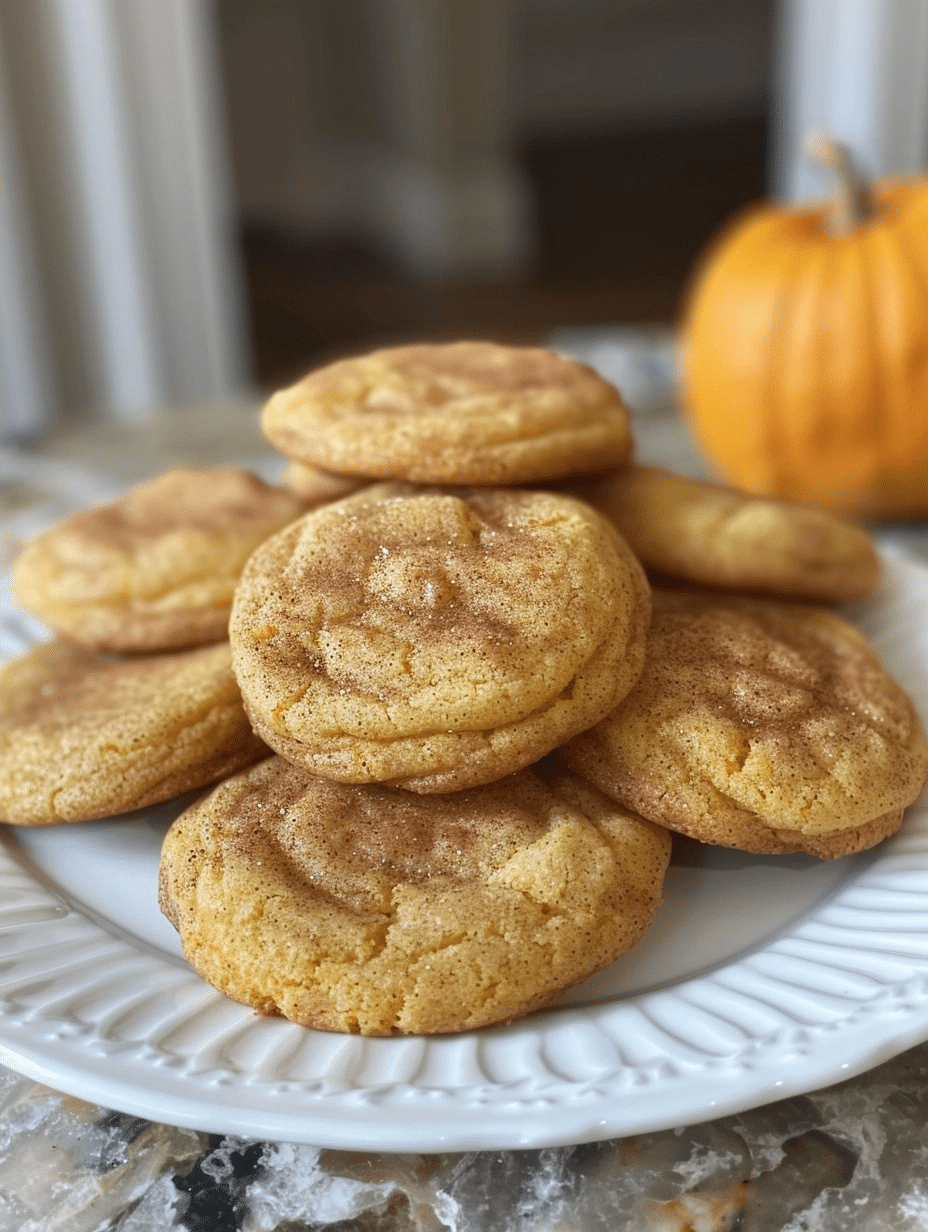
Pumpkin Snickerdoodle Cookies
Ingredients
- 2 cups all-purpose flour
- 1 1/2 teaspoons baking powder
- 1 teaspoon salt
- 1/2 teaspoon ground cinnamon
- 1/4 teaspoon nutmeg
- 1 cup unsalted butter, softened
- 3/4 cup brown sugar
- 1 teaspoon vanilla extract
- 1 large egg
- 1 cup pumpkin puree
- 2 tablespoons granulated sugar
- 1 teaspoon ground cinnamon
Instructions
- Preheat oven to 350°F (175°C)
- Whisk flour, baking powder, salt, cinnamon, and nutmeg in a bowl
- Beat butter and brown sugar until fluffy
- Add vanilla, egg, and pumpkin puree to butter mixture
- Mix wet ingredients into dry ingredients until smooth
- Form dough into 15 balls (1 1/2 oz each)
- Combine granulated sugar and cinnamon in a bowl
- Roll each dough ball in cinnamon-sugar mixture
- Place on baking sheet 2 inches apart
- Bake 12-14 minutes until golden
- Cool on wire racks
- Re-roll in cinnamon-sugar after cooling
Notes
Use fresh pumpkin puree, not canned
For crisp coating, ensure cinnamon-sugar mixture is dry and not clumpy
