

A napoleon cake recipe creates a sophisticated dessert with three layers of crispy puff pastry alternating with smooth pastry cream and topped with chocolate ganache. This French classic, also called mille-feuille, combines buttery, flaky pastry with rich vanilla custard for an impressive presentation that looks far more complicated than it actually is. The napoleon cake delivers incredible texture contrasts: the snap of pastry against creamy filling creates an unforgettable eating experience. Whether you’re baking for a special celebration or simply want to impress your family, this recipe produces bakery-quality results in your own kitchen.

About the Baker
I’m Lila Bennett, a 34-year-old home baker based in Portland, Oregon, and my kitchen is almost always filled with the smell of something sweet. I fell in love with baking as a kid, sneaking tastes of cookie dough and watching simple ingredients turn into something comforting and delicious. What started with slightly overbaked cookies turned into years of experimenting with cakes, pancakes, and all kinds of desserts, learning through trial, error, and a lot of taste-testing.
The napoleon cake holds a special place in my baking journey. I first encountered this dessert at a tiny patisserie in Lyon during a college semester abroad, and I became obsessed with recreating it. My early attempts were disasters—soggy pastry, lumpy cream, uneven layers. After countless batches and many learning moments, I finally mastered the technique. Now, this is the dessert I return to whenever I want to prove to myself that my baking skills have grown. Every layer represents years of practice, patience, and a genuine love for classic French pastry.
| Metric | Value |
|---|---|
| Prep Time | 30 minutes |
| Cook Time | 35 minutes |
| Total Time | 2 hours 5 minutes (including chilling) |
| Servings | 8-10 servings |
| Difficulty Level | Intermediate |
| Cuisine | French |
Why This Recipe Works
This napoleon cake recipe succeeds because it respects the integrity of each component while allowing them to shine together. The puff pastry needs high heat to puff dramatically and achieve that signature crispness, while the pastry cream requires gentle, patient cooking to avoid scrambling the eggs. I’ve structured these steps to ensure neither element compromises the other, building a dessert with perfect texture balance.
I learned the hard way that timing matters tremendously with this cake. Assembling the layers too far in advance causes the pastry to absorb moisture from the cream and lose its crispness. My solution: prepare all components several hours ahead, then assemble just one hour before serving. This window keeps the pastry snappy while allowing flavors to meld. The result tastes like you spent all day in the kitchen, even though active work takes under an hour.
The chocolate ganache topping serves a practical purpose beyond decoration. It seals the top layer and prevents the pastry from becoming overly soft from ambient humidity. This layer also provides visual elegance and a chocolate contrast that elevates the entire cake from good to restaurant-quality. Every element in this recipe has been tested and refined through repetition.
Ingredients
| Ingredient | Quantity | Notes |
|---|---|---|
| Puff pastry sheets (thawed) | 3 sheets | Use all-butter puff pastry for best flavor. Thaw at room temperature 30 minutes before using. |
| Whole milk | 2 cups | Use full-fat milk for richest cream. Oat or almond milk works but produces thinner pastry cream. |
| Granulated sugar | ¾ cup divided | Use ½ cup for cream, ¼ cup for egg yolks. Superfine sugar dissolves more quickly but granulated works fine. |
| Egg yolks | 5 large | Room temperature eggs incorporate more smoothly. Save whites for other recipes or freeze. |
| Corn starch | 3 tablespoons | Thickens the cream without adding flour flavor. Tapioca starch or arrowroot powder substitute 1:1. |
| All-purpose flour | 1 tablespoon | Adds structure to pastry cream. Can reduce to 1 teaspoon if using cornstarch at full amount. |
| Unsalted butter | 3 tablespoons | Cut into small pieces, cold. High-quality European butter enhances flavor significantly. |
| Pure vanilla extract | 2 teaspoons | Use real vanilla, not imitation. Vanilla paste provides more flecks and deeper flavor. |
| Sea salt | ¼ teaspoon | Enhances vanilla flavor and balances sweetness. Omit if using salted butter. |
| Dark chocolate (chopped) | 6 ounces | Use 60-70% cacao. Higher cacao provides less sweetness; lower provides more sweetness. |
| Heavy cream | ½ cup | For chocolate ganache. Must be at least 35% fat for proper emulsification. |
| Butter (for ganache) | 1 tablespoon | Adds shine and smoothness to ganache. Can substitute coconut oil for dairy-free version. |
Step-by-Step Instructions
Preparing the Puff Pastry
- Remove puff pastry sheets from freezer and thaw at room temperature for 30 minutes until pliable but still cold to touch.
- Preheat your oven to 400°F and line two large baking sheets with parchment paper.
- Place one pastry sheet on each prepared baking sheet, leaving one sheet for replacement midway through baking.
- Prick the entire surface of each pastry sheet with a fork at ½-inch intervals to prevent excessive puffing.
- Bake for 12-15 minutes until the pastry sheets are golden brown and sound hollow when tapped.
- Remove from oven and place on a wire rack to cool completely, approximately 15 minutes.
- Using a serrated knife or pastry trimmer, cut each cooled sheet into one 9×13-inch rectangle by trimming uneven edges.
- Save all trimmings in a food processor for garnish; pulse until fine crumbs form.
Making the Pastry Cream
- Pour 2 cups of milk into a heavy-bottomed saucepan and heat over medium until steam rises and small bubbles form at edges.
- While milk heats, whisk 5 egg yolks with ½ cup sugar in a medium bowl for 2-3 minutes until pale and thick.
- Add 3 tablespoons cornstarch and 1 tablespoon flour to the egg mixture, whisking until no lumps remain.
- Remove hot milk from heat and slowly pour ½ cup into the egg mixture while whisking constantly to temper the yolks.
- Pour the tempered egg mixture back into the saucepan with remaining hot milk, whisking continuously to incorporate smoothly.
- Return the saucepan to medium heat and cook, stirring constantly with a wooden spoon, for 3-4 minutes until the cream thickens and reaches 180°F on a thermometer.
- Remove from heat and immediately stir in 3 tablespoons cold butter, 2 teaspoons vanilla extract, and ¼ teaspoon salt.
- Pour the pastry cream through a fine mesh strainer into a clean bowl to remove any lumps.
- Press plastic wrap directly onto the surface of the cream to prevent a skin from forming, then refrigerate for at least 1 hour.
Creating the Chocolate Ganache
- Heat ½ cup heavy cream in a small saucepan over medium until steaming but not boiling.
- Place 6 ounces chopped dark chocolate in a heat-safe bowl and pour the hot cream over it.
- Let stand for 2 minutes without stirring to allow the heat to soften the chocolate.
- Stir in 1 tablespoon butter and mix until smooth and glossy, about 30 seconds of stirring.
- Set the ganache aside to cool to room temperature, approximately 10-15 minutes, until it reaches a spreadable consistency.
Assembling the Napoleon Cake
- Remove the pastry cream from the refrigerator and give it a quick stir to loosen the texture before assembly.
- Place one pastry rectangle on your serving platter or cake board, positioning it flat side down.
- Spread half of the pastry cream (approximately 1 cup) evenly across the first pastry layer using an offset spatula.
- Carefully place the second pastry rectangle on top of the cream layer, pressing gently to set.
- Spread the remaining pastry cream evenly across the second layer.
- Top with the third pastry rectangle, pressing gently to adhere.
- Spread the cooled chocolate ganache in a thin, even layer across the top pastry sheet.
- While ganache is still slightly soft, use a fork to create a wavy pattern across the top by gently dragging the fork through the chocolate.
- Sprinkle the reserved pastry crumbs along the sides of the cake, gently pressing them onto the cream layers between the pastry rectangles.
- Refrigerate the assembled napoleon cake for 30 minutes before cutting and serving.
Chef Tips for Perfect Results
- Use all-butter puff pastry instead of margarine-based versions. The butter creates superior flavor and texture, producing layers that taste delicate rather than greasy. I always check ingredient lists for “real butter” as the first fat ingredient.
- Keep your workspace cool when assembling the cake. Work quickly to prevent the pastry cream from softening the pastry layers. If your kitchen is warm, briefly chill assembled layers before adding the next one.
- Temper the egg yolks properly to avoid scrambled cream. Adding cold egg mixture directly to hot milk creates a grainy, separated pastry cream. The slow tempering process I describe gradually brings the yolks to the safe temperature.
- Use a serrated knife for cutting clean pastry slices. A straight knife crushes the delicate layers, creating messy cuts. A serrated knife saws through the pastry with minimal pressure, preserving layer structure and visual appeal.
- Assemble the cake one hour maximum before serving. This timing ensures the pastry stays crispy while the components have enough time to meld flavors. If assembled too early, the pastry absorbs moisture and becomes soggy.
- Chill the chocolate ganache to room temperature before spreading. Warm ganache melts into the pastry cream, creating an unattractive appearance and uneven topping. Cooled ganache spreads in clean lines.
Common Mistakes to Avoid
Mistake 1: Not pricking the pastry sheets before baking. Why this happens: Puff pastry puffs dramatically when heated, creating thick, doughy layers instead of crispy ones. How to fix: Always use a fork to pierce the entire surface at regular intervals. This controlled venting allows steam to escape evenly, resulting in thin, crispy, evenly-puffed sheets.
Mistake 2: Overbaking the pastry until too dark. Why this happens: It’s tempting to leave pastry in the oven until deeply golden, but this creates hard, bitter sheets. How to fix: Remove pastry when it’s golden brown and sounds hollow when tapped lightly. The residual heat continues cooking slightly as it cools.
Mistake 3: Cooking the pastry cream at too high heat. Why this happens: Rushing the process by turning heat to high seems efficient but causes the eggs to scramble before thickening occurs. How to fix: Use medium heat and stir constantly, allowing the starch and eggs to gradually thicken over 3-4 minutes. If you see lumps forming, immediately remove from heat and strain through a fine mesh.
Mistake 4: Assembling the cake too far in advance. Why this happens: Many bakers assemble early thinking it makes day-of preparation easier, but this causes the pastry to absorb moisture and become limp. How to fix: Prepare all components the night before, then assemble no more than one hour before serving. This preserves pastry crispness.
Mistake 5: Using chocolate ganache that’s too warm. Why this happens: Spreading warm ganache melts it into the pastry cream layer, creating a messy, unfinished appearance. How to fix: Cool the ganache to room temperature (approximately 70°F) before spreading. It should be spreadable but slightly thick, maintaining its shape on the top layer.
Variations and Substitutions
| Ingredient | Substitution | Impact on Flavor and Texture |
|---|---|---|
| Dark chocolate ganache | White chocolate ganache (6 oz white chocolate, ½ cup cream, 1 tbsp butter) | Creates elegant, pale appearance. Sweeter taste without chocolate depth. Works well with vanilla-forward pastry cream. |
| Pure vanilla extract | Almond extract (use 1 teaspoon) or vanilla paste (use 2 tablespoons) | Almond extract adds subtle nuttiness and depth. Vanilla paste provides darker specks and more intense vanilla flavor. |
| Heavy cream in ganache | Half-and-half (use ¾ cup) or full-fat coconut milk | Half-and-half produces less rich ganache; requires additional chocolate for body. Coconut milk adds tropical notes but may separate slightly. |
| All-butter puff pastry | Phyllo dough (layer 3 sheets with butter between layers) | Creates thinner, more delicate pastry with different texture. Less buttery richness but equally crispy. Requires careful handling when layering. |
| Corn starch | Tapioca starch or arrowroot powder (use 3 tablespoons) | Creates slightly glossier cream with identical thickness. Arrowroot produces more translucent cream. Both work identically in final texture. |
| Pastry cream filling | Diplomat cream (pastry cream plus whipped cream, 1:1 ratio) | Creates lighter, airier filling with less richness. Reduces heaviness of traditional napoleon. Must be assembled just before serving as whipped cream collapses over time. |
| Sea salt | Omit entirely or increase to ½ teaspoon | Omitting creates slightly sweeter, less complex flavor. Increasing creates more pronounced savory undertones that enhance chocolate and vanilla. |
Serving Suggestions and Pairings
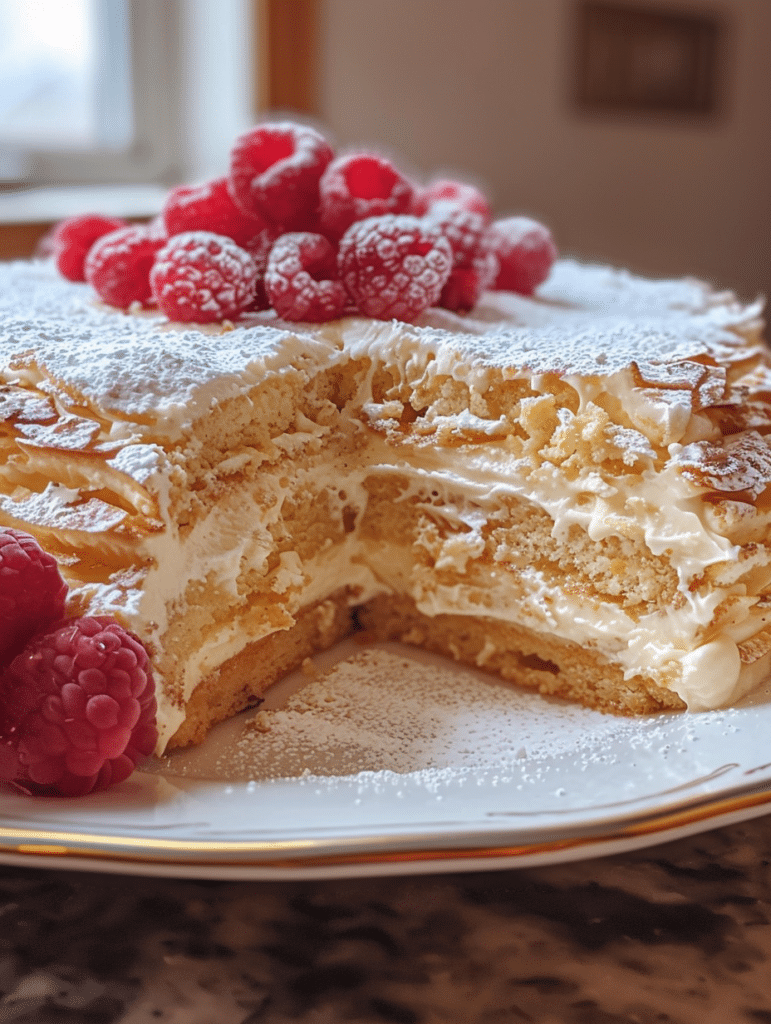
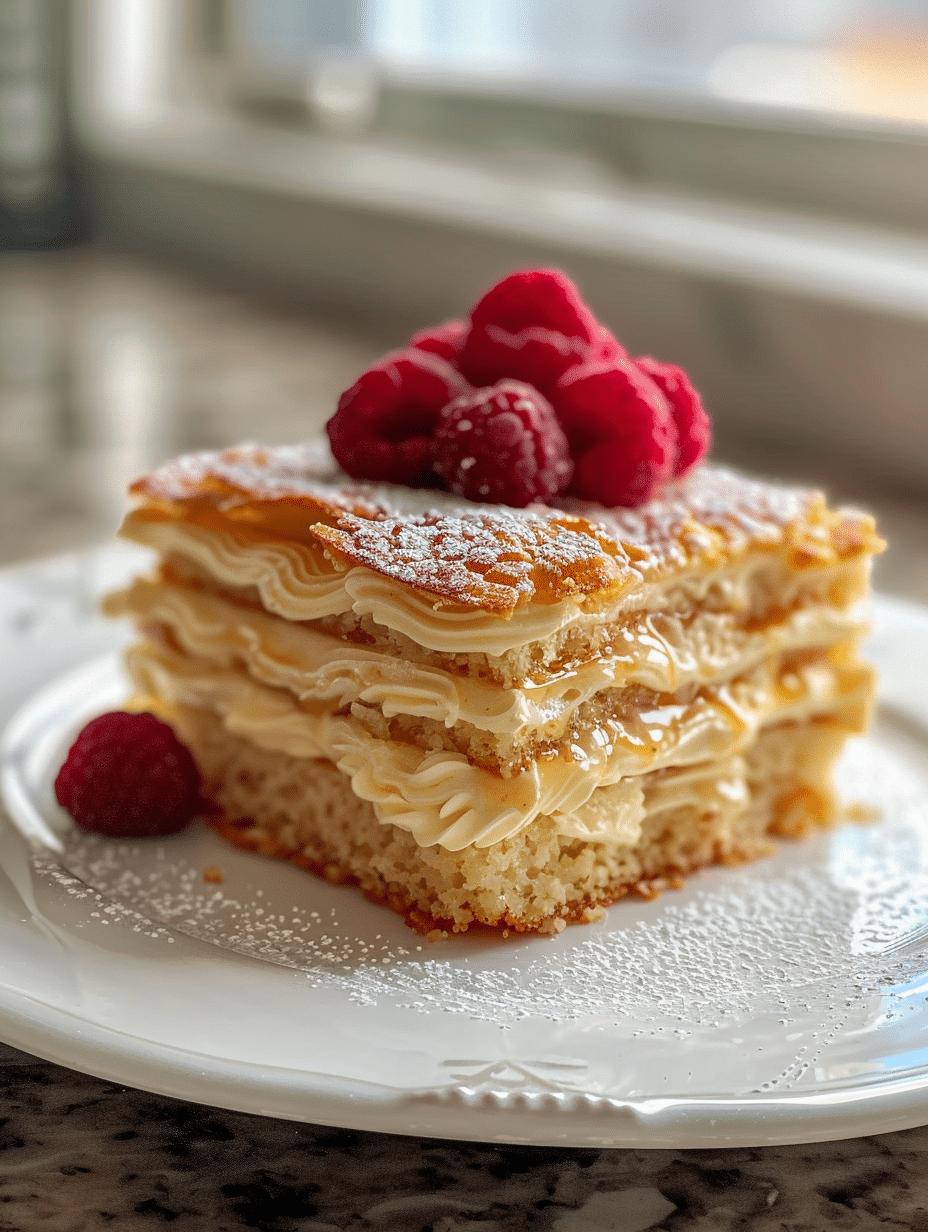
Serve napoleon cake slices with fresh berries for color and tartness that balances the rich pastry cream. Raspberries or strawberries provide visual elegance and subtle acidity that cuts through the cream’s sweetness. For a classic pairing, serve with whipped cream on the side, allowing guests to add as much richness as they prefer.
This cake pairs beautifully with strong black coffee or espresso, which contrasts with the vanilla and chocolate sweetness. The cake’s delicate layers make it perfect for afternoon tea service or as the finale to an elegant dinner party. I often serve individual slices on white ceramic plates with a small garnish of edible flowers or a dusting of powdered sugar for sophisticated presentation.
For special occasions, consider serving alongside a glass of vanilla-forward tea like chamomile or a simple fruit compote. The napoleon cake works wonderfully at bridal showers, retirement celebrations, or birthday dinners. Its elegant appearance and manageable serving size (approximately 3×4 inches per slice) make it practical for formal gatherings where presentation matters.
Storage and Reheating
| Storage Method | Duration | Instructions |
|---|---|---|
| Refrigerator | 2 days maximum | Store the entire cake in an airtight container on a shelf (not touching other foods). Cover with plastic wrap to prevent odor absorption. Remove 15 minutes before serving for optimal texture. |
| Individual slices | 2 days maximum | Wrap each slice individually in plastic wrap and store in a sealed container. Separate layers may shift slightly during storage; this is normal. |
| Freezer (pastry only) | 2 months | Store cooled pastry sheets in freezer bag with parchment between layers. Freeze cream and ganache separately. Assemble after thawing individual components. |
| Freezer (assembled) | Not recommended | Freezing assembled cake causes pastry to absorb moisture upon thawing, resulting in soggy texture. Freeze components separately instead. |
| Counter (short-term) | 1-2 hours maximum | Keep in cool kitchen away from direct sunlight. Pastry will gradually soften as cream warms; serve as soon as possible after assembly. |
Nutritional Information
Approximate values per serving (based on 10 servings)
| Nutrient | Amount per Serving |
|---|---|
| Calories | 385 |
| Protein | 5g |
| Total Fat | 24g |
| Saturated Fat | 14g |
| Unsaturated Fat | 8g |
| Carbohydrates | 39g |
| Dietary Fiber | 1g |
| Sugars | 28g |
| Sodium | 185mg |
| Cholesterol | 142mg |
This napoleon cake recipe is a dessert meant for special occasions and should be enjoyed in moderate portions. The cream-based filling contributes most calories and fat content. For lighter serving, pair with fresh fruit and reduce portion size slightly.
Frequently Asked Questions
Can I make napoleon cake without puff pastry by substituting phyllo dough?
Yes, phyllo dough creates a delicate, paper-thin pastry that works beautifully for this recipe. Layer three sheets of phyllo, brushing melted butter between each layer, then bake at 400°F for 12-15 minutes until golden. The texture will be more delicate and shatter-prone than puff pastry, requiring careful assembly. Phyllo’s thinner profile allows more visible layering, creating an equally elegant presentation.
How do I know when the pastry cream reaches the correct thickness?
The pastry cream should coat the back of a wooden spoon so thickly that you can draw a line through it with your finger and the line remains clear. This typically occurs at 180°F on a thermometer and takes 3-4 minutes of constant stirring over medium heat. If your cream appears too thick after cooling, whisk in 1 tablespoon of milk at a time until it reaches proper spreading consistency.
What’s the best way to cut napoleon cake into clean slices without crushing the layers?
Use a serrated knife (like a bread knife) dipped in hot water and wiped dry before each cut. The serrated edge saws through pastry with gentle pressure rather than crushing it downward. Cut slowly with a gentle sawing motion, allowing the knife to do the work. For cleanest results, refrigerate the assembled cake for 30 minutes before cutting, and use a long serrated knife rather than a short one.
Can I assemble the napoleon cake up to 24 hours in advance?
Assembling more than one hour in advance causes the pastry to absorb moisture from the cream and lose its crispness, resulting in a soggy rather than crispy texture. Instead, prepare all components the night before and assemble one hour maximum before serving. If you need to prepare earlier, store assembled components separately and assemble shortly before serving for optimal pastry texture.
What should I do if my pastry cream turns lumpy during cooking?
Lumpy cream indicates the eggs have scrambled because they were cooked too quickly or at too high heat. Immediately remove from heat and pour through a fine mesh strainer into a clean bowl, discarding lumps. If only minor lumps remain, the straining often removes them completely. For future batches, temper eggs slowly and maintain medium heat throughout cooking to prevent this issue.
Can I use store-bought pastry cream instead of making it from scratch?
Store-bought pastry cream works in a pinch, though homemade cream offers superior flavor and texture control. If using store-bought, ensure it’s not overly thick or stabilized with gelatin, as this affects the cake’s texture and ease of layering. Homemade cream takes approximately 15 minutes to prepare and tastes noticeably fresher and more delicate than commercial versions.
Conclusion
A napoleon cake recipe represents the perfect balance of technique and simplicity, delivering elegant results that taste even better than they look. This French classic proves that impressive desserts don’t require complicated methods, just proper understanding of how pastry and cream interact. Master this recipe once, and you’ll return to it countless times for celebrations and gatherings. The combination of crispy pastry, silky cream, and glossy chocolate creates the signature flavor that makes this cake unforgettable.
Napoleon Cake
Equipment
- baking sheets
- parchment paper
- wire cooling rack
- heavy-bottomed saucepan
- mixing bowls
- whisk
- fine mesh sieve
- offset spatula
- serrated knife
- food processor
Ingredients
- 3 sheets puff pastry sheets, thawed
- 2 cups whole milk
- 3/4 cup granulated sugar
- 5 large egg yolks
- 3 tbsp cornstarch
- 1 tbsp all-purpose flour
- 3 tbsp unsalted butter
- 2 tsp pure vanilla extract
- 1/4 tsp sea salt
- 6 oz dark chocolate, chopped
- 1/2 cup heavy cream
- 1 tbsp butter for ganache
Instructions
- Thaw the puff pastry sheets at room temperature for 30 minutes until pliable but still cold.
- Preheat the oven to 400°F and line baking sheets with parchment paper.
- Place the pastry sheets on the prepared baking sheets.
- Prick the pastry sheets all over with a fork to prevent excessive puffing.
- Bake the pastry sheets for 12–15 minutes until golden brown and crisp.
- Cool the baked pastry completely on a wire rack.
- Trim the pastry sheets into even 9×13-inch rectangles and reserve the scraps.
- Pulse the pastry trimmings into fine crumbs for garnish.
- Heat the milk in a saucepan until steaming and small bubbles form at the edges.
- Whisk the egg yolks and sugar together until pale and thick.
- Add the cornstarch and flour to the egg mixture and whisk until smooth.
- Slowly whisk hot milk into the egg mixture to temper the yolks.
- Return the mixture to the saucepan and cook over medium heat until thickened.
- Remove from heat and stir in butter, vanilla extract, and sea salt.
- Strain the pastry cream through a fine mesh sieve into a clean bowl.
- Cover the surface with plastic wrap and refrigerate for at least 1 hour.
- Heat the heavy cream until steaming but not boiling.
- Pour the hot cream over the chopped dark chocolate and let sit for 2 minutes.
- Add butter and stir until smooth and glossy.
- Allow the ganache to cool to room temperature before assembling.
- Stir the chilled pastry cream briefly to loosen the texture.
- Place one pastry rectangle on a serving platter.
- Spread half of the pastry cream evenly over the first pastry layer.
- Top with the second pastry sheet and press gently into place.
- Spread the remaining pastry cream evenly over the second layer.
- Place the final pastry layer on top and press gently.
- Spread the cooled ganache evenly across the top layer.
- Create decorative waves in the ganache using a fork.
- Press pastry crumbs along the sides of the cake for garnish.
- Refrigerate the assembled napoleon cake for 30 minutes before slicing and serving.
