

Instant pot roast beef is a slow-cooked masterpiece that transforms tough beef cuts into fall-apart tender meat in less than two hours. Using a pressure cooker dramatically reduces cooking time while intensifying flavors through steam and heat, creating results that rival traditional oven roasting without the all-day commitment. This recipe delivers restaurant-quality beef with minimal hands-on effort, making it ideal for busy weeknights or weekend gatherings.
About This Recipe
I’m Eva Stoner, creator of Fresh Recipes Corner, where I share simple, reliable recipes for everyday cooking. My love for cooking began in my grandmother’s kitchen, where I learned that good food doesn’t have to be complicated—it just needs care, patience, and the right techniques. Those early moments shaped how I cook today and inspired me to keep things practical and approachable.
When I discovered my Instant Pot, I realized I could recreate my grandmother’s beloved pot roast in a fraction of the time. She always said the secret was low, slow cooking and quality meat. The pressure cooker honors that wisdom while fitting modern schedules. Over years of testing, I’ve refined this recipe to deliver the exact tenderness and depth of flavor she achieved, proving that shortcuts don’t mean sacrificing quality.
| Detail | Value |
|---|---|
| Prep Time | 15 minutes |
| Cook Time | 75 minutes |
| Total Time | 90 minutes |
| Servings | 6-8 servings |
| Difficulty Level | Easy |
| Cuisine | American |
Why This Recipe Works
This instant pot roast beef recipe works because high-pressure steam breaks down connective tissue in tough meat cuts far faster than conventional cooking methods. When I first tested pressure cooking beef, I was amazed how the 15 PSI forced moisture deep into the meat while keeping it incredibly juicy. The searing step before pressure cooking creates a flavor-rich crust through the Maillard reaction, the same browning that develops in slow-roasted beef.
I’ve chosen chuck roast for this recipe because its intramuscular fat renders at high temperatures, creating that luxurious, fork-tender texture everyone loves. The combination of beef broth, aromatics, and beef bouillon builds layers of umami that develop in minutes rather than hours. A natural pressure release at the end allows muscle fibers to relax gradually, preventing the toughness that quick releases sometimes cause.
What makes this approach superior to traditional slow cooking is precision and consistency. Every time I make this, the results are identical because pressure cooking temperature remains steady. There’s no guessing whether the oven temperature fluctuated or whether eight hours was enough time. This reliability makes it perfect for meal planning and family dinners where timing matters.
Ingredients
| Ingredient | Quantity | Notes & Alternatives |
|---|---|---|
| Chuck roast | 3-4 pounds | One piece preferred; brisket or bottom round work but are leaner. Chuck has ideal fat content for tenderness. |
| Kosher salt | 1.5 teaspoons | For seasoning and surface browning. Sea salt works equally well. Avoid table salt (contains anti-caking agents). |
| Black pepper | 1 teaspoon | Freshly ground preferred. Pre-ground loses potency quickly. |
| Olive oil | 2 tablespoons | For searing. Vegetable oil or ghee substitute if preferred. Avocado oil has higher smoke point. |
| Yellow onions | 2 medium, quartered | Adds sweetness and depth. Sweet onions like Vidalia are too mild. Yellow onions provide balance. |
| Carrots | 4 large, cut into 2-inch pieces | Cut uniform size for even cooking. Baby carrots okay but regular carrots superior in flavor development. |
| Celery | 3 stalks, cut into 2-inch pieces | Provides mirepoix aromatics. Celery seed can substitute if fresh unavailable (use 1/2 teaspoon). |
| Garlic cloves | 6 cloves, smashed | Minced garlic acceptable but whole cloves distribute more evenly and won’t scorch. |
| Beef broth | 1.5 cups | Low-sodium preferred to control salt. Beef stock creates richer sauce. Never use bouillon only as sole liquid. |
| Beef bouillon cubes | 2 cubes | Intensifies beef flavor. Omit if using beef stock instead of broth. Chicken bouillon creates different flavor profile. |
| Tomato paste | 2 tablespoons | Adds umami and slight acidity. Omit for lighter sauce. Cannot substitute with ketchup (too sweet). |
| Apple cider vinegar | 1 tablespoon | Brightens flavors and tenderizes. Red wine vinegar or white vinegar work; flavor profile changes slightly. |
| Dried thyme | 1 teaspoon | Signature herb for roast beef. Fresh thyme (3 sprigs) works; dried more concentrated than fresh. |
| Dried rosemary | 0.5 teaspoon | Use sparingly; peppery note. Fresh rosemary (1.5 sprigs) stronger in flavor. |
| Bay leaves | 2 | Classic aromatics. Always remove before serving. Turkish bay leaves milder than California varieties. |
| Cornstarch (optional) | 2 tablespoons | Mixed with 3 tablespoons cold water for thickening sauce post-cooking. Omit for brothier consistency. |
| Fresh parsley | 2 tablespoons, chopped | Garnish only. Adds color and freshness. Cilantro inappropriate for this dish’s flavor profile. |
Step-by-Step Instructions
Preparation Phase
- Remove chuck roast from refrigerator 20 minutes before cooking to bring closer to room temperature, ensuring even pressure cooking throughout the meat.
- Pat the roast completely dry with paper towels on all sides to maximize browning when searing and prevent steam that blocks crust formation.
- Season the entire surface generously with kosher salt and freshly ground black pepper, pressing seasonings onto the meat so they adhere.
Searing Phase
- Turn your Instant Pot to the sauté setting on high heat and add olive oil, allowing it to shimmer for 30 seconds until nearly smoking.
- Carefully place the seasoned roast into the hot oil and sear for 4-5 minutes without moving it, creating a dark golden crust on the bottom.
- Flip the roast and sear the opposite side for 4-5 minutes, then sear any remaining sides for 2-3 minutes each until the entire exterior browns.
- Transfer the seared roast to a clean plate and set aside while you prepare the aromatics.
Building Flavor Phase
- In the same pot with remaining oil, add quartered onions and cook for 2 minutes, stirring occasionally until slightly softened.
- Add smashed garlic cloves and cook for 30 seconds, stirring constantly to prevent burning and release aromatic oils.
- Stir in tomato paste and cook for 1 minute, allowing it to caramelize slightly in the hot pot, deepening its umami intensity.
- Add apple cider vinegar and use a wooden spoon to scrape up any browned bits from the pot bottom (deglazing), incorporating all the flavor.
- Pour in the beef broth slowly while stirring, then add the two beef bouillon cubes, stirring until dissolved completely.
Pressure Cooking Phase
- Return the seared roast to the pot, nestling it among the onions and submerging as much as possible in the liquid.
- Arrange carrot and celery pieces around the roast, distributing them evenly so they cook uniformly during pressure cooking.
- Scatter the dried thyme, dried rosemary, and bay leaves over the top of the roast and liquid.
- Close the Instant Pot lid and set the valve to the sealing position, ensuring the pressure release valve is properly closed.
- Set the pot to high pressure (15 PSI) and cook for 60 minutes, adjusting time only if your roast weighs less than 3 pounds (use 50 minutes) or more than 5 pounds (use 70 minutes).
- When the timer beeps, allow the pressure to release naturally for 15 minutes—this step is critical for maintaining meat tenderness and juiciness.
- After 15 minutes of natural release, carefully turn the valve to venting position to release any remaining pressure, then open the lid slowly away from your body.
Finishing Phase
- Remove the roast to a cutting board and cover with foil to retain heat while you finish the sauce.
- If you prefer a thicker sauce, turn the Instant Pot to sauté mode and whisk together cornstarch and cold water until smooth.
- Slowly pour the cornstarch slurry into the simmering liquid while whisking constantly until the sauce thickens to desired consistency, usually 2-3 minutes.
- Turn off the Instant Pot and remove the bay leaves, then taste the sauce and adjust seasoning with additional salt or pepper if needed.
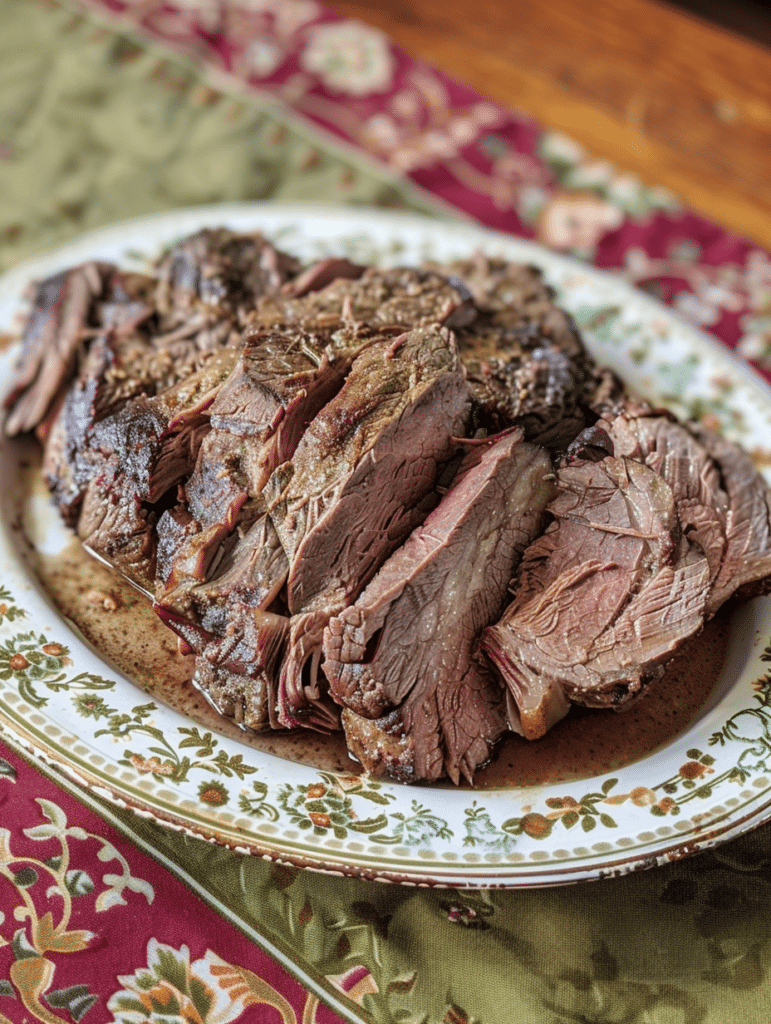
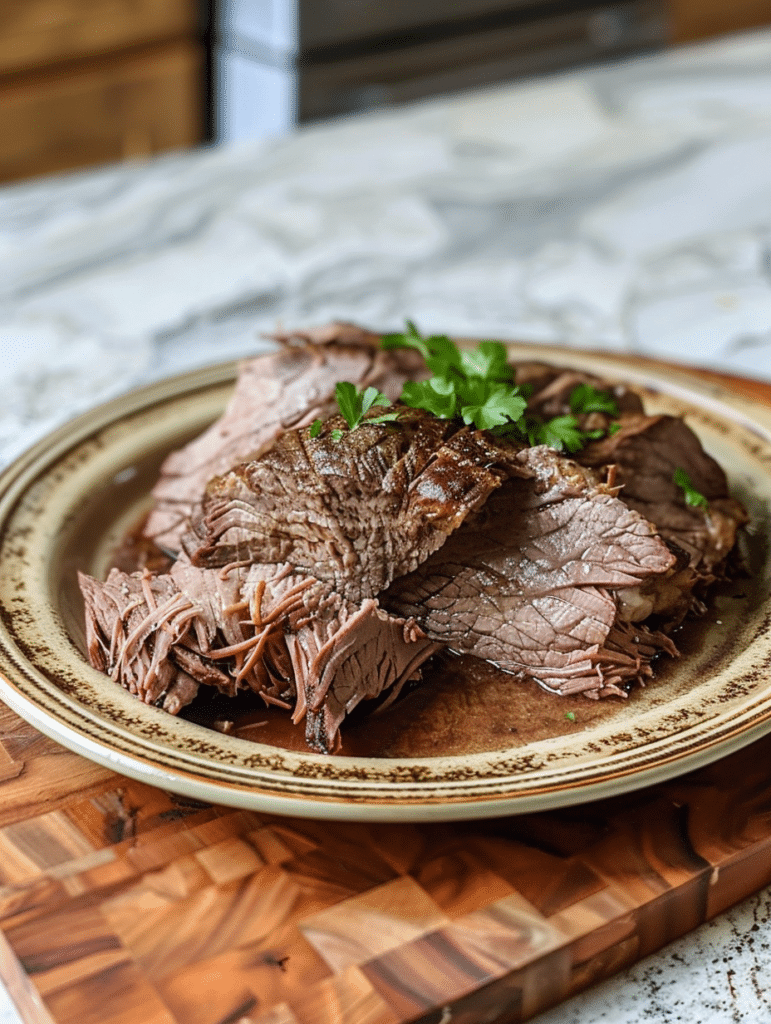
- Slice the roast against the grain into half-inch thick pieces, exposing the tender interior and maximizing tenderness in each bite.
- Transfer sliced beef to a serving platter and pour the sauce with vegetables over top, then garnish with fresh chopped parsley before serving.
Chef Tips for Perfect Results
- Sear without moving: Resist the urge to move the roast while searing. Patience allows a proper crust to develop. Moving it repeatedly prevents browning and creates steam instead of caramelization.
- Don’t skip the natural release: Quick release can cause muscle fibers to contract suddenly, resulting in a tougher texture. The 15-minute natural release allows carryover cooking and fiber relaxation.
- Cut against the grain: Always identify and cut perpendicular to the meat’s grain structure. This breaks muscle fibers, making each piece more tender than if cut with the grain.
- Use high-quality beef broth: The sauce quality directly impacts the final dish. Low-quality broth with excessive sodium and fillers produces thin, one-dimensional results. Check ingredient lists for real beef and minimal additives.
- Add vegetables at the right time: Placing carrots and celery in the pot only during pressure cooking prevents mushiness. If cooking longer than 60 minutes, add vegetables during the last 20 minutes only.
- Reserve liquid for gravy: Save 1.5 cups of cooking liquid after removing vegetables and meat. This creates the most flavorful gravy because it contains concentrated beef essence, aromatics, and rendered fat.
Common Mistakes to Avoid
Mistake 1: Using Lean Beef Cuts
Lean cuts like sirloin or eye of round lack sufficient intramuscular fat, resulting in dry, stringy meat regardless of pressure cooking duration. Why: Pressure cooking moisture penetrates the meat but cannot create fat that doesn’t exist. Chuck roast’s marbling melts during cooking, creating natural lubrication. How to fix: Always select chuck roast, beef shoulder, or brisket with visible fat distribution throughout.
Mistake 2: Insufficient Searing
Rushing the searing step by lowering heat or reducing sear time results in pale, unrebrowned exteriors and flat-tasting beef. Why: Proper browning develops hundreds of flavor compounds through the Maillard reaction, which requires high heat and adequate time. How to fix: Ensure sauté is on high setting, allow oil to shimmer before adding meat, and commit the full 4-5 minutes per side without disturbance.
Mistake 3: Opening the Lid During Cooking
Checking on the roast by opening the lid releases pressure instantly, requiring 10+ additional minutes to re-pressurize and restart cooking time. Why: Each time you open the lid, internal pressure drops dramatically, interrupting the cooking process and lengthening total time significantly. How to fix: Trust the timer and resist opening the lid. Your Instant Pot will alert you when cooking completes.
Mistake 4: Overcrowding the Pot with Liquid
Using more than 2 cups of liquid creates a watery sauce and results in meat that tastes boiled rather than braised. Why: Excess liquid dilutes the beef and vegetable flavors, preventing sauce concentration and depth. Pressure cookers require minimum liquid to generate steam, but maximum liquid is actually excess. How to fix: Use exactly 1.5 cups beef broth plus other ingredients. After cooking, the sauce should coat a spoon lightly.
Mistake 5: Forgetting to Deglaze
Skipping the step where you scrape browned bits from the pot bottom wastes all the caramelized flavor compounds that stuck during searing. Why: Those browned bits are concentrated, flavorful beef and vegetable essence that dissolve into the liquid, creating restaurant-quality depth. How to fix: Always deglaze with vinegar or broth after sautéing aromatics, using a wooden spoon to scrape every bit of brown residue from the pot bottom.
Variations and Substitutions
| Ingredient | Substitution | Impact on Flavor |
|---|---|---|
| Apple cider vinegar | Balsamic vinegar (use 1.5 teaspoons due to intensity) | Creates sweeter, richer sauce with slight Italian notes. Less brightness than apple cider. |
| Beef broth | Beef stock (reduce to 1.25 cups for concentration) | Dramatically richer, more gelatinous sauce with deeper beef flavor. More luxurious mouthfeel. |
| Dried thyme and rosemary | Italian herb blend (1.5 teaspoons total) or Herbes de Provence (1 teaspoon) | Shifts flavor profile toward Mediterranean. Herbes de Provence adds lavender note and slightly more complexity. |
| Carrots | Parsnips (4 large pieces) or combination of carrots and parsnips | Parsnips add earthy sweetness and slight nuttiness. Mixed vegetables provide greater flavor complexity. |
| Tomato paste | Omit entirely or use 1 tablespoon (for lighter sauce) | Removing creates lighter, brothy dish emphasizing beef and vegetable flavors. Healthier but less umami. |
| Yellow onions | Pearl onions (8-10 whole) or shallots (3 medium, halved) | Pearl onions create more elegant presentation and milder onion flavor. Shallots add sophisticated, subtle sweetness. |
| Bay leaves | Omit entirely or substitute with dried oregano (0.25 teaspoon) | Oregano creates more Mediterranean-leaning dish. Omitting results in less herbaceous, simpler flavor profile. |
Serving Suggestions and Pairings
Instant pot roast beef pairs beautifully with creamy mashed potatoes, which absorb the rich, beefy sauce perfectly. I serve this combination to guests and always receive compliments about the sauce, so provide plenty alongside the beef. Egg noodles tossed with butter and fresh dill create a Stroganoff-style presentation that transforms the dish from rustic to sophisticated.
For side vegetables, roasted Brussels sprouts with garlic and olive oil provide crispy texture contrast to the tender, moist beef. Steamed green beans or haricots verts offer lighter, fresher balance if you prefer vegetable sides. Crusty bread or dinner rolls become essential for soaking every drop of sauce.
This recipe excels for Sunday family dinners where comfort food feels appropriate and cooking time matters less than flavor quality. Serve to guests at casual dinner parties, where the impressive presentation and restaurant-quality results generate conversation. The make-ahead nature makes this perfect for weeknight planning when you want something remarkable with minimal day-of effort.
Storage and Reheating
| Method | Duration | Instructions |
|---|---|---|
| Refrigerator Storage | 3-4 days | Cool completely, then transfer beef and sauce to airtight containers. The sauce will gel when cold due to rendered fat, which protects the beef from drying. |
| Freezer Storage | 3-4 months | Cool completely, then place beef and sauce in freezer bags or containers, leaving 1-inch headspace for expansion. Label with date. Freeze flat for space efficiency. |
| Stovetop Reheating | 15-20 minutes | Place beef and sauce in heavy-bottomed pot over medium heat, stirring occasionally. Add 1/4 cup water if sauce is too thick. Heat until steaming, about 15 minutes. This method preserves texture best. |
| Microwave Reheating | 5-8 minutes | Place portions in microwave-safe container, cover loosely with plastic wrap or lid. Microwave at 50% power for 5 minutes, then full power for 2-3 minutes until heated through, stirring halfway. Protect texture by using lower initial power. |
| Oven Reheating | 30-35 minutes | Transfer beef and sauce to Dutch oven or baking dish, cover with lid or foil. Heat at 325°F for 30-35 minutes until steaming. This slow method prevents overheating and maintains meat tenderness perfectly. |
| Instant Pot Reheating | 8-10 minutes | Place frozen or thawed beef and sauce in Instant Pot. Use sauté mode on medium heat for 8-10 minutes, stirring occasionally, or pressure cook on low for 5 minutes if frozen. Quick and convenient option. |
Nutritional Information
Approximate values per serving (based on 8 servings).
| Nutrient | Amount per Serving |
|---|---|
| Calories | 385 kcal |
| Protein | 42 grams |
| Total Fat | 18 grams |
| Saturated Fat | 7 grams |
| Carbohydrates | 12 grams |
| Dietary Fiber | 2 grams |
| Sugar | 6 grams |
| Sodium | 720 mg |
| Cholesterol | 95 mg |
| Iron | 3.2 mg (18% Daily Value) |
| Potassium | 580 mg (17% Daily Value) |
| Vitamin A | 285 mcg (32% Daily Value) |
Frequently Asked Questions
Can I substitute chuck roast with brisket?
Brisket works but produces different results due to its leaner composition compared to chuck roast. Brisket requires the same pressure cooking time but yields a slightly drier texture without chuck’s rich marbling. If using brisket, reduce cooking time to 55 minutes and ensure sauce has adequate fat for richness.
How do I know if the roast is cooked to the right doneness?
The meat should shred easily with a fork and break apart when pressed with a spoon, indicating complete tenderness throughout. At 60 minutes high pressure, chuck roast will be completely tender and moist, past the medium stage into fall-apart territory. Taste a small piece to confirm; if it still requires chewing, something prevented proper pressure cooking (often not enough liquid or lid seal issues).
What if my sauce is too thin after cooking?
Remove the roast and vegetables, then use the sauté function to reduce the liquid by simmering uncovered for 5-10 minutes until sauce thickens to desired consistency. Alternatively, create a slurry with cornstarch and cold water (1 tablespoon cornstarch per 1.5 tablespoons water), whisk it into the simmering sauce, and cook for 2 minutes until thickened.
Can I prepare this recipe the night before?
Yes, this recipe improves when made a day ahead because flavors meld and develop overnight in the refrigerator. Prepare through the end of pressure cooking and step 20, then cool completely and refrigerate in airtight containers. The next day, reheat on the stovetop over medium heat, stirring occasionally, for 15-20 minutes until steaming throughout.
How do I fix roast beef that turned out tough?
Tough roast beef usually results from insufficient cooking time, using wrong beef cut, or quick pressure release. If this occurs, return the meat and sauce to the Instant Pot and pressure cook for an additional 15 minutes on high, then allow full natural release. This rarely fails to improve texture.
What internal temperature indicates the roast is properly cooked?
Instant pot roast beef reaches an internal temperature of 195-205°F when completely tender, well past traditional doneness levels because we’re aiming for fall-apart texture rather than rare or medium-rare. Use a meat thermometer inserted into the thickest part after 60 minutes; if below 195°F, cook an additional 10 minutes and check again.
Conclusion
Instant pot roast beef delivers restaurant-quality results without the all-day cooking commitment or guesswork of traditional slow cooking methods. This recipe proves that shortcuts don’t mean sacrificing quality when you follow proven techniques and use quality ingredients. Master this instant pot roast beef and you’ll have an impressive dinner solution for any occasion, weeknight or weekend.
Image Alt Suggestions: “Golden-seared chuck roast in Instant Pot with mirepoix vegetables” | “Fork-tender instant pot roast beef sliced on serving platter” | “Rich, glossy sauce coating tender beef and carrots” | “Mashed potatoes topped with sliced roast beef and gravy”
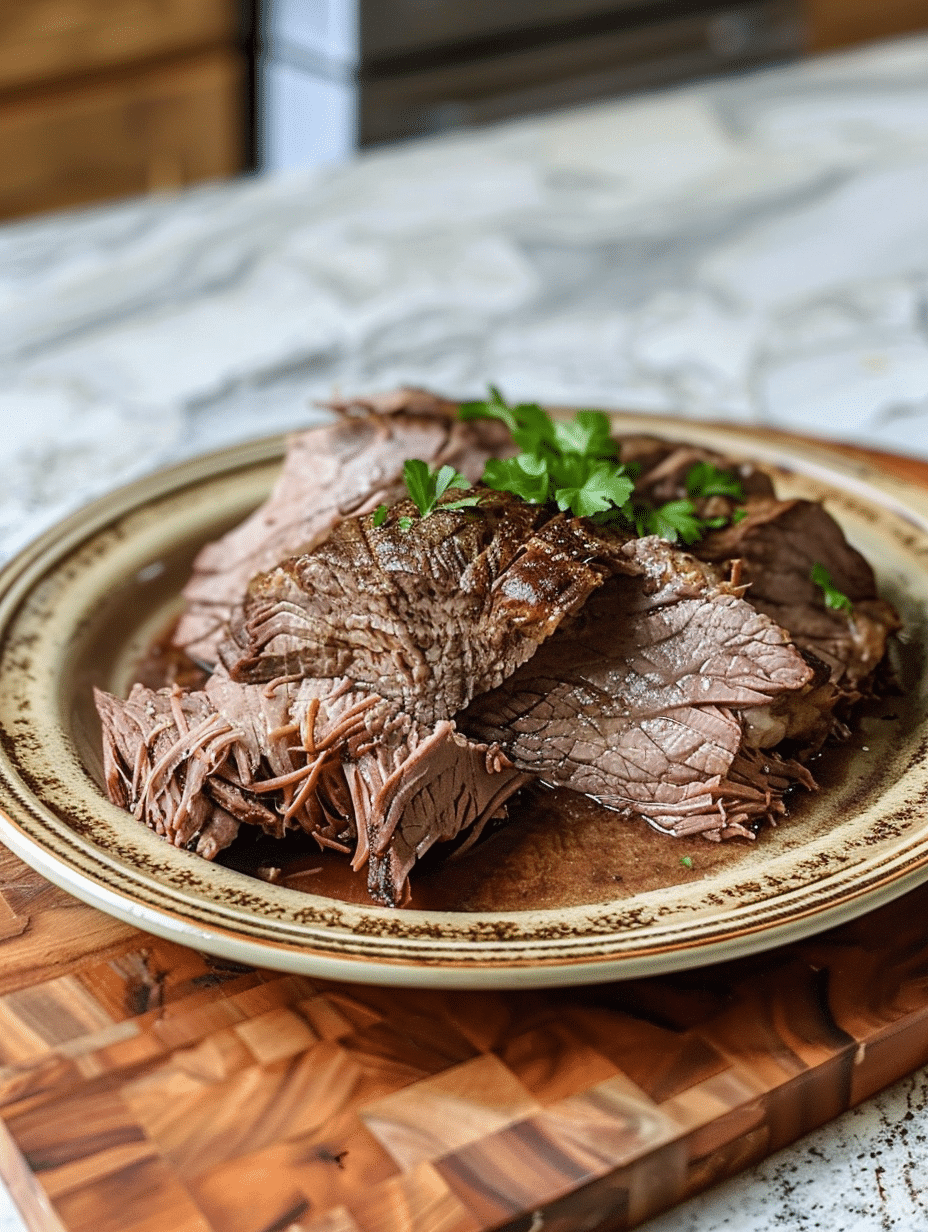
Instant Pot Roast Beef: Tender, Juicy, and Ready in Hours
Ingredients
- 2.5-3 lb beef chuck roast
- 2 tbsp olive oil
- 2 carrots, sliced
- 2 celery stalks, sliced
- 1 large onion, quartered
- 3 garlic cloves
- 1 tbsp beef bouillon
- 1 tsp dried thyme
- 2 bay leaves
- 2.5 cups beef broth
- 1 tbsp Worcestershire sauce (alcohol-free)
- Salt and pepper to taste
Instructions
- Pat roast dry and season generously with salt and pepper
- Heat olive oil in Instant Pot. Sear roast 3-4 minutes per side until browned
- Add vegetables, garlic, thyme, bay leaves, and bouillon; sear 2-3 minutes
- Pour in broth and Worcestershire sauce. Secure lid with valve set to sealing
- Pressure cook on high for 45 minutes
- Turn off heat and let pressure release naturally for 20 minutes before quick release
Notes
Substitute chuck roast with brisket or round roast
Bouillon can be replaced with vegetable bouillon for vegetarian version
Let broth reduce by half for thickened sauce