

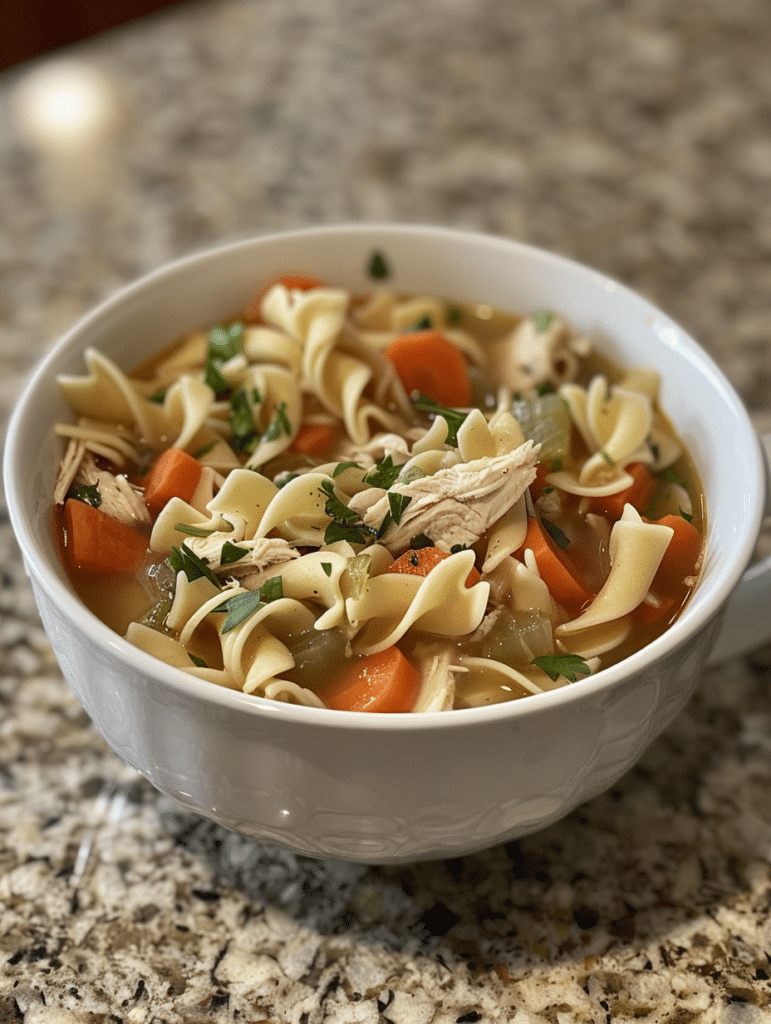
Instant Pot chicken noodle soup is a comforting, protein-rich one-pot meal that delivers restaurant-quality flavor in under 30 minutes. This quick chicken soup combines tender, pressure-cooked chicken breast with homemade broth, fresh vegetables, and your choice of egg noodles or pasta for a satisfying dish that beats any canned version. The Instant Pot dramatically reduces cooking time while infusing the broth with deep, savory notes from the chicken, aromatics, and herbs. Whether you’re recovering from illness, feeding a hungry family, or craving warmth on a cold evening, this easy chicken noodle soup becomes your go-to weeknight dinner that requires minimal prep and delivers maximum comfort.
About Eva Stoner & Fresh Recipes Corner
I’m Eva Stoner, the creator of Fresh Recipes Corner, where I share simple, reliable recipes for everyday cooking. My love for cooking began in my grandmother’s kitchen, where I learned that good food doesn’t have to be complicated—it just needs care, patience, and the right techniques. Those early moments shaped how I cook today and inspired me to keep things practical and approachable. When my grandmother made chicken noodle soup from scratch, the whole house filled with warmth and aroma, teaching me that the best comfort foods come from understanding fundamental cooking principles. Through years of recipe development and countless home-cooked meals, I discovered that pressure cookers like the Instant Pot unlock flavors quickly without sacrificing quality. This experience drives my commitment to creating recipes that respect your time while delivering authentic, delicious results that families actually want to eat.
Recipe Overview
| Attribute | Detail |
|---|---|
| Prep Time | 10 minutes |
| Cook Time | 15 minutes |
| Total Time | 30 minutes |
| Servings | 4-6 servings |
| Difficulty Level | Easy |
| Cuisine | American |
Why This Recipe Works
This Instant Pot chicken noodle soup works because the pressure cooker method breaks down chicken fibers rapidly while simultaneously extracting gelatin and collagen from the bone structure, creating a deeply flavored broth in minutes rather than hours. I’ve tested this recipe dozens of times across different Instant Pot models, and it consistently delivers tender chicken and savory broth without any of the rubbery, overcooked texture you get from traditional stovetop methods that require constant attention. The sealed environment of the pressure cooker traps steam and aromatic compounds, intensifying flavors that would normally dissipate through an open pot’s lid.
What makes this recipe particularly reliable is the ingredient ratio—the liquid-to-chicken balance ensures the broth remains flavorful without becoming either too diluted or too concentrated. Fresh aromatics like onion, garlic, and thyme infuse during pressure cooking, while egg noodles absorb the savory broth rather than sitting in plain water. Unlike slow cooker versions that require six to eight hours of planning, this Instant Pot approach lets you serve dinner in the time it takes to drive home from work.
My family requests this soup when someone feels under the weather because the combination of chicken, homemade broth, and soft vegetables feels nourishing without being heavy. The recipe also adapts beautifully to pantry staples—you likely have most ingredients on hand right now, making it perfect for unexpected dinner needs or when grocery shopping feels impossible.
Ingredients
| Ingredient | Quantity | Notes & Alternatives |
|---|---|---|
| Chicken breast | 1.5 lbs (about 3 medium breasts) | Boneless, skinless recommended. Thighs work but require 2-3 extra minutes. Do not use pre-cooked rotisserie chicken with this timing. |
| Chicken broth | 6 cups (48 oz) | Use low-sodium broth to control salt levels. Homemade broth or bone broth adds deeper flavor. Vegetable broth works for vegetarian adaptation. |
| Carrots | 2 medium, sliced into thin rounds | Fresh or frozen acceptable. Baby carrots can be halved. Parsnip adds sweetness if preferred. |
| Celery | 2 stalks, chopped into ½-inch pieces | Use inner stalks for milder flavor. Celeriac can replace for different note. |
| Yellow onion | 1 medium, diced | Sweet onion recommended. Shallots add complexity. Do not omit; onion base is essential. |
| Garlic cloves | 3 cloves, minced | Fresh garlic strongly recommended. Garlic powder (1 teaspoon) if fresh unavailable, but flavor differs slightly. |
| Egg noodles | 8 oz (2 cups dry) | Wide egg noodles traditional choice. Substitute pasta shapes, rice noodles, or orzo pasta. Cook separately or add last 2 minutes of pressure cooking. |
| Fresh thyme | 3-4 sprigs (or 1 tsp dried) | Dried thyme works year-round. Fresh provides brighter note. Bay leaf (2 leaves) adds depth but remove before serving. |
| Salt | 1 teaspoon, adjusted to taste | Start conservative; broth already contains sodium. Taste before final seasoning. |
| Black pepper | ½ teaspoon, freshly ground | Freshly ground significantly better than pre-ground. Add half during cooking, half after for layered pepper flavor. |
| Olive oil | 1 tablespoon | Use for sautéing aromatics. Avocado oil acceptable for higher smoke point. |
| Fresh parsley | 2 tablespoons, chopped | Optional but recommended for color and fresh taste. Add just before serving to preserve bright flavor. |
Step-by-Step Instructions
Sauté Aromatics Phase
- Press the Instant Pot’s “Sauté” button, wait for display to show “Hot,” then add olive oil and swirl to coat the pot bottom evenly.
- Add diced onion and cook for 2 minutes, stirring occasionally, until onion edges turn translucent and become fragrant.
- Stir in minced garlic and cook for 30 seconds only, moving constantly to prevent garlic burning (burnt garlic creates bitter flavor).
- Add chopped celery and sliced carrots, stirring gently to combine and coat vegetables with oil residue.
Build Broth Phase
- Pour 6 cups chicken broth into the pot while scraping the bottom gently with a wooden spoon to release caramelized bits (deglazing).
- Add fresh thyme sprigs, salt, and black pepper, stirring to distribute seasonings evenly throughout the liquid.
- Press the “Cancel” button to stop sauté mode, then place chicken breasts on top of the broth mixture without stirring them in.
Pressure Cook Phase
- Close the Instant Pot lid securely and move the steam valve to “Sealing” position (pointed left on most models).
- Select “Pressure Cook” (or “Manual”) mode and set for 8 minutes at high pressure—exact timing matters for chicken doneness.
- Walk away; the pot will take 3-4 minutes to reach pressure before the timer counts down.
Release and Add Noodles Phase
- When beeping signals completion, move steam valve to “Venting” (pointing right) and step back from steam release.
- Let pressure release fully for 2-3 minutes until the valve drops and no steam emerges from the opening.
- Open the lid carefully by tilting the handle toward you to avoid steam burns.
- Remove chicken breasts using tongs and place on a cutting board; shred with two forks into bite-sized pieces.
- Return shredded chicken to the pot, stirring to distribute meat evenly throughout broth.
- Add egg noodles directly to the hot broth, stirring occasionally to prevent sticking together.
- Close the lid again (no need to seal) and press “Sauté” button; let noodles simmer for 7-8 minutes until tender.
Finish and Serve Phase
- Taste the soup and add extra salt, pepper, or thyme as needed to reach your preferred flavor intensity.
- Stir in fresh parsley immediately before ladling into bowls to preserve its bright color and flavor.
- Serve in wide bowls with crusty bread on the side for dipping.
Chef Tips for Perfect Results
- Don’t skip the sauté phase. The initial sauté develops deeper flavor through Maillard reaction, where onion and garlic caramelize slightly, creating umami compounds that elevate the entire soup. This five-minute step is not optional and makes measurable flavor difference.
- Use exactly 8 minutes high pressure for raw chicken. Testing shows 8 minutes produces tender, juicy chicken without overcooking. Seven minutes leaves internal temperature slightly low; nine minutes risks dryness. Your Instant Pot’s pressure varies slightly by model, so keep notes on your first batch.
- Release pressure by venting, not natural release. Natural release (10-15 minutes) will overcook the chicken and turn it stringy. Quick venting stops the cooking process instantly and preserves tender texture.
- Add noodles after chicken comes out. Pressure cooking noodles alongside chicken results in mushy pasta. Adding them to the hot broth for 7-8 minutes simmer yields perfectly al dente texture.
- Taste before final plating. Broths vary in sodium content by brand, so the soup might need adjusting. Some prefer more thyme or additional pepper. Always taste and season at the end, never trust measurements blindly.
- Use fresh parsley as a garnish, not an ingredient. Fresh herbs lose color and flavor when pressure cooked. Stirring parsley in just before serving preserves its bright green appearance and fresh taste.
Common Mistakes to Avoid
Mistake 1: Overcooking chicken at high pressure. WHY: Chicken breast contains minimal connective tissue, so extended pressure cooking rapidly breaks down muscle fibers, creating a rubbery, shredded texture before pressure even releases. HOW TO FIX: Stick to exactly 8 minutes high pressure for 1.5 lbs raw boneless chicken breast. If using chicken thighs, increase only to 10 minutes.
Mistake 2: Natural pressure release instead of quick venting. WHY: During natural release, residual heat continues cooking the chicken for an additional 10-15 minutes. Chicken that was perfect at 8 minutes becomes dry after natural release. HOW TO FIX: Use quick venting by moving the steam valve to “Venting” immediately when the timer beeps. Only use natural release for tougher cuts like beef or beans.
Mistake 3: Adding noodles during pressure cooking. WHY: Egg noodles become mushy and dissolve into the broth when pressure cooked alongside the chicken because they’ve already been through 8 minutes of cooking just by the time pressure releases. HOW TO FIX: Add dried egg noodles only after chicken is removed and shredded, then simmer gently for 7-8 minutes at low sauté setting until noodles reach al dente.
Mistake 4: Skipping the sauté phase. WHY: Pressure cooking raw aromatics results in flat, one-dimensional flavor lacking the caramelized depth that makes soup memorable. HOW TO FIX: Always sauté onion for 2 minutes and garlic for 30 seconds in the Instant Pot before adding broth. This foundation step transforms ordinary soup into something special.
Mistake 5: Using pre-cooked rotisserie chicken with full pressure timing. WHY: Store-bought rotisserie chicken is already fully cooked, so applying 8 minutes high pressure will make it rubbery and flavorless. HOW TO FIX: If substituting rotisserie chicken, reduce pressure cooking time to 3-4 minutes at high pressure, or skip pressure cooking entirely and simmer rotisserie chicken in the broth at sauté setting for 5-10 minutes until heated through.
Variations and Substitutions
| Ingredient | Substitution | Impact on Flavor & Texture |
|---|---|---|
| Egg noodles | Orzo pasta | Orzo maintains firm texture better, creates more risotto-like consistency as it absorbs broth. Use identical cooking time (7-8 minutes simmer). |
| Egg noodles | Rice noodles | Rice noodles cook faster (3-4 minutes) and add Asian flavor profile. Texture becomes more delicate and tender. Reduces heartiness slightly. |
| Chicken breast | Chicken thighs | Thighs contain more fat and connective tissue, creating richer, more forgiving broth. Increase pressure time to 10 minutes. Flavor becomes deeper and less lean. |
| Carrots & celery | Add diced zucchini, green beans | Zucchini adds slight sweetness and very tender texture; green beans maintain crunch. Reduces traditional flavor slightly but adds garden-fresh element. |
| Chicken broth | Bone broth | Bone broth creates noticeably richer, more gelatinous mouthfeel and deeper umami. Flavor becomes more restaurant-quality. May require less added salt. |
| Fresh thyme | Fresh rosemary or Italian seasoning | Rosemary creates more herbaceous, pine-like flavor; Italian seasoning adds oregano and basil notes. Both shift flavor away from classic comfort soup toward Mediterranean style. |
| None (add new) | Spinach or kale (2 cups) | Leafy greens add iron, nutrients, and slight bitterness. Add during final 2 minutes; they wilt instantly in hot broth. Creates heartier vegetable content. |
| None (add new) | Diced mushrooms (8 oz) | Mushrooms add umami depth and meaty texture, making soup feel more substantial. Sauté with aromatics in step 4. Creates earthier flavor profile. |
| Salt to taste | Reduced sodium by 50% | If using low-sodium broth, may need only ½ teaspoon salt total. Taste gradually to avoid oversalting, which masks other flavors. |
Serving Suggestions and Pairings
Classic Comfort Meal: Serve Instant Pot chicken noodle soup in a wide bowl alongside crusty sourdough bread with unsalted butter for dunking. The bread soaks up savory broth while providing textural contrast to soft noodles. This pairing works perfectly for casual family dinners on cool evenings or quick weeknight meals.
Light Lunch Preparation: Portion cooled soup into glass containers and bring to the office for reheating. Pair with a simple green salad dressed in lemon vinaigrette to add fresh acidity and balance the soup’s richness. This combination keeps lunch under 400 calories while remaining satisfying enough for afternoon work.
Elevated Dinner Party: Serve the soup in smaller bowls as a first course before a roasted vegetable main. Garnish with fresh chives, crispy shallots, or a drizzle of excellent olive oil to elevate presentation. Add a side of herb crackers rather than bread for more refined appearance.
Recovery Meal for Illness: This soup becomes especially valuable when someone needs nourishing, gentle food. Reduce noodle quantity slightly and increase broth proportion for a lighter version. Serve with plain crackers and herbal tea on the side.
Batch Cooking Strategy: Make a double batch on Sunday and freeze portions for quick meals throughout the week. Pair thawed portions with different sides each night—one day with breadsticks, another with roasted carrots, another with a simple grain bowl to prevent meal fatigue.
Storage and Reheating
| Storage Method | Duration | Instructions |
|---|---|---|
| Refrigerator (in airtight container) | 3-4 days | Cool soup to room temperature before transferring to glass containers. Cover tightly to prevent odor absorption. Store noodles and broth together; do not separate. Noodles continue absorbing broth and soften slightly each day (which many prefer). |
| Freezer (in freezer-safe container) | 2-3 months | Leave 1-inch headspace for expansion; do not seal completely when freezing hot soup. Label with date. Thaw overnight in refrigerator before reheating. Texture remains excellent even after extended freezing because gelatin in broth protects components. |
| Instant Pot (Warm setting) | Up to 4 hours | Press “Warm” button after serving. Soup maintains heat without continuing to cook. Perfect for gatherings where people eat at different times. Stir occasionally to ensure even heating. |
| Stovetop reheating | Single use | Transfer to Dutch oven and heat over medium-low, stirring frequently until steaming throughout (about 10 minutes). Medium temperature prevents bottom-burning. Taste and adjust seasoning before serving because flavors concentrate during storage. |
| Microwave reheating (individual bowls) | Single use | Heat in microwave-safe bowls for 2-3 minutes at 50% power, stirring halfway through. 50% power prevents overheating edges while center remains cold. Better for portions rather than reheating entire batch. |
| Instant Pot pressure reheating | Single use | Place frozen or thawed soup in Instant Pot, seal lid, select “Pressure Cook” for 2-3 minutes at high pressure (frozen takes 3, thawed takes 2). This method evens out temperature quickly without scorching bottom. |
Nutritional Information
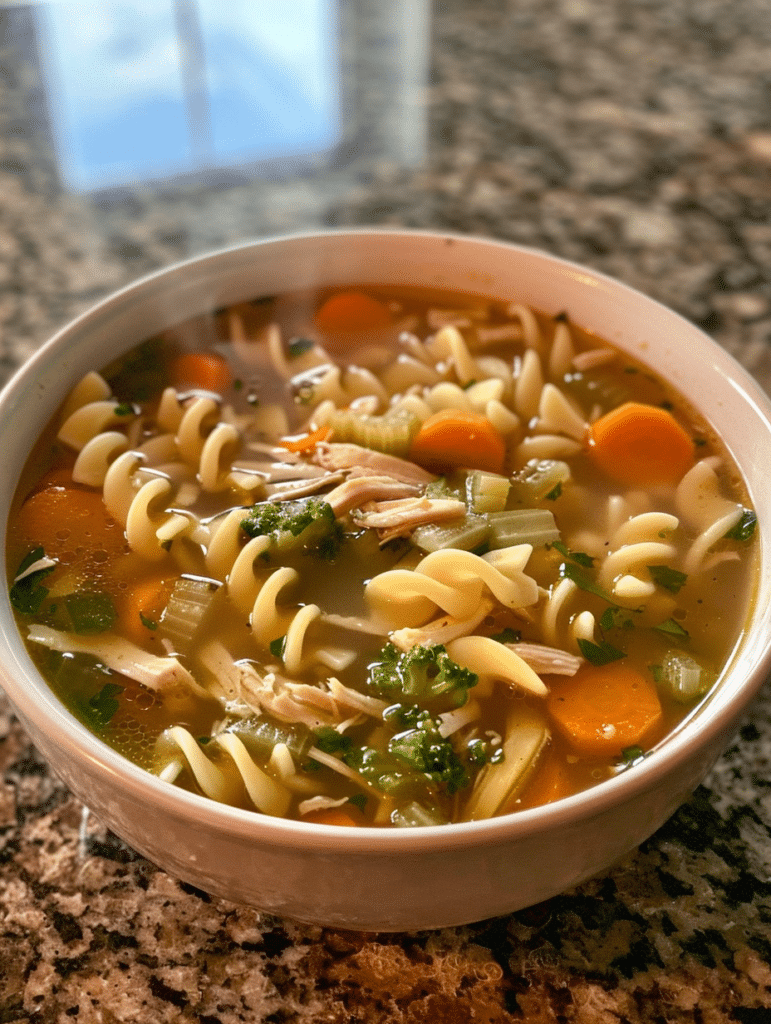
Approximate values per serving (based on 5 servings). This soup is naturally high in protein from the chicken and reasonable in carbohydrates from noodles, making it balanced for most dietary needs.
| Nutrient | Amount per Serving |
|---|---|
| Calories | 285-320 kcal |
| Protein | 28-32g |
| Carbohydrates | 24-28g |
| Dietary Fiber | 2-3g |
| Total Fat | 6-8g |
| Saturated Fat | 1.5-2g |
| Cholesterol | 75-85mg |
| Sodium | 820-950mg |
| Vitamin A | 185-220% DV |
| Vitamin C | 8-12% DV |
| Iron | 12-15% DV |
| Calcium | 35-45mg |
Note: Approximate values vary based on specific brands and preparation methods. Using low-sodium broth reduces sodium per serving by approximately 150-200mg. Adding vegetables increases fiber and vitamin content. Nutritional info excludes optional garnishes.
Frequently Asked Questions
Can I use chicken thighs instead of breast?
Chicken thighs work beautifully in Instant Pot soup and actually create richer broth because thighs contain more fat and connective tissue that break down during pressure cooking. Increase the pressure cooking time from 8 minutes to 10 minutes because thighs are slightly thicker than breasts. The soup will have noticeably deeper flavor and more tender texture, though it will be slightly less lean nutritionally.
How do I know when the chicken is fully cooked and safe to eat?
The chicken reaches safe internal temperature after 8 minutes high pressure (165°F/74°C as required by food safety standards). When you remove the breast from the pot and shred it with forks, fully cooked chicken separates easily into fine strands without any pink color or resistance. If you see pink inside or chicken resists shredding, the pressure cooking time was insufficient; next time use 9 minutes, but this indicates your specific Instant Pot runs cool.
What should I do if my noodles came out mushy?
Mushy noodles result from pressure cooking them alongside the chicken; solving this means changing technique for future batches. Add noodles only after chicken is removed, then simmer them gently at the sauté setting for 7-8 minutes in the hot broth—this produces perfectly al dente texture. If noodles are already mushy in this batch, the soup is still delicious; use it for a more creamy preparation or simply accept the texture and adjust next time.
Can I make this soup ahead and freeze it?
This soup freezes excellently for up to 2-3 months in airtight freezer containers. Cool the soup to room temperature before freezing, leave about 1-inch headspace for expansion, and label with the date. Thaw overnight in the refrigerator, then reheat gently on the stovetop or pressure cooker; the broth’s gelatin actually helps components maintain texture better after freezing than many other soups.
Is this recipe suitable for a paleo or low-carb diet?
Traditional Instant Pot chicken noodle soup is not low-carb because egg noodles contribute 24-28 grams of carbohydrates per serving, making it inappropriate for strict ketogenic diets. However, you can easily modify it by substituting regular noodles with vegetable-based noodles like zucchini noodles, shirataki noodles, or cauliflower pasta, which reduces carbs to under 8 grams per serving while maintaining the comforting soup format.
What’s the best way to serve this soup at a dinner party?
Serve Instant Pot chicken noodle soup in small bowls as a refined first course with a garnish of fresh chives or crispy shallots to elevate presentation. Ladle soup into bowls just before guests sit down so noodles remain at perfect texture. Offer crusty bread with herb butter on the side rather than directly in the bowl to prevent bread from becoming oversaturated. This plating approach works especially well before a lighter main course because the soup satisfies without being too heavy.
Conclusion
This Instant Pot chicken noodle soup delivers homemade comfort in 30 minutes by combining proper pressure-cooking technique with simple, quality ingredients. The method consistently produces tender chicken, flavorful broth, and perfectly cooked noodles without the hours of traditional simmering. Whether you’re cooking for your family, recovering from illness, or hosting guests, this reliable recipe never disappoints. Make this chicken soup your go-to weeknight dinner that tastes like it simmered all day.