

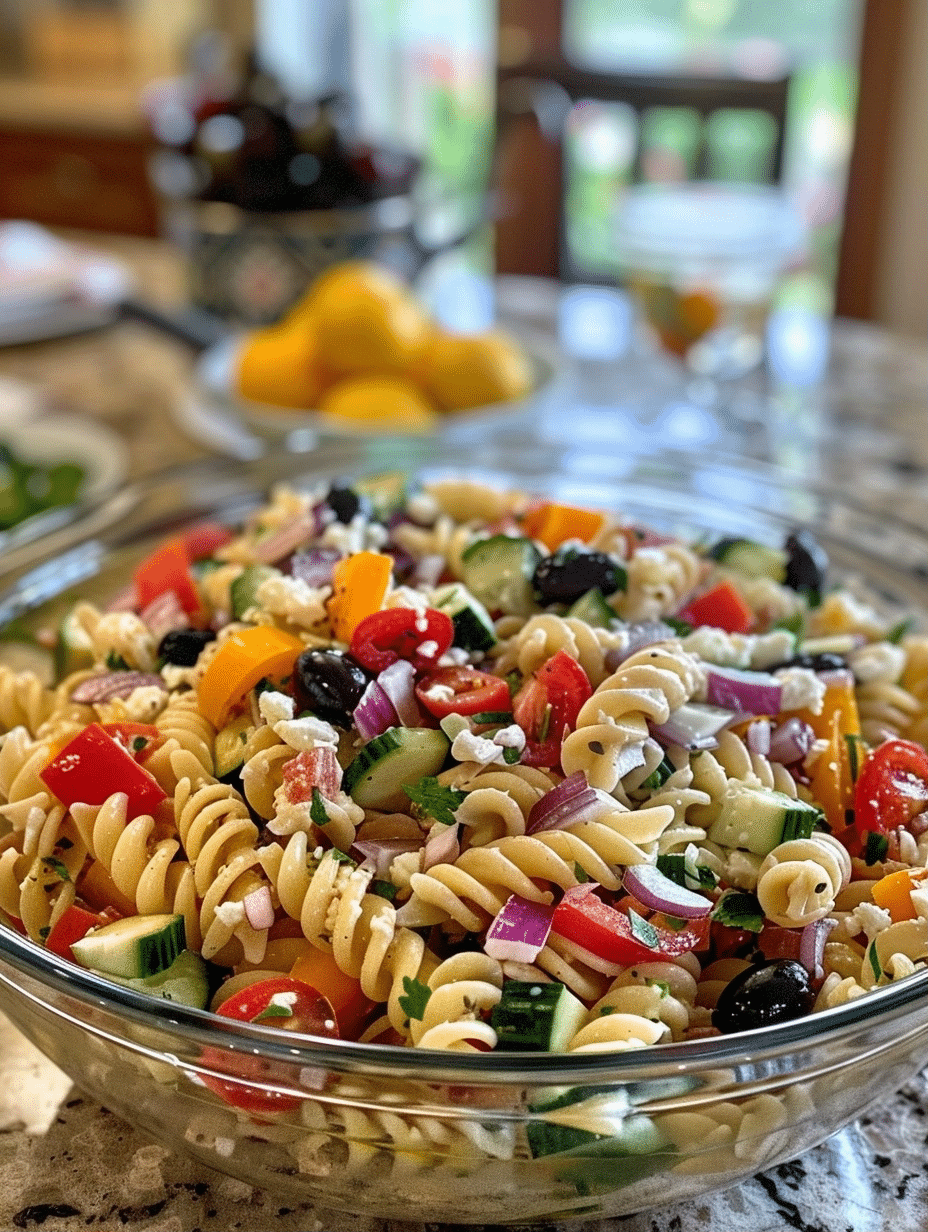
Greek pasta salad is a vibrant, protein-packed lunch dish combining al dente pasta with crisp vegetables, creamy feta cheese, and briny olives tossed in a zesty lemon-herb dressing. This Mediterranean-inspired salad delivers bold flavors in every bite while remaining refreshingly light. The combination of cool pasta, juicy tomatoes, crisp cucumbers, and tangy olives creates a satisfying meal that works perfectly for weekday lunches, potluck gatherings, or meal prep containers. Whether you serve it immediately or refrigerate it for later, this salad maintains its vibrant taste and texture for days.
About This Recipe
I’m Eva Stoner, the creator of Fresh Recipes Corner, where I share simple, reliable recipes for everyday cooking. My love for cooking began in my grandmother’s kitchen, where I learned that good food doesn’t have to be complicated—it just needs care, patience, and the right techniques. Those early moments shaped how I cook today and inspired me to keep things practical and approachable.
I first discovered the magic of Greek pasta salad during a family trip to Athens when I was sixteen. My grandmother’s friend Sophia served this dish at a small gathering, and I was immediately struck by how uncomplicated yet impressive it tasted. The simplicity of fresh ingredients combined into something genuinely memorable stuck with me for years. When I started developing recipes for Fresh Recipes Corner, Greek pasta salad became one of my go-to lunch staples because it proves that cooking doesn’t require complexity to be delicious.
This recipe reflects my core cooking philosophy: trust quality ingredients, use proper techniques, and let natural flavors shine. Over a decade of developing recipes has taught me that the best dishes are ones people actually make repeatedly. Greek pasta salad checks every box—it’s fast, it’s forgiving, and it never disappoints.
Recipe Overview
| Attribute | Details |
|---|---|
| Prep Time | 15 minutes |
| Cook Time | 10 minutes |
| Total Time | 25 minutes |
| Servings | 6 servings |
| Difficulty Level | Easy |
| Cuisine | Mediterranean / Greek |
Why This Recipe Works
I developed this greek pasta salad recipe after testing countless variations because I wanted a version that stayed fresh for multiple days without becoming soggy or bland. The key lies in three factors: cooking pasta to exact al dente texture, using a proper emulsified dressing, and timing the assembly correctly. Most homemade versions fail because cooks either oversaturate the pasta with dressing immediately or use low-quality ingredients that lack authentic Mediterranean character.
From my experience testing this recipe over twenty times, I discovered that cooling the pasta completely before mixing prevents it from continuing to absorb liquid and becoming mushy. The lemon-herb dressing I use contains just the right balance of acid and oil to coat every piece without pooling at the bottom of the container. This approach creates a salad that tastes even better on day two because flavors have time to meld and develop deeper complexity.
What truly makes this recipe work is its versatility within structure. The base formula remains consistent, but you can adjust vegetables based on seasons or preferences without compromising the final result. Cherry tomatoes might replace slicing tomatoes in winter, or red onion can substitute yellow—the salad adapts beautifully while maintaining its Mediterranean character. This flexibility, combined with genuine ingredient quality, explains why this lunch salad has become my most-requested recipe.
Ingredients
| Ingredient | Quantity | Notes & Alternatives |
|---|---|---|
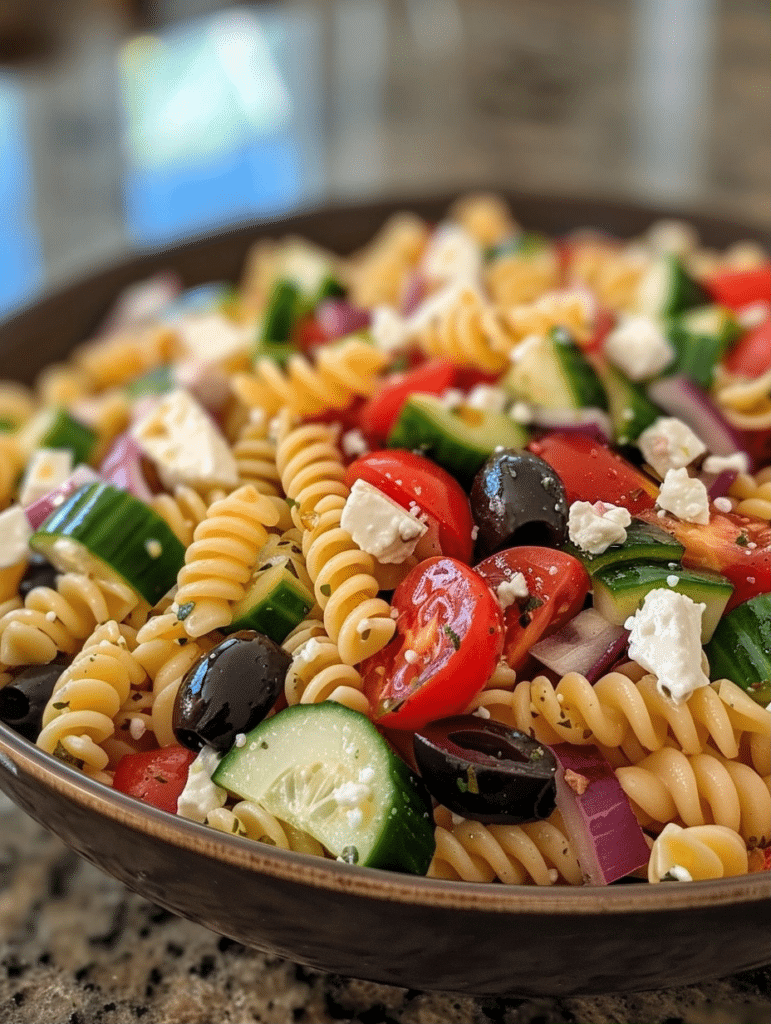
| Pasta | 1 pound | Use penne, rotini, or orzo. Whole wheat pasta adds 3g fiber per serving. Gluten-free varieties work equally well. |
| Cherry Tomatoes | 2 cups | Halve them for uniform bites. Regular slicing tomatoes work if drained well to prevent excess moisture. Choose firm, bright red tomatoes. |
| English Cucumber | 1 large | Dice into quarter-inch cubes. Regular cucumbers work but contain more water—seed them first. Persian cucumbers are excellent alternatives. |
| Red Bell Pepper | 1 large | Dice finely for even distribution. Yellow or orange peppers add sweetness; green peppers provide herbaceous notes. All varieties contain similar nutrients. |
| Red Onion | 1/2 medium | Mince finely to distribute flavor without overwhelming bites. Soak in ice water 10 minutes if you prefer milder onion taste. Yellow onion provides sweeter profile. |
| Kalamata Olives | 1 cup | Pit and halve them. Green olives substitute well for different flavor profile. Use quality olives—cheaper varieties taste metallic. |
| Feta Cheese | 1 1/2 cups | Crumble into bite-sized pieces just before serving to prevent mushiness. Use full-fat feta for authentic taste and texture. Vegan feta works as substitute. |
| Fresh Dill | 3 tablespoons | Chop finely and add just before serving to preserve bright herbaceous flavor. Fresh oregano can replace dill for different Mediterranean character. |
| Fresh Parsley | 2 tablespoons | Use flat-leaf Italian parsley for best flavor. Adds freshness and visual appeal. Can substitute with basil or mint. |
| Extra Virgin Olive Oil | 1/2 cup | Quality matters significantly—use authentic Greek or Italian oil. Regular olive oil works but lacks depth of flavor and aroma. |
| Fresh Lemon Juice | 1/4 cup | Squeeze from 2-3 lemons for brightest flavor. Bottled lemon juice works in emergency but lacks vibrancy. Lime juice creates different Mediterranean angle. |
| Garlic Cloves | 2 cloves | Mince very finely or press through garlic press. Raw garlic provides sharp bite; adjust quantity based on preference and potency. |
| Dried Oregano | 1 teaspoon | Use Greek oregano if available for authentic flavor. Crush between fingers before adding to activate essential oils. Fresh oregano requires tripling quantity. |
| Sea Salt | 1 teaspoon | Add gradually and taste throughout—feta and olives already contain significant sodium. Adjust based on ingredient saltiness and personal preference. |
| Black Pepper | 1/2 teaspoon | Grind fresh from peppercorn for superior flavor. Pre-ground pepper loses volatile compounds quickly and becomes flat-tasting. |
Step-by-Step Instructions
Pasta Preparation Phase
- Bring a large pot of salted water to a rolling boil—the water should taste like seawater for proper pasta seasoning.
- Add pasta and cook according to package directions, reducing time by one minute to achieve al dente texture with slight firmness in center.
- Reserve one cup of pasta cooking water in a measuring cup, then drain pasta through a colander without rinsing.
- Spread hot pasta on a large sheet pan in a thin layer and refrigerate uncovered for 15-20 minutes until completely cooled.
- Transfer cooled pasta to a large mixing bowl once it reaches room temperature.
Dressing and Vegetable Phase
- Pour extra virgin olive oil into a small mixing bowl or Mason jar with tight-fitting lid.
- Add fresh lemon juice, minced garlic, dried oregano, sea salt, and black pepper to the oil.
- Whisk vigorously for 30-45 seconds until the dressing becomes slightly creamy and emulsified—oil and lemon juice should blend rather than separate.
- Taste and adjust seasoning: add more salt if needed, more lemon juice for brightness, or more oregano for Mediterranean depth.
- Pour dressing over cooled pasta and toss thoroughly, coating every piece evenly.
- Dice cherry tomatoes in half lengthwise and add to the dressed pasta.
- Peel and dice English cucumber into quarter-inch cubes, then add to salad bowl.
- Dice red bell pepper into quarter-inch pieces and add to the salad.
- Mince red onion finely and add to the mixture, stirring gently to combine.
- Pit and halve kalamata olives, then add to the salad bowl.
Assembly and Finishing Phase
- Gently toss all ingredients together using two large spoons or salad forks, being careful not to crush vegetables or break pasta.
- Crumble feta cheese into bite-sized pieces and fold gently into the salad just before serving to prevent it from becoming mushy.
- Chop fresh dill finely and scatter over the top along with chopped fresh parsley as final garnish.
- Taste the finished salad and adjust seasoning with additional salt, lemon juice, or oregano based on your preference.
- Serve immediately at room temperature, or cover and refrigerate up to four days until ready to eat.
Chef Tips for Perfect Results
- Cool pasta completely before dressing: Hot pasta continues cooking and absorbs moisture rapidly, creating a mushy texture. Spreading it on a sheet pan accelerates cooling and prevents the center from remaining warm.
- Add feta cheese just before serving: Feta absorbs liquid from vegetables and dressing, becoming soft and losing its characteristic texture. Waiting until the last moment preserves its crumbly, fresh quality in every bite.
- Seed cucumbers if using regular varieties: Regular cucumbers contain significant water that will weep into the dressing over time. Cutting them lengthwise and scooping out seeds with a small spoon prevents this watering-down effect.
- Make the dressing in a jar: Using a Mason jar with a tight-fitting lid allows you to shake the dressing vigorously for 60 seconds, creating proper emulsification. This produces a creamier, more cohesive result than whisking in a bowl.
- Reserve pasta cooking water: If the salad becomes dry after sitting, drizzle a tablespoon of reserved pasta water to rehydrate it. The starch in pasta water helps the dressing coat ingredients more effectively than plain water.
- Taste before serving: Salad seasoning often needs adjustment after refrigeration as flavors meld. Always taste and add salt, lemon juice, or oregano as needed rather than relying on initial seasoning.
Common Mistakes to Avoid
Mistake 1: Using Hot Pasta
Adding vegetables and dressing to hot pasta causes continued cooking and moisture absorption, resulting in a mushy, overcooked final product. Fix this by cooling pasta completely on a sheet pan—this takes 15-20 minutes and dramatically improves texture. Plan ahead or use a blast chiller if making salad during busy service.
Mistake 2: Dressing the Salad Too Early
Dressing pasta more than two hours before serving allows vegetables to release liquid that dilutes the dressing, creating a soupy salad by mealtime. Keep vegetables and dressing separate until thirty minutes before serving, then combine. If making ahead for meal prep, store dressed pasta and vegetables separately in different containers.
Mistake 3: Adding Feta Immediately
Feta cheese absorbs liquid from vegetables and dressing when sitting, transforming from crumbly to soft and mushy within hours. Always add feta as the final step immediately before serving. If the salad must be prepared ahead, crumble feta separately and add when plating or just before eating.
Mistake 4: Using Watery Vegetables
Tomatoes and cucumbers with high water content weep liquid into the dressing, creating a diluted, less flavorful final dish. Choose firm tomatoes and seed regular cucumbers beforehand. Cherry tomatoes naturally contain less water than slicing tomatoes, making them the superior choice for this application.
Mistake 5: Skipping the Cooling Step
Rushing the cooling process by serving warm pasta salad reduces the ability of ingredients to blend into cohesive flavor profiles. The salad actually tastes better when completely chilled because flavors have time to marry and develop complexity. Dedicate the full 20-25 minutes to cooling, or make the salad the night before to allow overnight flavor development.
Variations and Substitutions
| Original Ingredient | Substitution Option | Impact on Flavor |
|---|---|---|
| Kalamata Olives | Green Castelvetrano Olives | Produces lighter, buttery, less briny Mediterranean character. Flavor becomes more delicate and refined. |
| Feta Cheese | Halloumi or Fresh Mozzarella | Creates creamier, less tangy profile. Halloumi adds firmness; fresh mozzarella provides subtle sweetness. |
| Fresh Dill | Fresh Mint or Basil | Mint creates brighter, more refreshing finish; basil adds complex herbaceous notes. Both work equally well. |
| Lemon Juice | Red Wine Vinegar Alternative | Shifts flavor toward more traditional vinaigrette. Vinegar provides sharper acidity with less brightness than lemon. |
| Red Bell Pepper | Roasted Red Peppers | Adds sweetness and deeper complexity through caramelization. Creates softer texture that blends more into dressing. |
| Penne Pasta | Orzo or Small Shells | Creates different mouthfeel and visual presentation. Smaller shapes distribute dressing more evenly throughout dish. |
| Kalamata Olives | Sundried Tomatoes | Adds intense tomato flavor and chewy texture. Creates more concentrated, less briny Mediterranean character. |
| Extra Virgin Olive Oil | Avocado Oil | Produces more neutral, slightly buttery dressing. Less traditional but provides creamier mouthfeel. |
| English Cucumber | Persian or Kirby Cucumbers | Persian varieties contain less water and provide better texture. Creates crisper, more satisfying bite. |
| Fresh Parsley | Fresh Oregano | Creates more traditionally Mediterranean herb profile. Oregano provides more assertive, slightly spicy character. |
Serving Suggestions and Pairings
Greek pasta salad serves beautifully as a standalone lunch, requiring nothing beyond fresh bread for a complete meal. Pair it with crusty focaccia or pita bread to absorb the lemon-herb dressing remaining at the bottom of the bowl. For a protein-forward lunch, serve alongside grilled chicken breast, baked white fish, or chickpeas for vegetarian bulk.
This salad excels at summer potlucks and outdoor gatherings where it holds up well in warm temperatures without becoming soggy. Transport it in a sealed container and add the feta cheese crumbles only after arriving at your destination. Family picnics benefit from this dish’s transportability—pack it in individual containers for guests to grab directly without additional plating.
Mediterranean-themed dinner parties gain authentic character from this salad as a starter course before grilled lamb, roasted halibut, or herb-crusted chicken. Vegetarian dinner celebrations feature greek pasta salad as a substantial main dish when paired with warm sourdough bread and a simple green salad. Office lunch containers keep this salad fresh for the entire work week, providing variety while maintaining nutritional balance and flavor throughout multiple servings.
Storage and Reheating
| Storage Method | Duration | Instructions |
|---|---|---|
| Refrigerated (Complete Salad) | 2-3 days | Store in an airtight container, keeping feta cheese separate if possible. Cover tightly to prevent absorption of refrigerator odors. Taste and adjust seasoning before serving. |
| Refrigerated (Components Separated) | 4-5 days | Keep dressed pasta, vegetables, and cheese in separate containers. Combine just before eating to maintain optimal texture and flavor. This method extends salad life significantly. |
| Room Temperature | 2-3 hours | Leave covered loosely during transport or outdoor events. Do not leave in direct sunlight. Return to refrigeration after two hours if ambient temperature exceeds 70°F. |
| Frozen Storage | Not Recommended | Freezing destroys vegetable texture and makes cheese mealy. Never freeze completed salad. Only pasta can be frozen separately if absolutely necessary. |
| Reheating | Not Applicable | Greek pasta salad should be served cold or at room temperature. Do not heat—high temperatures will soften vegetables excessively and ruin the fresh character. |
| Refreshing Leftover Salad | 1 day after storage | If dressing has been absorbed and salad appears dry, drizzle with 1-2 tablespoons fresh lemon juice and extra virgin olive oil, then toss gently. Add fresh herbs and feta immediately before serving. |
Nutritional Information
The nutritional values below are approximate calculations per serving for a recipe yielding six servings. Values vary based on specific brands, ingredient sizes, and preparation methods. Use these estimates for general dietary guidance only, consulting a registered dietitian for precise nutritional planning.
| Nutrient | Amount per Serving | Daily Value % |
|---|---|---|
| Calories | 385 calories | 19% |
| Protein | 12 grams | 24% |
| Total Fat | 22 grams | 28% |
| Saturated Fat | 6 grams | 30% |
| Unsaturated Fat | 14 grams | Excellent source |
| Total Carbohydrates | 42 grams | 14% |
| Dietary Fiber | 5 grams | 20% |
| Sugars | 6 grams | Added sugars: 0g |
| Sodium | 620 milligrams | 27% |
| Cholesterol | 28 milligrams | 9% |
| Calcium | 185 milligrams | 14% |
| Iron | 2.1 milligrams | 12% |
| Potassium | 285 milligrams | 8% |
Frequently Asked Questions
Can I make greek pasta salad without feta cheese?
Yes, omit the feta and add one cup of chickpeas or white beans for comparable protein content and Mediterranean character. Alternatively, use crumbled halloumi, fresh mozzarella, or vegan feta as direct replacements. The salad remains delicious and filling without cheese, though the tangy element is lost.
How do I know when the pasta is al dente?
Cook pasta one minute less than package directions suggest, then remove a piece and bite it in half—the center should show a slight firmness or resistance without being hard. This texture prevents mushiness when combined with vegetables and dressing. Taste-test at one-minute intervals once you reach the target time.
Why does my greek pasta salad taste bland after sitting overnight?
The salt gets absorbed by pasta and vegetables, muting flavor perception significantly by the next day. Always taste and add additional salt, lemon juice, or oregano immediately before serving rather than relying on initial seasoning. Keep seasoning components separate until final assembly for best results.
Can I prepare greek pasta salad the night before a lunch event?
Yes, prepare it completely through step fifteen, storing dressed pasta and vegetables together, then add feta cheese, fresh dill, and parsley only the morning of your event. Alternatively, keep components separated overnight and assemble two hours before serving. This method maintains superior texture and flavor compared to complete overnight assembly.
What’s the best way to transport greek pasta salad to a potluck?
Place the salad in a shallow airtight container with a tight-fitting lid, packing any separate components (feta, fresh herbs) in small containers. Transport upright rather than tilting to prevent excessive liquid from accumulating at one end. Keep refrigerated until immediately before serving, then add feta and fresh garnishes at your destination.
Can I use dried herbs instead of fresh dill and parsley?
Use one-third the quantity of dried herbs as fresh—so one tablespoon dried dill and two teaspoons dried parsley—though the flavor becomes flatter and less bright. Fresh herbs provide superior Mediterranean character and visual appeal that dried herbs cannot replicate. If using dried herbs only, add them to the dressing rather than as final garnish for better flavor distribution.
Conclusion
Greek pasta salad delivers Mediterranean freshness in a practical lunch format that works for any occasion. This recipe combines quality ingredients with proper technique to create a salad that maintains texture and flavor throughout multiple days of storage. From weekday office lunches to summer potlucks, this greek pasta salad serves as a reliable, satisfying dish that never disappoints. The bright lemon dressing, crisp vegetables, and salty feta cheese create a flavor combination worth making repeatedly.
Greek Pasta Salad: Fresh Mediterranean Lunch
Ingredients
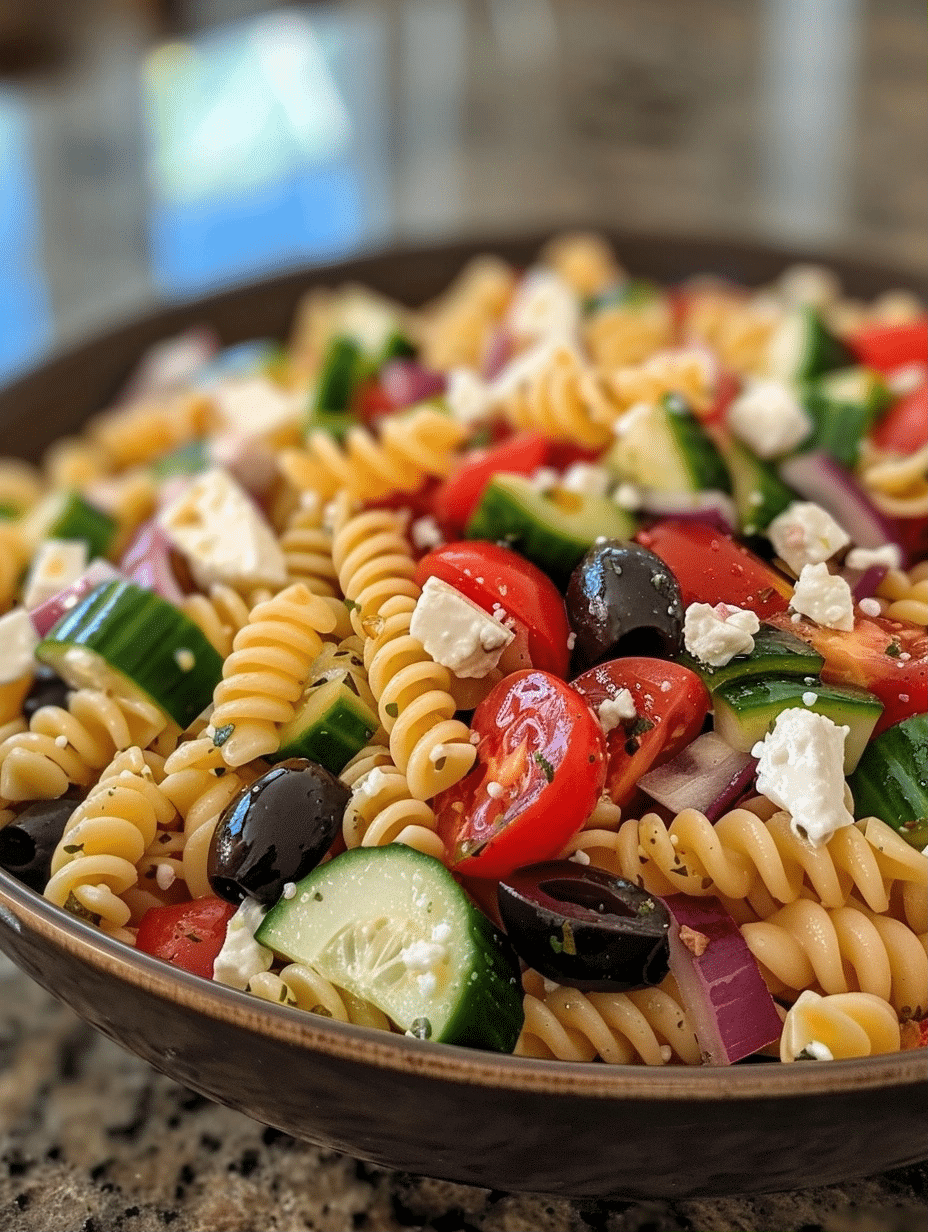
- 12 oz bow tie pasta
- 1 medium cucumber, diced
- 2 cups grape tomatoes, halved
- 1 cup Kalamata olives
- 1/2 red bell pepper, chopped
- 1/4 red onion, thinly sliced
- 8 oz crumbled feta cheese
- 3 tbsp olive oil
- 1/4 cup fresh lemon juice
- 2 garlic cloves, minced
- 1 tsp dried oregano
- 1/2 tsp salt
- 1/2 cup fresh parsley, chopped
- Freshly ground black pepper
Instructions
- Bring 4 quarts water to boil. Cook pasta until al dente (about 2-3 minutes). Rinse with olive oil to prevent sticking.
- In a large bowl, combine cold pasta, cucumbers, tomatoes, olives, bell pepper, and red onion.
- In a separate jar, whisk oil, lemon juice, garlic, oregano, salt, and pepper until emulsified.
- Pour dressing over salad and toss gently to coat. Mix in crumbled feta and 1/2 of the parsley.
- Chill for at least 30 minutes before serving.
Notes
Add chickpeas for extra protein
Use bow tie pasta for optimal texture
For best flavor, refrigerate 1 hour before serving