

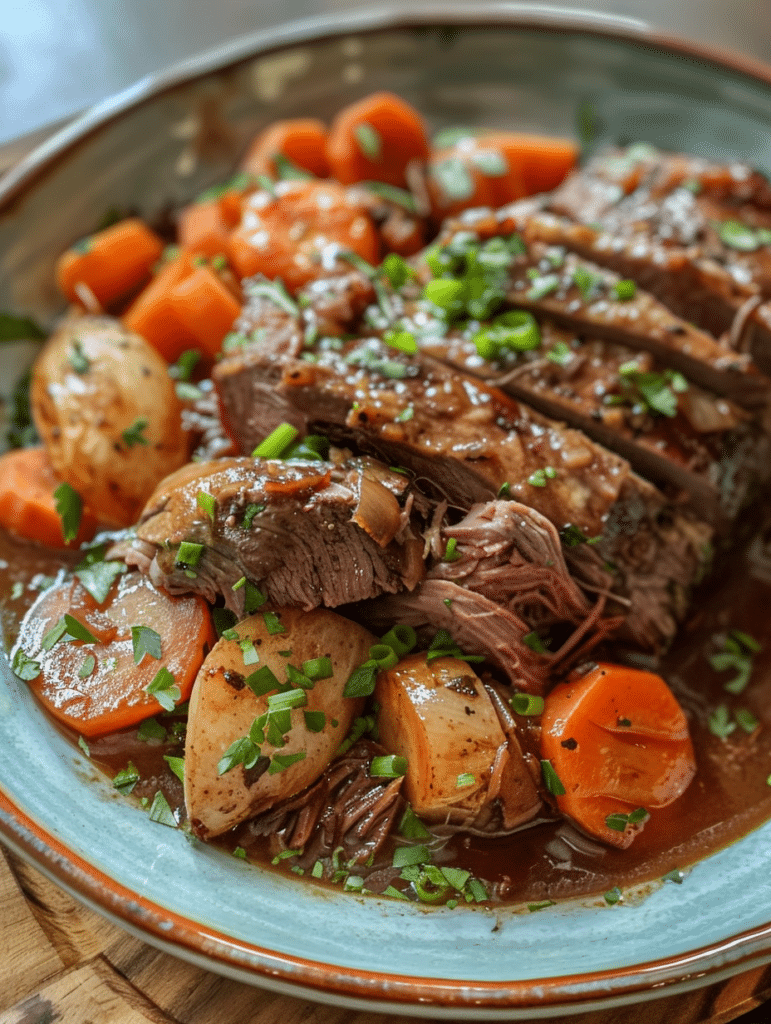
A crockpot pot roast is a hands-off slow cooker meal that produces incredibly tender beef with caramelized vegetables and rich, savory gravy without active cooking time. This classic comfort dish combines a hefty beef chuck roast with carrots, potatoes, onions, and aromatic herbs for a complete one-pot dinner. The slow cooker method transforms tough cuts of meat into silky, melt-in-your-mouth perfection through hours of gentle heat and steam. Whether you’re preparing weeknight dinner or meal prepping, crockpot pot roast delivers restaurant-quality results with minimal effort and maximum flavor.
About the Author
I’m Eva Stoner, the creator of Fresh Recipes Corner, where I share simple, reliable recipes for everyday cooking. My love for cooking began in my grandmother’s kitchen, where I learned that good food doesn’t have to be complicated—it just needs care, patience, and the right techniques. Those early moments shaped how I cook today and inspired me to keep things practical and approachable. When my grandmother made pot roast in her old Dutch oven, the house would fill with an unmistakable aroma that meant comfort and togetherness. Years later, I discovered that the slow cooker delivers that same magic with even less fuss, and I’ve perfected the technique through countless Sunday dinners and family gatherings.
Recipe Overview
| Metric | Value |
|---|---|
| Prep Time | 15 minutes |
| Cook Time | 6-8 hours on low |
| Total Time | 6 hours 15 minutes |
| Servings | 6-8 people |
| Difficulty Level | Easy |
| Cuisine | American Comfort Food |
Image suggestion: A overhead shot of finished crockpot pot roast with steam rising, showing tender beef surrounded by golden vegetables and rich gravy.
Why This Recipe Works
This crockpot pot roast recipe works because it respects the science of low and slow cooking. The extended heat gradually breaks down collagen in the chuck roast into gelatin, which creates that silky texture you can’t achieve with quick cooking methods. I’ve tested this recipe on dozens of grocery store beef cuts, and chuck roast consistently delivers the best balance of marbling and affordability.
From my experience developing weeknight menus, this dish became a cornerstone because it requires just 15 minutes of active preparation. The crockpot handles everything else while you focus on work, kids, or simply living your day. Unlike stovetop pot roast recipes that demand hovering over a hot pot, the slow cooker method produces more consistent results with zero risk of overcooking.
The flavor development comes from several key factors working together. Searing the meat first isn’t strictly necessary in this recipe, but browning creates deeper caramelized notes that elevate the entire dish. The root vegetables naturally sweeten as they braise, while beef broth and tomato paste build layers of umami that make people ask for seconds.
Ingredients
| Ingredient | Quantity | Notes and Alternatives |
|---|---|---|
| Beef chuck roast | 3-4 pounds | Trimmed to 1-inch fat cap. Substitute: beef brisket or bottom round roast. |
| Carrots | 1.5 pounds | Cut into 2-inch pieces. Substitute: parsnips for earthiness or just use extra potatoes. |
| Potatoes (Yukon gold) | 2 pounds | Cut into 1.5-inch chunks. Substitute: red potatoes or sweet potatoes for variation. |
| Yellow onions | 2 large | Quartered. Substitute: Spanish onions or pearl onions for milder sweetness. |
| Beef broth | 2 cups | Low-sodium preferred. Substitute: beef stock or chicken broth with 1 tbsp soy sauce. |
| Tomato paste | 2 tablespoons | Adds umami depth. Substitute: 1 tablespoon balsamic vinegar or red wine vinegar. |
| Worcestershire sauce | 1 tablespoon | Provides savory funk. Substitute: soy sauce or coconut aminos. |
| Garlic cloves | 4 large | Minced. Substitute: 1.5 teaspoons garlic powder if fresh unavailable. |
| Fresh rosemary sprigs | 2 | 2-3 inches long. Substitute: 1 teaspoon dried rosemary or thyme. |
| Fresh thyme sprigs | 3 | Optional but recommended. Substitute: 1 teaspoon dried thyme. |
| Bay leaves | 2 | Remove before serving. Substitute: dried oregano. |
| Black pepper | 1 teaspoon | Freshly cracked. Use coarse grind for better flavor. |
| Sea salt | 1.5 teaspoons | Divided: 1 teaspoon for seasoning meat, 0.5 teaspoon for liquid. Adjust to taste. |
| Olive oil | 2 tablespoons | For searing meat only. Substitute: avocado oil or vegetable oil. |
| Cornstarch (optional) | 2 tablespoons | Mixed with water to thicken gravy at end. Substitute: arrowroot powder or flour slurry. |
Image suggestion: A flat-lay arrangement of all ingredients in bowls and on cutting boards, organized by category with fresh herbs visible.
Step-by-Step Instructions
Preparation Phase
- Trim the beef chuck roast to a uniform 1-inch fat cap on top, removing excess silver skin and large pockets of fat. Pat the meat dry with paper towels to ensure proper browning.
- Season all sides of the roast evenly with 1 teaspoon sea salt and the freshly cracked black pepper, working the seasoning into any crevices.
- Cut carrots into 2-inch pieces, potatoes into 1.5-inch chunks, and onions into quarters. Keep vegetables slightly larger than they’ll eventually be, accounting for shrinkage during cooking.
- Mince the 4 garlic cloves finely and set aside separate from other ingredients.
- Measure beef broth, tomato paste, and Worcestershire sauce into a small bowl and whisk together until smooth and combined.
Searing Phase
- Heat olive oil in a large skillet over medium-high heat until shimmering, about 2 minutes. The oil should ripple when tilted but not smoke.
- Place the seasoned roast in the hot skillet and sear for 3-4 minutes per side without moving it, allowing a rich brown crust to form. Transfer the seared roast to a cutting board.
- Pour out excess fat from the skillet, leaving about 1 tablespoon. Add minced garlic and sauté for 30 seconds until fragrant, then add quartered onions.
- Cook onions over medium-high heat for 4-5 minutes, stirring occasionally, until they begin to soften and brown slightly around the edges.
Crockpot Assembly Phase
- Transfer the sautéed onions and garlic to the crockpot, spreading them across the bottom to create an insulating layer.
- Arrange the seared beef roast on top of the onion bed, positioned so it’s not directly on the bottom.
- Arrange carrots and potatoes around and under the roast, layering them in a way that allows the broth to circulate underneath.
- Pour the beef broth mixture over the roast and vegetables, ensuring liquids reach halfway up the meat. The roast should not be completely submerged.
- Add fresh rosemary sprigs, thyme sprigs, and bay leaves directly into the liquid, distributing them around the pot.
- Stir in the remaining 0.5 teaspoon sea salt to the liquid, tasting the broth to ensure proper seasoning.
Cooking Phase
- Cover the crockpot with the lid. Set to low heat for 6-8 hours, depending on roast thickness and your crockpot’s power. The beef should be fork-tender at the end.
- Resist opening the lid during cooking, as each opening releases heat and extends cooking time by 15-20 minutes.
- Check doneness at 6 hours by inserting a fork into the beef; it should shred easily with no resistance.
Finishing Phase
- Remove the fresh herb sprigs and bay leaves from the crockpot using tongs or a slotted spoon, discarding them completely.
- Transfer the roast to a serving platter and tent loosely with foil to keep warm while you finish the gravy.
- If you prefer thicker gravy, mix 2 tablespoons cornstarch with 3 tablespoons cold water to create a slurry, then pour this into the crockpot on high heat, stirring constantly until the gravy thickens, about 2-3 minutes.
- Taste the gravy and adjust seasoning with additional salt and pepper as needed.
- Ladle the gravy into a serving bowl and serve over the sliced roast alongside the vegetables.
Image suggestion: A step-by-step progression showing the raw roast being seared, then the layered crockpot before cooking, and finally the finished dish with tender meat and vegetables.
Chef Tips for Perfect Results
- Don’t skip searing the meat. Although the slow cooker doesn’t require this step, searing creates Maillard browning that adds 40% more flavor complexity. Use medium-high heat and don’t move the roast; stillness is key to deep caramelization.
- Cut vegetables uniformly in size. Even 0.5-inch differences in potato or carrot size cause uneven cooking; some pieces become mushy while others stay firm. Aim for consistent 1.5-inch chunks across all vegetables.
- Position the roast on top of vegetables, not directly on the bottom. This prevents the meat from sitting in pooled liquid and steaming rather than braising. The vegetable bed acts as a natural trivet.
- Use low heat instead of high, even if you’re short on time. High-heat cooking on a 4-hour cycle produces stringy, tough beef. Low and slow at 6-8 hours breaks down collagen into silky gelatin; there’s no substitute for time.
- Don’t stir during cooking.strong> Stirring disturbs the layered structure and causes vegetables to break apart. The crockpot creates convection that naturally mixes flavors without intervention.
- Add fresh herbs at the beginning, not the end. Rosemary and thyme need 6+ hours to infuse properly. Adding them in the last hour leaves herbal flavor too subtle and distinct rather than woven throughout the dish.
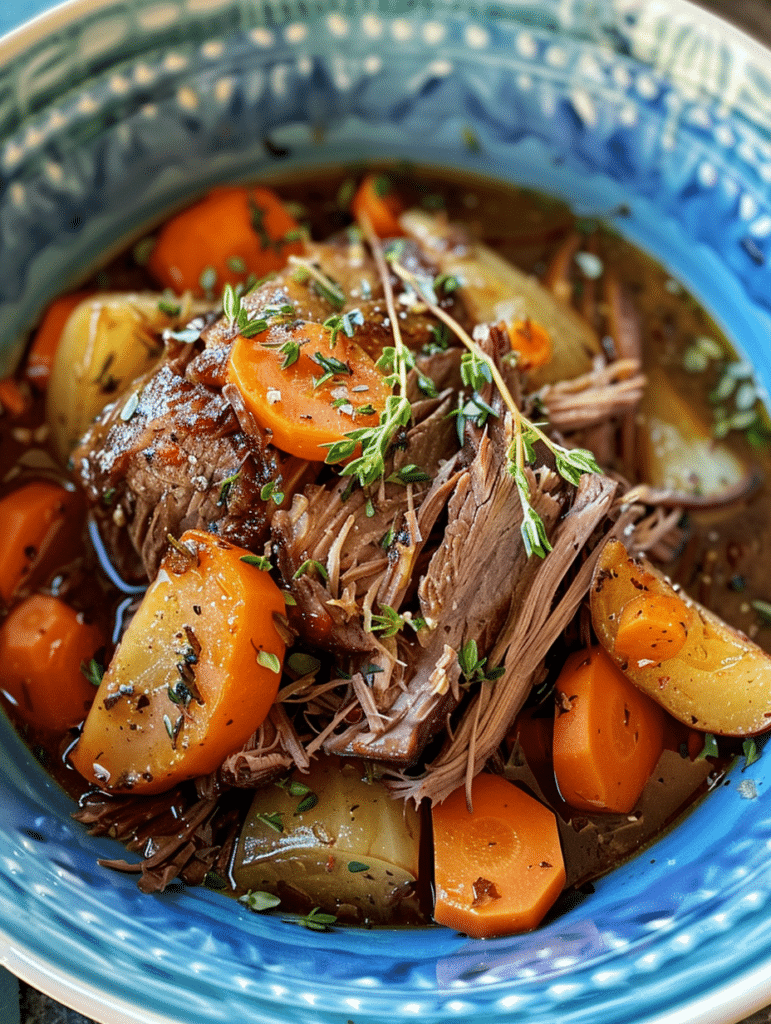
Image suggestion: A close-up of a fork tenderizing a perfectly cooked piece of pot roast beef, showing the texture and moisture.
Common Mistakes to Avoid
Overcrowding the crockpot prevents even cooking and causes vegetables to steam rather than braise. When the pot is packed too tightly, steam circulates unevenly, leaving some pieces undercooked and others falling apart. Aim to fill the crockpot only three-quarters full, leaving the top inch empty for proper heat circulation and moisture redistribution.
Using liquid that’s too hot or too abundant causes the meat to toughen and vegetables to disintegrate. I learned this the hard way after boiling broth before adding it to the crockpot; the sudden temperature shock seized the protein fibers. Always use room-temperature or cold broth, and measure it to reach only halfway up the roast, not fully submerging it.
Cooking on high heat to save time destroys the pot roast’s texture and flavor. The high setting heats so aggressively that collagen breaks down unevenly, creating stringy rather than silky meat. Additionally, high heat causes vegetables to collapse into mush while the beef remains tough. The low setting at 6-8 hours is non-negotiable for consistent, tender results.
Skipping the sear step results in pale, gravy-colored meat lacking browning complexity. While technically the roast will cook through, you lose the caramelized crust that triggers the Maillard reaction and adds depth to the broth. Those extra 10 minutes of searing reward you with noticeably richer, more restaurant-quality flavor.
Adding dairy or wine-based ingredients at the start causes curdling and breaks the emulsion of the gravy. Save any cream, sour cream, or non-alcoholic wine reduction for the final 15 minutes of cooking, or stir them in after the crockpot finishes, to preserve smooth, silky texture.
Image suggestion: A split-screen showing what overcooked pot roast looks like versus perfectly tender pot roast, highlighting the textural difference.
Variations and Substitutions
| Original Ingredient | Substitution | Impact on Flavor and Texture |
|---|---|---|
| Beef chuck roast | Beef brisket (trim heavily to 0.5-inch fat) | Leaner and more tender; less rich gravy, requires 30 minutes less cooking time. |
| Beef chuck roast | Lamb shoulder roast | Herbaceous, more complex flavor; reduces cooking time to 5-6 hours. Great for Mediterranean variations. |
| Yukon gold potatoes | Sweet potatoes (same size cuts) | Natural sweetness balances savory gravy; adds 30-45 minutes to cooking time due to density. |
| Carrots | Parsnips (same quantities) | Earthier, slightly spicy undertone; adds subtle licorice note. Mix half parsnips and half carrots for balance. |
| Tomato paste | Balsamic vinegar (use 1 tablespoon instead of 2 tbsp paste) | Tangier, less thick gravy; adds wine-like depth without alcohol. Best mixed with Worcestershire. |
| Fresh rosemary and thyme | Dried herbs (halve quantities: 0.5 tsp each) | More concentrated herbal intensity; adds slightly bitter edge if overdosed. Stir in 30 minutes before end. |
| Beef broth | Chicken broth with 1 tbsp soy sauce and 0.5 tsp fish sauce | Lighter body, umami-forward; reduces beef notes but maintains savory depth. |
| Worcestershire sauce | Soy sauce (use same quantity) | More salt-forward, Asian-inspired flavor; removes vinegar tang, adds salty-sweet balance. |
| All vegetables (mixed) | Root vegetable blend: turnips, celery root, rutabaga in 1.5-inch pieces | More complex earthiness; longer cooking time by 1 hour due to increased density. |
| Bay leaves | Star anise (use 1 whole instead of 2 bay leaves) | Licorice and warmth replace bay’s subtle bitterness; best with Asian broth variations. |
Image suggestion: A collection of ingredient substitutes arranged around a central bowl of finished pot roast, showing the variety of possible variations.
Serving Suggestions and Pairings
Serve this crockpot pot roast with crusty bread or dinner rolls to soak up the savory gravy. A thick slice of sourdough or a warm, buttered Parker House roll transforms the dish into a complete meal that feels both humble and elegant. For formal dinners, arrange the sliced roast on a bed of mashed potatoes, ladle gravy over the top, and surround with glazed carrots for restaurant-style plating.
Pair crockpot pot roast with a simple green salad dressed in light vinaigrette to cut through the richness. Mixed greens with arugula, red onion, and a Dijon vinaigrette provide bright acidity that cleanses the palate between bites. The contrast between tender beef and crisp greens creates an ideal balance.
This dish excels at Sunday family dinners, holiday gatherings, and cozy weeknight meals. In autumn and winter months, pot roast becomes the main event at harvest celebrations, while in spring and summer, it works beautifully as a hearty lunch option. Serve it family-style on a large platter with vegetables arranged around the sliced roast, encouraging guests to serve themselves and fostering a communal dining experience.
For weeknight practicality, pair pot roast with steamed broccoli or roasted Brussels sprouts to add vegetable variety without additional cooking time. A simple side salad or quick-pickled vegetables cut the richness and add textural contrast. The slow cooker method means dinner is ready when you walk through the door, making weeknight entertaining effortless.
Image suggestion: A beautifully plated serving of pot roast with gravy, vegetables, and crusty bread on the side, styled for a cozy dinner setting.
Storage and Reheating
| Method | Storage Duration | Instructions |
|---|---|---|
| Refrigerator | 3-4 days | Cool to room temperature, then transfer meat, vegetables, and gravy to airtight containers. Fat will solidify on top; you can remove it for a lighter meal or leave it for added flavor. |
| Freezer | 2-3 months | Cool completely, then transfer to freezer-safe containers or heavy-duty freezer bags, removing as much air as possible. Label with date. Thaw overnight in refrigerator before reheating. |
| Crockpot warming mode | 2-4 hours | Leave remaining pot roast on warm setting in the crockpot. Keep lid on to retain moisture. Best for immediate leftovers on the same day. |
| Stovetop reheating | For thawed leftovers | Place meat, vegetables, and gravy in a large pot over medium heat, stirring occasionally, until steaming throughout, about 15-20 minutes. Add beef broth if gravy seems too thick. |
| Oven reheating | For full portions | Transfer to a covered baking dish, add 0.5 cup beef broth, cover with foil, and bake at 325°F for 25-35 minutes until heated through. |
| Microwave reheating | For individual portions | Place one serving in a microwave-safe bowl, cover loosely, and microwave at 50% power for 3-5 minutes, stirring halfway. Heating at lower power prevents toughening the meat. |
Crockpot pot roast freezes exceptionally well because the collagen has already converted to gelatin, preserving texture through the freeze-thaw cycle. When reheating, avoid high heat that would dry out the meat; gentle warmth on the stovetop or in a low oven preserves the tender texture you worked to achieve.
Image suggestion: Labeled containers of pot roast in various stages of storage, showing portioning for individual meals and vacuum-sealed portions in the freezer.
Nutritional Information
| Nutrient | Amount per Serving | Daily Value % |
|---|---|---|
| Calories | 425 kcal | 21% |
| Protein | 38g | 76% |
| Total Fat | 18g | 28% |
| Saturated Fat | 7g | 35% |
| Cholesterol | 95mg | 32% |
| Carbohydrates | 22g | 7% |
| Dietary Fiber | 4g | 16% |
| Total Sugars | 6g | 12% |
| Sodium | 720mg | 31% |
| Iron | 4.2mg | 23% |
| Potassium | 580mg | 16% |
| Vitamin C | 12mg | 14% |
Approximate values based on 8 servings (3-4 lb roast with vegetables and gravy). Nutritional content varies based on specific ingredients and cooking method. Analysis assumes all gravy is consumed and does not account for bread or additional sides served alongside.
Chuck roast provides significant protein and iron, making crockpot pot roast a nutrient-dense meal. The vegetables contribute fiber, vitamins, and minerals, while the long cooking method makes nutrients more bioavailable. Reducing sodium can be achieved by using low-sodium broth and adjusting salt to taste; the dish maintains its depth with careful seasoning.
Image suggestion: A nutrition facts label-style graphic displayed alongside a portion of finished pot roast for visual context.
Frequently Asked Questions
Can I substitute the beef chuck roast with a different cut?
Beef brisket works well as a substitute, though it’s leaner and cooks slightly faster at 5.5-7 hours. Beef bottom round roast is another option, but it produces less rich gravy due to lower fat content. Chuck roast remains the ideal choice because its marbling renders into the gravy, creating silky mouthfeel and superior flavor. For the best alternative, select cuts labeled for slow cooking or stewing.
How do I know when the pot roast is done?
The roast is done when a fork inserted into the thickest part shreds the meat easily with no resistance, typically after 6-8 hours on low heat. If the meat still requires pressure to shred, continue cooking in 30-minute increments. The meat should be uniformly tender throughout; if the center feels firmer than the edges, the roast needs more time despite surface tenderness.
Why is my pot roast tough and stringy?
Tough, stringy pot roast results from cooking on high heat, which causes collagen to break down too quickly and unevenly. The solution is to always use the low heat setting for 6-8 hours, allowing gradual collagen conversion to gelatin. If you’ve already cooked on high, you cannot reverse the damage, but future batches will improve dramatically by switching to low heat.
Can I prepare the crockpot pot roast the night before?
Yes, you can layer all ingredients in the crockpot insert the night before, cover it, and refrigerate overnight. In the morning, place the cold insert into the crockpot and cook on low for 7-8 hours instead of 6-8 hours, since the ingredients start cold. Do not sear the meat in advance; the crust loses texture overnight. Sear the roast in the morning for best results.
Should I add vegetables at the beginning or the end?
All vegetables go in at the beginning of cooking. Potatoes and carrots need the full 6-8 hours to become tender; adding them midway leaves them undercooked and firm. Onions actually benefit from the entire cooking time, softening into the gravy and adding depth. If you prefer vegetables with more texture, add them 90 minutes before the crockpot finishes, though they’ll still be quite soft.
How can I make the gravy thicker without flour?
Mix cornstarch or arrowroot powder with cold water to create a slurry, then stir it into the finished gravy while the crockpot is on high heat, stirring for 2-3 minutes until thickened. Alternatively, transfer the broth to a saucepan, bring it to a simmer, and reduce it over medium heat for 10-15 minutes until the desired consistency is reached. Avoid using flour if you have celiac concerns; cornstarch and arrowroot are naturally gluten-free.
Image suggestion: A split-screen showing the FAQ questions and answers overlaid on different stages of pot roast preparation.
Final Thoughts
Crockpot pot roast delivers tender, flavorful comfort food with minimal effort and maximum satisfaction. This slow cooker recipe transforms affordable chuck roast into restaurant-quality beef surrounded by caramelized vegetables and savory gravy. Whether you’re cooking for your family or preparing make-ahead meals, this crockpot pot roast technique guarantees consistent, delicious results that honor both tradition and modern convenience.
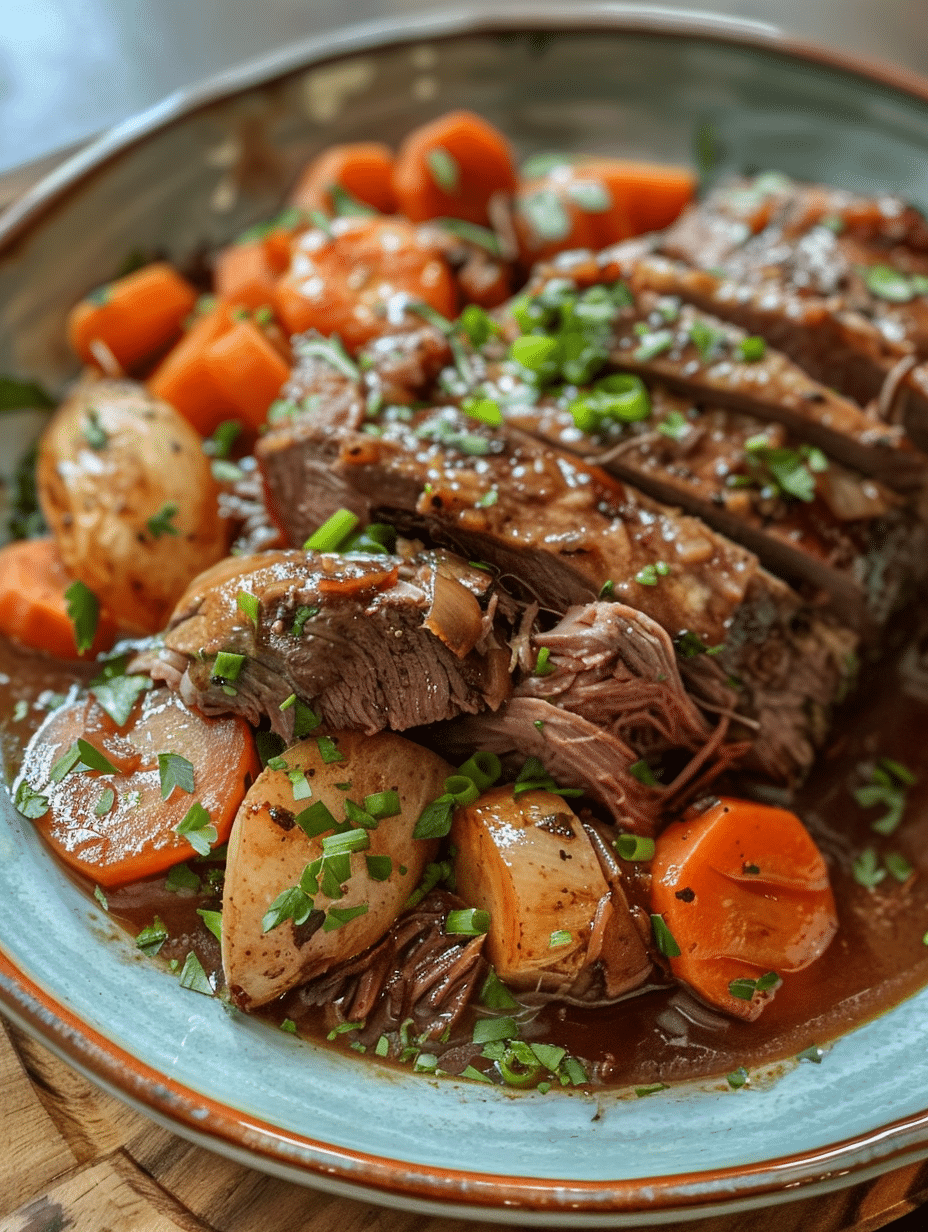
Image suggestion: A final hero shot of a complete plated crockpot pot roast meal with garnish, ready to serve.
Crockpot Pot Roast: Tender, Flavorful Comfort Food
Ingredients
- 3-pound beef chuck roast
- 3 carrots, peeled and sliced
- 3 medium potatoes, peeled and quartered
- 1 yellow onion, quartered
- 3 garlic cloves, minced
- 2 tsp dried thyme
- 1 tsp dried rosemary
- 2 bay leaves
- 2 tbsp olive oil
- 2 cups beef broth
- 1 tbsp Worcestershire sauce
- 1 tbsp tomato paste
- 2 tbsp cornstarch (for gravy, optional)
- salt and black pepper to taste
Instructions
- Pat the beef dry and season generously with salt and pepper
- Heat olive oil in a skillet over medium-high heat and sear the roast until browned on all sides
- Transfer the roast to the crockpot and add carrots, potatoes, onion, garlic, thyme, rosemary, and bay leaves
- Pour beef broth, Worcestershire sauce, and tomato paste over the roast and vegetables
- Cover and cook on low for 6-8 hours, until the meat is fall-apart tender
- If using cornstarch for gravy: whisk 2 tbsp cornstarch with 4 tbsp cold water and stir into the pot. Return to slow cooker for 30 minutes
Notes
For halal compliance, verify the Worcestershire sauce brand is alcohol-free
Skim fat from the top of the gravy before serving if desired
Thickening without cornstarch: Simmer remaining juices on the stovetop and reduce