

Coconut oatmeal cookies combine tender oats with shredded coconut to create a chewy, satisfying cookie that tastes like a tropical vacation in cookie form. This recipe produces bakery-quality cookies with crispy caramelized edges and soft, chewy centers that stay fresh for days. I developed this particular version after years of testing ratios and baking times in my Portland kitchen, finally landing on a formula that delivers the ideal texture every single time.

About the Baker: My Journey to Perfect Cookies
I’m Lila Bennett, a 34-year-old home baker based in Portland, Oregon, and my kitchen is almost always filled with the smell of something sweet. I fell in love with baking as a kid, sneaking tastes of cookie dough and watching simple ingredients transform into something comforting and delicious. What started with slightly overbaked cookies turned into years of experimenting with cakes, pancakes, and all kinds of desserts, learning through trial, error, and a lot of taste-testing.
These coconut oatmeal cookies represent over two decades of cookie experimentation. I’ve tested dozens of coconut varieties, oat types, and sugar combinations to find what works best. My neighbors became willing taste-testers, and their honest feedback shaped every element of this recipe. The balance between brown sugar for chewiness and granulated sugar for structure came from countless batches baked right here on my home oven rack.
Recipe Overview
| Metric | Value |
|---|---|
| Prep Time | 15 minutes |
| Cook Time | 12 minutes |
| Total Time | 27 minutes |
| Servings | 24 cookies |
| Difficulty Level | Easy |
| Cuisine | American |
Why This Recipe Works
This coconut oatmeal cookie recipe works because it balances three critical elements: proper moisture retention, structural integrity, and bold flavor. The combination of butter, both sugars, and eggs creates a dough that holds its shape while baking but remains tender once cooled. I discovered that using old-fashioned rolled oats rather than quick oats provides better texture and prevents the cookies from becoming cake-like or dense.
The coconut flavor comes through clearly without overwhelming the other components because I use unsweetened shredded coconut rather than sweetened varieties. This choice allows the toasted coconut flavor to shine while preventing the cookies from becoming overly sweet. The warm spices, cinnamon and nutmeg, complement the coconut beautifully and add complexity that keeps people reaching for another cookie.
From my personal baking experience, I’ve learned that slightly underbaking these cookies is essential. Removing them from the oven when the edges are golden but the centers still look slightly soft ensures they set properly as they cool while maintaining that desirable chewiness. This single technique transformed my coconut oatmeal cookies from average to exceptional.
Ingredients
| Ingredient | Quantity | Notes & Alternatives |
|---|---|---|
| Old-fashioned rolled oats | 2 cups | Do not use instant oats; they create a mushy texture. Certified gluten-free oats work well for dietary needs. |
| Unsweetened shredded coconut | 1.5 cups | Essential for balanced sweetness. Sweetened coconut will make cookies too sweet. Look for unsweetened in the baking aisle. |
| Unsalted butter | 1 cup (2 sticks) | Must be softened to room temperature. Salted butter can be substituted if you reduce added salt to 0.5 teaspoon. |
| Granulated sugar | 1 cup | Provides structure and crispy edges. Do not substitute with honey or agave as it changes the texture significantly. |
| Packed brown sugar | 0.75 cup | The molasses content creates chewiness and adds depth. Light brown sugar produces slightly lighter cookies than dark brown sugar. |
| Large eggs | 2 | Room temperature eggs incorporate better with the butter mixture. Cold eggs can create separation in the dough. |
| Vanilla extract | 2 teaspoons | Use pure vanilla extract for best flavor. Imitation vanilla works but produces a less complex taste profile. |
| All-purpose flour | 1.75 cups | Measured by spooning and leveling. Too much flour creates dense cookies. Whole wheat flour can replace up to 0.5 cup but increases density. |
| Baking soda | 1 teaspoon | Reacts with brown sugar to provide lift and browning. Essential for proper rise and color development. |
| Sea salt | 0.75 teaspoon | Enhances sweetness and coconut flavor. Table salt can substitute at the same measurement. |
| Ground cinnamon | 0.5 teaspoon | Complements coconut beautifully. Use freshly ground for maximum flavor impact. |
| Ground nutmeg | 0.25 teaspoon | Adds warmth and complexity. Use sparingly to avoid overpowering the coconut flavor. |
Step-by-Step Instructions
Preparation Phase
- Preheat your oven to 350°F (175°C) and line two large baking sheets with parchment paper for easy cleanup.
- Combine two cups of old-fashioned rolled oats with one and a half cups of unsweetened shredded coconut in a medium mixing bowl and set aside.
- Measure out all remaining ingredients before you begin mixing to ensure smooth execution.
Creaming Phase
- Cream one cup of softened unsalted butter with one cup of granulated sugar and three-quarter cup of packed brown sugar in a large mixing bowl.
- Beat the mixture on medium speed for approximately three minutes until the texture becomes light, fluffy, and pale in color.
- Add the two large eggs one at a time, beating well for about one minute after each addition to incorporate thoroughly.
- Mix in two teaspoons of vanilla extract and continue beating until the mixture is completely uniform and lighter in appearance.
Dough Assembly Phase
- Whisk together one and three-quarter cups of all-purpose flour, one teaspoon of baking soda, three-quarter teaspoon of sea salt, one-half teaspoon of ground cinnamon, and one-quarter teaspoon of ground nutmeg in a separate bowl.
- Gradually fold the dry ingredient mixture into the wet ingredients using a rubber spatula, mixing gently until just combined without overmixing.
- Fold the reserved oat and coconut mixture into the dough until the ingredients are evenly distributed throughout.
Baking Phase
- Drop rounded tablespoons of cookie dough onto the prepared baking sheets, spacing the cookies approximately two inches apart.
- Bake the cookies for eleven to thirteen minutes until the edges are golden brown but the centers still appear slightly soft and underbaked.
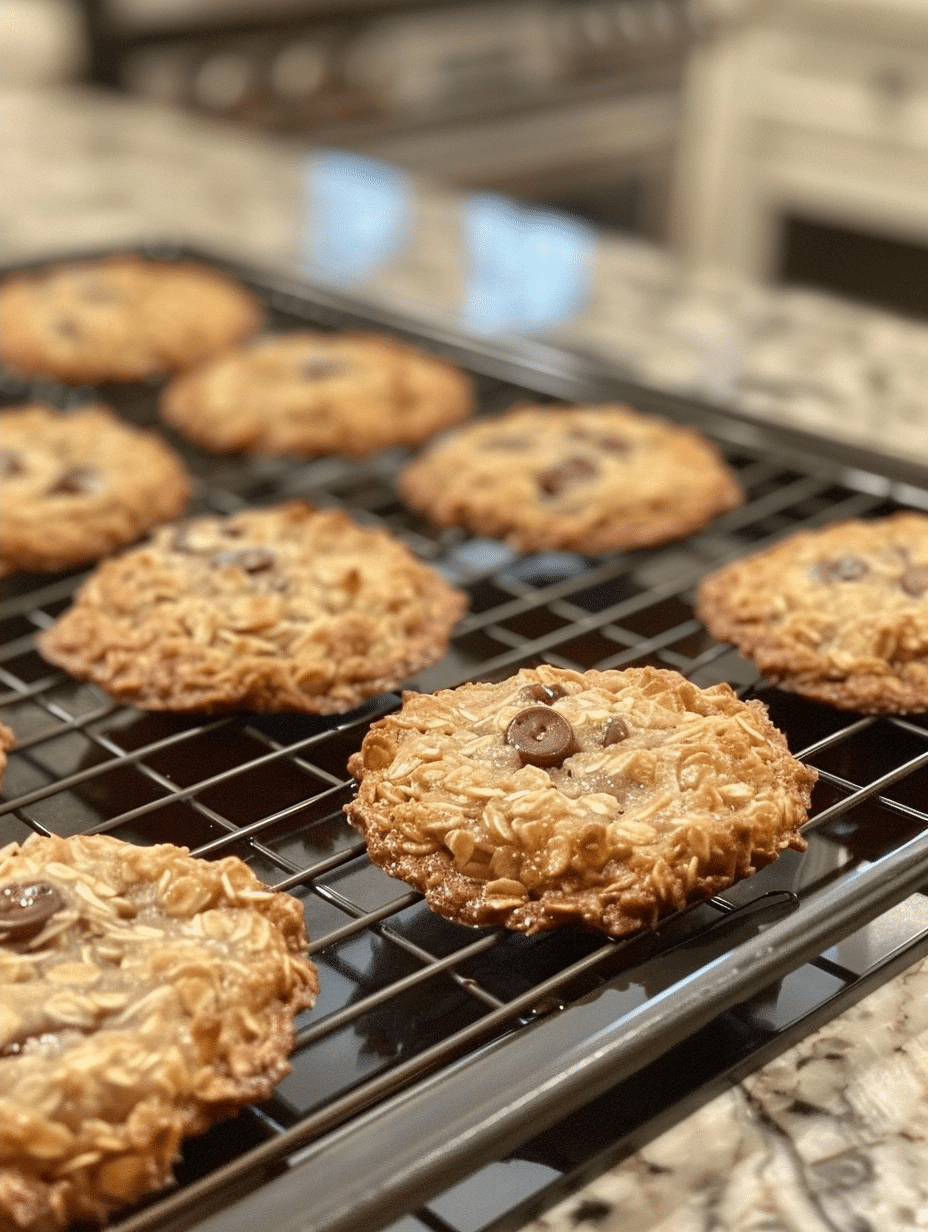
- Allow the cookies to cool directly on the baking sheet for five minutes to continue setting before transferring to a wire cooling rack.
- Cool the cookies completely on the wire rack before storing or serving.
Chef Tips for Perfect Results
- Measure flour by spooning it into the measuring cup and leveling with a knife rather than scooping directly from the bag, which compacts the flour and creates dense cookies.
- Use room temperature eggs and softened butter because cold ingredients don’t incorporate properly, resulting in a grainy texture and uneven mixing.
- Resist the urge to overbake these cookies by removing them when the edges are golden but the centers appear slightly underdone, as they continue cooking on the hot pan during the cooling period.
- Toast the coconut in a dry skillet over medium heat for two to three minutes before adding to the dough if you prefer a more pronounced, nutty coconut flavor.
- Chill the dough for thirty minutes before baking if your kitchen is warm, which prevents excessive spreading and helps maintain defined cookie edges.
- Use parchment paper instead of greasing baking sheets directly to ensure even browning on the bottom and prevent sticking.
Common Mistakes to Avoid
Mistake 1: Using Sweetened Coconut Adding sweetened shredded coconut instead of unsweetened creates excessively sweet cookies that overpower the other flavors. The solution is to check your ingredient label carefully and purchase unsweetened coconut from the baking section of your grocery store or online.
Mistake 2: Overbaking the Cookies Leaving these cookies in the oven too long produces hard, brittle cookies that lack the signature chewiness this recipe is known for. Set a timer for eleven minutes and check for doneness by looking for golden edges while the centers still appear soft. Remove them immediately when they meet this criterion.
Mistake 3: Overmixing the Dough Stirring the dough too vigorously after adding the flour develops excess gluten, creating tough, dense cookies instead of tender ones. Fold the dry ingredients gently using a spatula with just enough motion to incorporate them evenly.
Mistake 4: Measuring Flour Incorrectly Scooping flour directly from the bag compacts it, resulting in too much flour in your cookies and creating a dry, cake-like texture. Always spoon flour into your measuring cup and level with a knife for accurate measurements.
Mistake 5: Using Cold Ingredients Cold butter, eggs, and dough don’t mix smoothly, creating a grainy texture and uneven distribution of ingredients throughout the batch. Leave butter on the counter for thirty minutes to soften and use eggs removed from the refrigerator at least thirty minutes before baking.
Variations and Substitutions
| Ingredient | Substitution | Impact on Flavor & Texture |
|---|---|---|
| Unsweetened shredded coconut | Toasted coconut flakes (larger pieces) | Creates more pronounced coconut flavor with interesting texture variation from larger pieces. Toasting intensifies the coconut taste. |
| Old-fashioned rolled oats | Steel-cut oats (chopped) | Produces chewier cookies with more texture. Steel-cut oats must be chopped to cookie-sized pieces for even distribution. |
| Brown sugar | Muscovado sugar (0.75 cup packed) | Intensifies molasses depth and creates even chewier cookies due to higher moisture content. Color will be darker. |
| Vanilla extract | Coconut extract (1 teaspoon) | Amplifies coconut flavor significantly. Reduce to one teaspoon as coconut extract is more potent than vanilla. |
| All-purpose flour | Whole wheat pastry flour (1.5 cups) | Adds nuttiness and slight earthiness while maintaining tenderness. Replace no more than half the flour to preserve texture. |
| Cinnamon and nutmeg | Cardamom (0.25 teaspoon) instead | Creates exotic, Indian-inspired flavor profile. Use sparingly as cardamom is potent and can overpower delicate flavors. |
| Granulated sugar | Coconut sugar (1 cup) | Adds caramel undertones and reduces glycemic impact. Resulting cookies spread slightly less and taste subtly different. |
Serving Suggestions and Pairings
Serve these coconut oatmeal cookies alongside a strong cup of black coffee or espresso to balance their sweetness with subtle bitterness. The tropical coconut flavor pairs beautifully with dark roast coffee for afternoon snacking. For tea lovers, steep a cup of chamomile or green tea as a lighter pairing that complements the cookies without overwhelming them.
Pack these cookies for lunch boxes, picnics, or bake sales where their durability shines. They maintain their texture far better than delicate butter cookies, making them ideal for travel. Arrange them on a dessert platter at casual dinner parties alongside chocolate cookies to provide variety in flavor and texture.
These cookies work wonderfully as homemade gifts during the holiday season when packaged in kraft paper bags tied with twine. Include a tag suggesting they pair well with coffee or tea. Create a dessert board for entertaining by combining these coconut oatmeal cookies with fresh tropical fruits like pineapple and mango to echo the coconut flavor.
Storage and Reheating
| Storage Method | Duration | Instructions |
|---|---|---|
| Airtight Container (Room Temperature) | 7 days | Store cooled cookies in an airtight container at room temperature away from direct sunlight. Place parchment paper between layers to prevent sticking. |
| Freezer Storage | 3 months | Freeze baked cookies in an airtight freezer-safe container with parchment paper between layers. Thaw at room temperature for thirty minutes before serving. |
| Refrigerator Storage | 10 days | Store in an airtight container in the refrigerator if your kitchen is warm or humid. Cold storage extends freshness but chills the cookies. |
| Dough Freezing | 2 months | Freeze unbaked dough in tablespoon-sized portions on a baking sheet, then transfer to freezer bags. Bake directly from frozen, adding one to two minutes to bake time. |
| Reheating (Oven Method) | 2-3 minutes | Wrap cookies in foil and place in a 300°F oven for two to three minutes to revive texture and warmth without further browning. |
| Reheating (Microwave Method) | 15-20 seconds | Microwave a single cookie on high power for fifteen to twenty seconds to soften. Longer periods dry them out significantly. |
Nutritional Information
Approximate values per cookie (24 cookies total batch)
| Nutrient | Amount per Serving |
|---|---|
| Calories | 185 |
| Protein | 3g |
| Total Fat | 9g |
| Saturated Fat | 6g |
| Unsaturated Fat | 3g |
| Carbohydrates | 24g |
| Dietary Fiber | 1.5g |
| Sugar | 14g |
| Sodium | 180mg |
| Cholesterol | 22mg |
These values represent a standard-sized cookie and may vary based on exact ingredient brands and portion sizes. The oats and coconut contribute fiber and healthy fats, making these cookies more nutritionally balanced than many traditional cookie recipes.

Frequently Asked Questions
Can I Substitute Dairy-Free Butter in This Coconut Oatmeal Cookie Recipe?
Yes, you can substitute dairy-free butter in equal amounts, though results may vary slightly depending on the brand selected. Use a dairy-free butter with at least 80% fat content for proper creaming and texture development. The cookies will bake similarly but may spread slightly more or brown faster, so watch them carefully during baking. I recommend testing with a favorite dairy-free butter brand rather than trying multiple options at once.
How Do I Know When These Coconut Oatmeal Cookies Are Done Baking?
The cookies are done when the edges turn golden brown while the centers still appear soft and slightly underdone, approximately eleven to thirteen minutes at 350°F. The centers will continue cooking on the hot baking sheet after removal from the oven, so this underbaked appearance is essential for achieving the signature chewy texture. When in doubt, remove them slightly early rather than leaving them in longer.
Why Are My Coconut Oatmeal Cookies Spreading Too Much?
Excessive spreading occurs when your butter is too soft, your baking soda is old or too much, or your dough isn’t chilled before baking. Ensure your butter is softened but not melted, replace baking soda if stored for over six months, and measure it accurately with a measuring spoon. Chilling the dough for thirty minutes in the refrigerator significantly reduces spreading on warm days.
Can I Make the Dough Ahead for These Coconut Oatmeal Cookies?
Absolutely, the dough can be made up to two days ahead and stored in an airtight container in the refrigerator. You can also freeze unbaked dough portions for up to two months and bake directly from frozen with an additional one to two minutes of baking time. This flexibility makes the recipe convenient for meal planning and entertaining situations.
How Do These Coconut Oatmeal Cookies Compare to Store-Bought Varieties?
Homemade coconut oatmeal cookies offer superior flavor, texture, and freshness compared to most store-bought versions because they contain real ingredients and no preservatives. The cookies stay chewier longer due to superior moisture content and lack of additives. Making them at home also allows customization of sweetness levels and texture preferences.
What’s the Best Way to Gift These Coconut Oatmeal Cookies to Friends and Family?
Package cooled cookies in kraft paper bags, mason jars, or decorative tins lined with parchment paper to maintain freshness and create an attractive presentation. Include a handwritten label with the baking date and a note suggesting they pair well with coffee or tea. Store-bought cookies often travel better in airtight containers within a decorative bag to prevent breakage during transport.
Conclusion
Coconut oatmeal cookies deliver bakery-quality results from your home kitchen with simple ingredients and straightforward techniques. This recipe balances chewy centers with crispy edges while delivering a tropical coconut flavor that satisfies with every bite. Whether you’re baking for family gatherings or creating homemade gifts, these cookies will become a beloved favorite that people request again and again.
Coconut Oatmeal Cookies
Ingredients
- 1 1/2 cups all-purpose flour
- 1 tsp baking soda
- 1/4 tsp nutmeg
- 1/2 tsp ground cinnamon
- 3/4 cup unsalted butter, softened
- 3/4 cup brown sugar
- 3/4 cup granulated sugar
- 2 large eggs
- 2 tsp pure vanilla extract
- 2 cups old-fashioned rolled oats
- 1 1/2 cups unsweetened shredded coconut
Instructions
- Preheat oven to 350°F (175°C). Line baking sheets with parchment paper.
- In a medium bowl, whisk flour, baking soda, nutmeg, and cinnamon.
- In a large bowl, cream butter with brown sugar and granulated sugar until light and fluffy.
- Beat in eggs one at a time, then stir in vanilla.
- Gradually add dry ingredients to butter mixture, mixing until just combined.
- Fold in oats and coconut until evenly distributed.
- Drop dough by heaping tablespoons onto prepared baking sheets, spacing 3 inches apart.
- Bake 12 minutes, rotating the sheets halfway for even browning. Cookies will be lightly golden around edges but soft in centers.
- Cool on baking sheets 5 minutes before transferring to wire racks.
Notes
Use unsweetened coconut to balance sweetness from sugars and maintain tropical flavor.
Store in an airtight container for up to 10 days at room temperature.
