

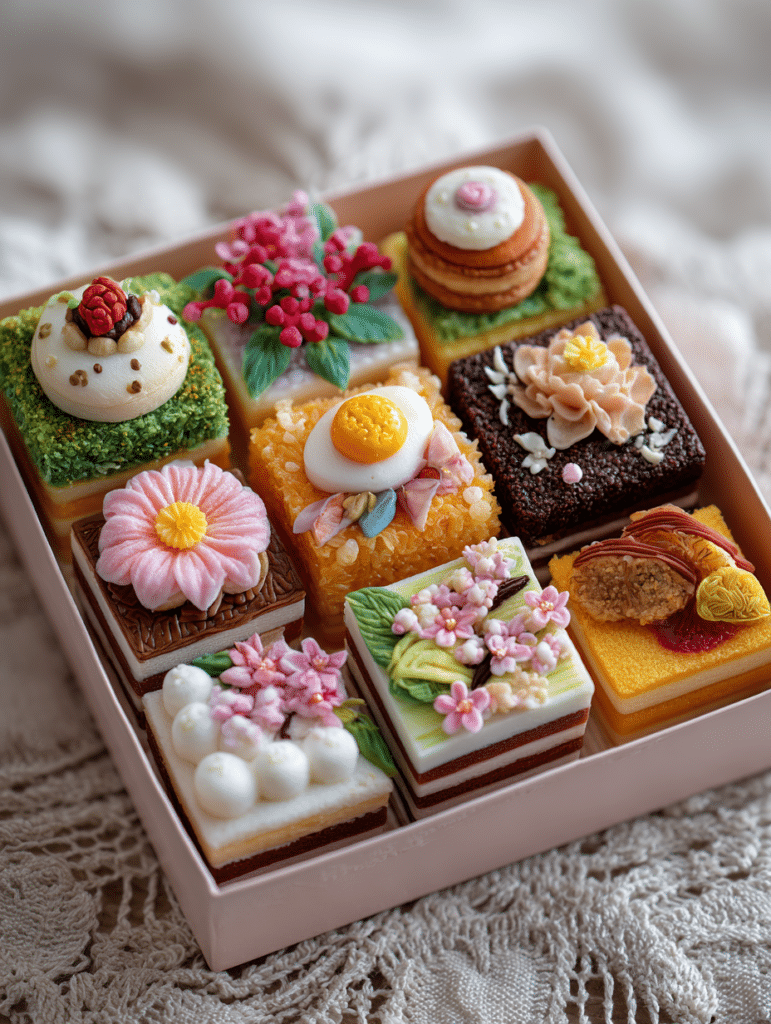
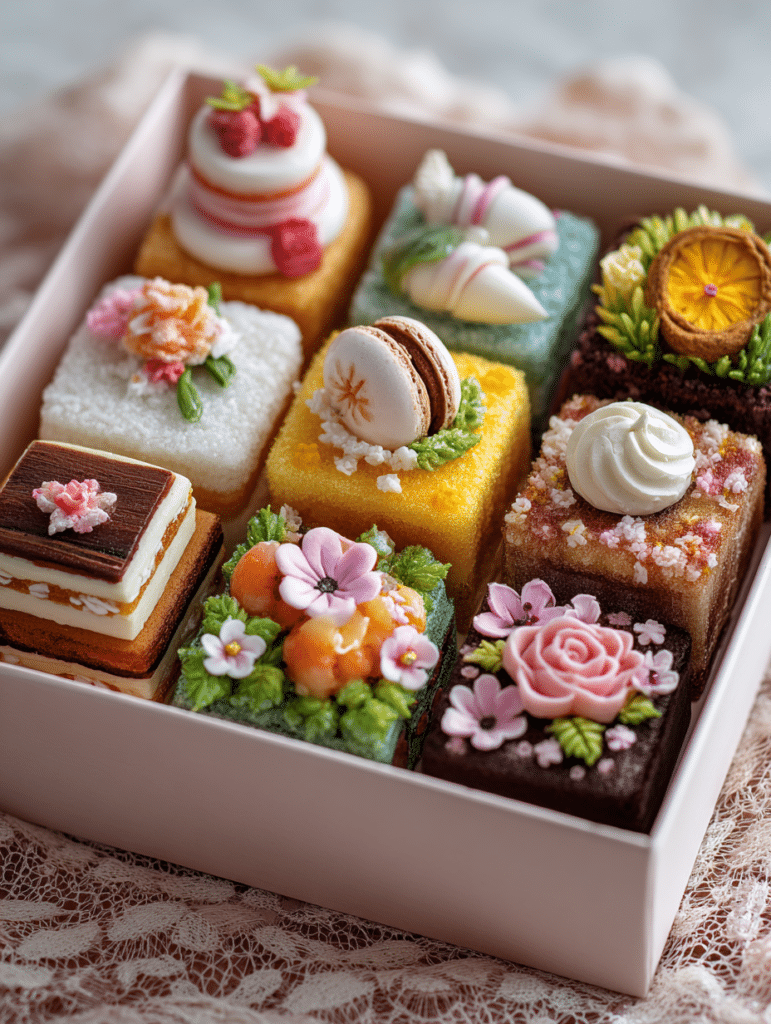
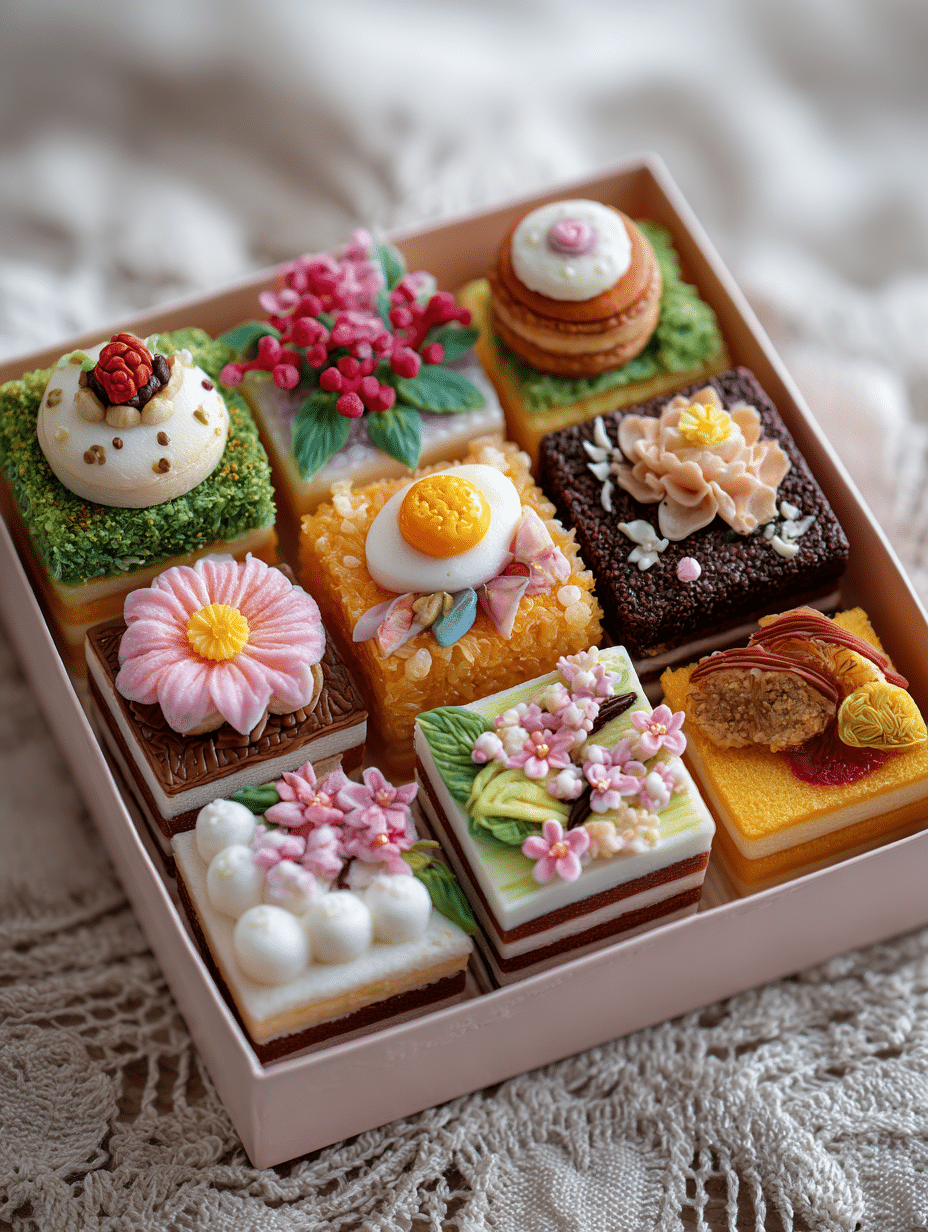
A bento cake is a visually striking Japanese-inspired layered dessert that combines sponge cake, pastry cream, and fresh fruit in colorful horizontal sections resembling a bento box. This elegant treat features thin layers of soft cake alternating with smooth custard and vibrant fruit garnishes, all stacked within a decorative ring mold or rectangular frame. What makes bento cake distinctive is its architectural presentation: each layer remains distinct and visible when sliced, creating a beautiful cross-section that showcases contrasting colors and textures. Unlike traditional layer cakes, bento cakes prioritize visual drama and precision over height, making them perfect for special occasions, dessert boxes, or intimate gatherings. I first encountered these stunning cakes during my deep dive into Japanese dessert techniques, and they’ve become a favorite in my Portland kitchen for impressing guests with minimal fuss.
About the Baker Behind This Recipe
I’m Lila Bennett, a 34-year-old home baker based in Portland, Oregon, and my kitchen is almost always filled with the smell of something sweet. I fell in love with baking as a kid, sneaking tastes of cookie dough and watching simple ingredients turn into something comforting and delicious. What started with slightly overbaked cookies turned into years of experimenting with cakes, pancakes, and all kinds of desserts—learning through trial, error, and a lot of taste-testing.
My journey into Japanese baking began five years ago when I took a class on Japanese pastry techniques. The precision, the minimalism, and the focus on quality ingredients immediately captivated me. Bento cakes represent everything I love about this approach: they’re elegant without being complicated, impressive without requiring professional equipment, and they taste as good as they look. I’ve spent countless hours perfecting the layering technique, testing different fruit combinations, and discovering which sponge cake formulas work best for this specific presentation. My experience has taught me that bento cakes aren’t mysterious or intimidating—they’re simply well-organized cakes built on solid baking fundamentals.
Recipe Overview
| Metric | Time or Amount |
|---|---|
| Prep Time | 45 minutes |
| Cook Time | 25 minutes |
| Cooling Time | 1 hour |
| Assembly Time | 30 minutes |
| Total Time | 2 hours 40 minutes |
| Servings | 8-10 slices |
| Difficulty Level | Intermediate |
| Cuisine | Japanese-Inspired |
Why This Recipe Works
This bento cake recipe succeeds because it balances structure with flexibility, requiring only basic baking skills and accessible ingredients. The sponge cake component is a light chiffon-style cake that’s forgiving to bake and sturdy enough to support multiple layers without compressing, which I’ve learned is crucial after several collapsed experiments in my early attempts. The pastry cream provides a stable, flavorful binding layer that doesn’t seep into the cake or create soggy sections—a problem I encountered repeatedly before understanding the importance of proper cooling and gelatin reinforcement.
What truly sets this recipe apart is the strategic use of fresh fruit placement and the careful construction sequence that prevents layers from sliding during assembly. I discovered through testing that chilling the cake between each layer addition reduces shifting significantly, transforming what seemed like an advanced technique into something genuinely manageable at home. The decorative presentation emerges naturally from the ingredient quality and proportions, not from complicated piping skills or special molds, though a baking ring makes the job easier.
Ingredients
| Ingredient | Quantity | Notes and Alternatives |
|---|---|---|
| All-purpose flour | 3/4 cup (90g) | King Arthur or Gold Medal recommended; cake flour (75g) creates softer crumb |
| Cornstarch | 2 tablespoons (20g) | Reduces gluten development for tender layers; not replaceable |
| Egg yolks | 4 large | Room temperature; save whites for meringue component |
| Egg whites | 5 large | Must be room temperature and grease-free for proper whipping |
| Granulated sugar | 1/2 cup (100g) | Divided: 25g for yolks, 75g for whites |
| Whole milk | 1/4 cup (60ml) | Or unsweetened almond milk for dairy-free option |
| Neutral oil | 3 tablespoons (45ml) | Vegetable or canola oil; not olive oil |
| Vanilla extract | 1 teaspoon (5ml) | Pure vanilla essential; imitation creates bitter notes |
| Salt | 1/4 teaspoon (1g) | Pinch; enhances flavor depth |
| Whole milk (pastry cream) | 1 cup (240ml) | Full-fat yields creamier results than 2% |
| Heavy cream (pastry cream) | 1/2 cup (120ml) | For stabilized pastry cream; whipped before folding |
| Egg yolks (pastry cream) | 3 large | Separate carefully; no whites needed |
| Granulated sugar (pastry cream) | 1/4 cup (50g) | Divided: 25g for yolks, 25g for milk |
| Cornstarch (pastry cream) | 2 tablespoons (20g) | Prevents weeping; essential for layer integrity |
| Vanilla extract (pastry cream) | 1 teaspoon (5ml) | Add after cooling to preserve flavor |
| Unflavored gelatin (optional) | 1/2 teaspoon (1.5g) | Bloomed in water; stabilizes cream in warm kitchens |
| Fresh strawberries | 8-10 medium | Ripe but firm; slice 1/4-inch thick |
| Fresh blueberries | 1/2 cup (75g) | Wipe dry before using to prevent moisture pooling |
| Fresh kiwi fruit | 2 medium | Peel and slice 1/8-inch thick just before assembly |
| Fresh raspberries | 1/3 cup (50g) | Handle gently; add last to prevent bruising |
| Lemon juice | 1/2 teaspoon (2.5ml) | Prevents discoloration of cut fruit surfaces |
| Powdered sugar (topping) | 1-2 tablespoons (8-16g) | Optional for dusting; use microplane for even coating |
Step-by-Step Instructions
Preparing the Equipment and Cake Pans
- Preheat your oven to 325°F (160°C) and position the rack to the middle-lower third position.
- Prepare one 8-inch round cake pan by lining the bottom and sides with parchment paper, overlapping slightly.
- Lightly spray the parchment with cooking spray or brush with oil to prevent sticking during removal.
- Have all ingredients measured and at room temperature before beginning; this ensures proper emulsification.
Making the Sponge Cake Base
- Sift together the all-purpose flour, cornstarch, and salt into a small bowl; sifting incorporates air and removes lumps.
- In a separate medium bowl, whisk the four egg yolks with 25g of sugar until pale yellow and thick, about 3 minutes of continuous whisking.
- Add the neutral oil to the yolk mixture one tablespoon at a time, whisking constantly until fully incorporated after each addition.
- Pour in the milk and vanilla extract, then whisk until completely combined and smooth.
- Fold the sifted flour mixture into the yolk mixture using a rubber spatula, making 12-15 folds until no streaks remain; do not overmix.
- In a separate large, grease-free bowl, combine the five egg whites and begin whisking on medium speed until foamy.
- Gradually add the remaining 75g of sugar while whisking continuously on medium-high speed until stiff peaks form, about 4 minutes total.
- Fold one-third of the whipped egg whites into the yolk mixture gently to lighten it, using about 8 folds.
- Pour the yolk mixture into the remaining egg whites and fold together delicately until no white streaks are visible, making approximately 20 folds.
- Pour the batter into the prepared pan and smooth the top with a spatula; do not tap or bang the pan.
Baking and Cooling the Cake
- Bake for 22-25 minutes until a toothpick inserted in the center emerges with just a few moist crumbs.
- Remove the cake from the oven and cool in the pan for 10 minutes, then turn out onto a wire rack.
- Cool the cake completely at room temperature, about 45 minutes, before slicing into layers.
Preparing the Pastry Cream Filling
- Heat the one cup of whole milk in a saucepan over medium heat until small bubbles form around the edges; do not boil.
- While milk heats, whisk together three egg yolks and 25g of sugar in a medium bowl until pale, about 2 minutes.
- Add the 2 tablespoons of cornstarch and the remaining 25g of sugar to the yolk mixture and whisk until smooth.
- Slowly pour the hot milk into the yolk mixture while whisking constantly to temper the eggs and prevent scrambling.
- Return the mixture to the saucepan and cook over medium heat, stirring constantly with a whisk, until it thickens and reaches a full boil, about 3-4 minutes.
- Boil for exactly one minute while stirring continuously to fully cook the cornstarch.
- Strain the pastry cream through a fine-mesh sieve into a clean bowl, pressing gently with a rubber spatula to remove lumps.
- Stir in the vanilla extract once the cream has cooled slightly.
- Press plastic wrap directly onto the surface of the pastry cream to prevent a skin from forming; cool completely, about 30 minutes.
- If desired, bloom 1/2 teaspoon gelatin in 1 tablespoon water for one minute, then whisk into the cooled cream for extra stability.
- In a separate bowl, whip 1/2 cup heavy cream to stiff peaks, then gently fold into the cooled pastry cream just before assembly.
Slicing and Assembling the Layers
- Once the cake is completely cool, use a serrated knife and a cake leveler to slice it into three even layers, approximately 1/3-inch thick each.
- Use a baking ring or prepare a 6-8 inch frame on a chilled serving plate lined with parchment paper.
- Place the first cake layer into the ring, pressing gently and trimming edges if needed to fit snugly.
- Spread or pipe 1/4 inch of pastry cream evenly over the first cake layer using an offset spatula.
- Arrange strawberry slices in a slightly overlapping pattern over the pastry cream, covering the entire layer.
- Place the second cake layer on top, pressing gently to secure, then refrigerate for 10 minutes to set.
- Spread another 1/4 inch layer of pastry cream over the second cake layer.
- Arrange kiwi slices in a decorative pattern over this layer, slightly overlapping.
- Add the third cake layer, pressing gently, then refrigerate again for 10 minutes.
- Spread the final 1/4 inch of pastry cream over the top cake layer.
- Arrange blueberries and raspberries in an attractive design over the top, pressing gently to secure.
- Refrigerate the completed bento cake for at least 30 minutes or up to 4 hours before serving to ensure structural integrity.
Finishing and Serving
- Remove the bento cake from the refrigerator 15 minutes before serving to bring the cake closer to room temperature.
- Carefully remove the baking ring or frame by sliding a warm thin knife around the inside edges and lifting gently.
- Dust lightly with powdered sugar using a fine-mesh sieve if desired, but keep minimal for aesthetic presentation.
- Use a hot, wet knife to slice the cake, wiping clean between each cut for sharp, defined layers.
- Serve immediately while the cake is chilled and the layers are distinct.
Chef Tips for Perfect Results
- Use a digital scale for all measurements, particularly flour and cornstarch, as volume measurements vary by packing technique and humidity.
- Ensure all eggs are at room temperature before beginning; cold eggs emulsify poorly and won’t create proper volume in the meringue component.
- When folding egg whites into the batter, use a rubber spatula and make large sweeping motions from the bottom of the bowl upward, rotating the bowl slightly with each fold.
- Layer pastry cream between cake and fruit, not on the fruit itself, as this prevents the fruit from sliding during slicing.
- Chill the assembled cake between each major step to allow pastry cream to set, which prevents layer shifting when you add weight from subsequent layers.
- Select fruit that is ripe but still slightly firm; overripe fruit releases too much moisture and weakens the pastry cream’s structural integrity.
Common Mistakes to Avoid
Mistake 1: Overmixing the egg white mixture. Why this happens: You’re trying to ensure no white streaks remain visible, but overmixing deflates the air bubbles in the meringue. How to fix it: Use a light hand when folding and accept a few thin white streaks that will disappear during baking; stop folding when the mixture is approximately 95% uniform.
Mistake 2: Using cold eggs straight from the refrigerator. Why this happens: Cold eggs seem fine and bake just the same, but they won’t emulsify properly with oil and won’t whip to maximum volume. How to fix it: Place eggs in warm water for 5 minutes before separating, or plan ahead and remove from the refrigerator 30 minutes before baking.
Mistake 3: Adding fruit while pastry cream is still warm or not properly cooled. Why this happens: Warm cream causes fruit juices to release rapidly, creating puddles of liquid that destabilize layers. How to fix it: Cool pastry cream to at least room temperature before folding in whipped cream, and refrigerate the assembled cake between fruit additions.
Mistake 4: Creating uneven cake layers. Why this happens: Slicing by eye without a guide leads to lopsided layers that stack unevenly. How to fix it: Invest in an adjustable cake leveler or use a serrated knife with height guides; mark your knife at the desired height with tape before slicing.
Mistake 5: Assembling the cake at room temperature instead of chilled. Why this happens: Warm pastry cream becomes looser and layers shift as you stack them. How to fix it: Chill all components thoroughly before assembly and refrigerate the cake between adding major layers to allow the cream to set.
Variations and Substitutions
| Original Ingredient | Substitution | Impact on Flavor and Texture |
|---|---|---|
| All-purpose flour | Cake flour (75g) | Creates more tender, delicate crumb; slightly less structure |
| Whole milk (cake) | Oat milk or almond milk | Minimal flavor change; slightly nuttier undertone with almond |
| Whole milk (cream) | Half-and-half (120ml) plus 120ml heavy cream | Richer, denser pastry cream; more luxurious mouthfeel |
| Vanilla extract | Almond extract (0.5 teaspoon) | Distinct almond flavor; use sparingly to avoid dominating |
| Strawberries | Sliced peaches or apricots | Warmer, more fragrant; slightly less tart |
| Blueberries | Blackberries or dark plums | More subtle flavor; blackberries create purple hue |
| Kiwi | Dragon fruit or star fruit | More exotic appearance; dragon fruit less acidic, star fruit sweeter |
| Heavy cream stabilizer | Mascarpone (1/4 cup folded in after whipping) | Richer, tangier flavor; must omit or reduce gelatin slightly |
For a vegan version, replace eggs with aquafaba (liquid from canned chickpeas) in a 3:1 ratio by volume, use coconut milk for the pastry cream, and substitute gelatin with agar-agar bloomed in water. This creates a lighter, more delicate final result but requires careful handling due to reduced structural support.
Serving Suggestions and Pairings
Serve bento cake at afternoon tea alongside Earl Grey or jasmine tea for an elegant pairing that complements the delicate sponge and fresh fruit. The subtle sweetness of the pastry cream balances perfectly with the slight bitterness of bergamot in traditional Earl Grey, creating a harmonious tasting experience that feels refined without being heavy.
For dessert presentations, pair bento cake with a light honey-sweetened yogurt dollop or a small glass of cold, unsweetened almond milk. These additions provide textural contrast and prevent the cake from feeling overly sweet, which is particularly welcome after a substantial meal.
Bento cake is ideal for Japanese-themed dinner parties, bridal showers, and summer garden gatherings where presentation matters as much as taste. The cake’s clean lines and vibrant fruit colors make it a natural centerpiece that demonstrates care and attention to detail without requiring professional culinary training.
For gift-giving, present the bento cake in a clear acrylic box with parchment liners, which showcases the beautiful layers and protects the cake during transport. Include storage instructions with a note that the cake is best enjoyed within 24 hours of assembly.
Storage and Reheating
| Storage Method | Duration | Instructions |
|---|---|---|
| Refrigerator | Up to 24 hours | Cover loosely with plastic wrap or place in an airtight cake container; do not seal tightly as condensation will soften the cake |
| Freezer (whole cake) | Up to 2 weeks | Freeze before adding fresh fruit; wrap well in plastic wrap then aluminum foil; thaw in refrigerator overnight before serving |
| Freezer (components separately) | Up to 3 weeks | Freeze unfrosted cake layers individually wrapped; freeze pastry cream in an airtight container; assemble only after both are thawed |
| Room temperature | Up to 4 hours | Keep covered with a cake dome in a cool location away from direct sunlight and heat sources |
Never refreeze a bento cake that contains fresh fruit, as the fruit will become soggy and release excess liquid upon thawing. If you’ve assembled the cake with fresh fruit and cannot serve it within 24 hours, consider freezing only the unfrosted cake layers and pastry cream, then adding fresh fruit and final assembly after thawing.
Nutritional Information
| Nutrient | Amount per Serving (1/8 cake) |
|---|---|
| Calories | 285-310 |
| Total Fat | 14-16g |
| Saturated Fat | 6-7g |
| Trans Fat | 0g |
| Cholesterol | 180-195mg |
| Sodium | 65-75mg |
| Total Carbohydrates | 35-38g |
| Dietary Fiber | 1-1.5g |
| Sugars | 24-26g |
| Protein | 5-6g |
Approximate values based on USDA nutritional database and standard ingredient databases. Actual values vary based on specific brands, fruit ripeness, and portion size. This analysis does not account for powdered sugar topping if used.
Frequently Asked Questions
Can I substitute cake flour for all-purpose flour when making bento cake?
Yes, cake flour is an excellent substitute and creates an even more tender crumb than all-purpose flour. Use 75 grams of cake flour in place of the 90 grams of all-purpose flour, as cake flour has lower protein content and requires slightly less weight. The resulting cake will be more delicate and slightly more moist, which works well for bento cake’s thinly sliced layers.
How do I know when the sponge cake layer is done baking?
The cake is done when a toothpick inserted in the center emerges with just a few moist crumbs, and the top springs back immediately when lightly touched with your finger. The edges will begin to pull away slightly from the sides of the pan, and the cake will rise above the initial batter level by approximately one inch. Do not bake until the toothpick comes out completely clean, as this indicates overbaking and results in a dry cake.
Why are my pastry cream layers sliding during assembly?
The pastry cream is likely not thick enough or is still too warm when you’re building the cake. Ensure you’ve cooked the mixture to a full boil for the full minute to completely cook the cornstarch, and cool it completely before folding in the whipped cream. Additionally, refrigerate the cake for 10 minutes between adding each major layer to allow the cream to set and prevent shifting from the weight of the layers above.
Can I make bento cake the day before serving?
Yes, you can assemble the bento cake up to 24 hours ahead if you’re not using fresh fruit, or up to 12 hours ahead if fruit is included. The unfrosted cake layers keep for three weeks frozen, and the pastry cream keeps for three days refrigerated, so you can prepare components in advance and assemble the final cake closer to serving time. The cake’s flavors actually meld and improve slightly after sitting overnight, making advance preparation ideal.
What’s the best way to slice and serve bento cake without crushing the layers?
Use a serrated knife dipped in hot water, wiping the blade clean between each cut, and use a gentle sawing motion rather than pressing down hard. Ensure the cake is thoroughly chilled and has been removed from the refrigerator only 15 minutes before slicing, so the pastry cream is still firm enough to hold the layers intact. A cake server or offset spatula beneath each slice provides additional support as you lift it from the serving plate.
Can I make bento cake with dairy-free ingredients?
Dairy-free bento cake is possible by substituting unsweetened almond milk for whole milk in both the cake and pastry cream, using coconut cream in place of heavy cream, and replacing gelatin with agar-agar. The resulting cake will be slightly less rich and have a subtly nuttier flavor, but the structure and visual appeal remain intact. Aquafaba can replace eggs if you’re making a fully vegan version, though the cake will be somewhat more fragile and requires gentle handling.
Final Thoughts on Bento Cake
Bento cake represents a perfect intersection of visual art and delicious flavor, transforming fundamental baking techniques into something that feels extraordinary on the plate. With the layering method, chilling strategy, and fresh fruit arrangement detailed in this guide, you can confidently assemble a stunning bento cake that rivals those from professional Japanese patisseries. The magic isn’t in secret ingredients or difficult skills—it’s in understanding why each step matters and executing with precision and care, leaving you with an elegant, fruit-studded creation that tastes as remarkable as it looks.
Bento Cake
Equipment
- 8-inch round cake pan
- mixing bowls
- electric mixer For whipping egg whites and cream
- rubber spatula
- whisk
- saucepan For pastry cream
- fine mesh sieve
- wire cooling rack
- cake leveler or serrated knife
- offset spatula
- cake ring or frame For assembly
Ingredients
- 3/4 cup all-purpose flour
- 2 tbsp cornstarch
- 4 large egg yolks
- 5 large egg whites
- 1/2 cup granulated sugar
- 1/4 cup whole milk
- 3 tbsp neutral oil
- 1 tsp vanilla extract
- 1/4 tsp salt
- 1 cup whole milk for pastry cream
- 1/2 cup heavy cream
- 3 large egg yolks for pastry cream
- 1/4 cup granulated sugar for pastry cream
- 2 tbsp cornstarch for pastry cream
- 1 tsp vanilla extract for pastry cream
- 1/2 tsp unflavored gelatin (optional)
- 8 fresh strawberries
- 1/2 cup fresh blueberries
- 2 fresh kiwi fruit
- 1/3 cup fresh raspberries
- 1/2 tsp lemon juice
- 2 tbsp powdered sugar for topping
Instructions
- Preheat oven to 325°F and position the rack in the lower-middle position.
- Line an 8-inch round cake pan with parchment paper and lightly grease it.
- Measure all ingredients and ensure eggs are at room temperature.
- Sift together flour, cornstarch, and salt in a bowl.
- Whisk egg yolks with part of the sugar until pale and thick.
- Add oil gradually while whisking constantly.
- Add milk and vanilla extract and whisk until smooth.
- Fold the flour mixture into the yolk mixture until just combined.
- Whisk egg whites until foamy, then gradually add remaining sugar and beat to stiff peaks.
- Fold one-third of the meringue into the yolk batter to lighten it.
- Fold the remaining meringue into the batter until smooth.
- Pour batter into the prepared pan and smooth the top gently.
- Bake for 22–25 minutes until a toothpick comes out with a few moist crumbs.
- Cool the cake in the pan for 10 minutes before transferring to a wire rack.
- Heat milk for the pastry cream until steaming but not boiling.
- Whisk egg yolks and sugar together for the pastry cream.
- Add cornstarch and whisk until smooth.
- Slowly whisk hot milk into the yolk mixture to temper the eggs.
- Return mixture to the saucepan and cook until thickened and boiling.
- Strain the pastry cream into a clean bowl and cool completely.
- Whip heavy cream to stiff peaks and fold into the cooled pastry cream.
- Slice the cooled sponge cake into three even layers.
- Place the first cake layer inside a cake ring on a serving plate.
- Spread pastry cream over the cake layer and top with strawberry slices.
- Add the second cake layer and chill for 10 minutes.
- Spread pastry cream over the second layer and arrange kiwi slices.
- Add the final cake layer and chill again for 10 minutes.
- Spread the remaining pastry cream on top and decorate with blueberries and raspberries.
- Refrigerate the completed cake for at least 30 minutes before serving.
- Dust lightly with powdered sugar and slice with a warm knife before serving.
